How to Choose the Right Resonant Capacitors for Your Needs?
Choosing the right resonant capacitors can significantly impact your electronic projects. These components play a crucial role in defining the performance of oscillators and filters. Understanding their specifications is vital for achieving efficiency and stability in your designs.
Resonant capacitors come in various types, each suited for different applications. Factors like capacitance value, voltage rating, and tolerance must be considered. This selection process can feel overwhelming, especially for beginners. Relying on accurate resources and knowledgeable suppliers can ease this challenge.
In many cases, engineers overlook small details, leading to suboptimal performance. Consider the temperature coefficient and dielectric type of resonant capacitors as they can affect function. Balancing cost and performance is essential, yet sometimes compromises may hinder project goals. Making informed choices is the pathway to success.
Understanding Resonant Capacitors: Definition and Functionality
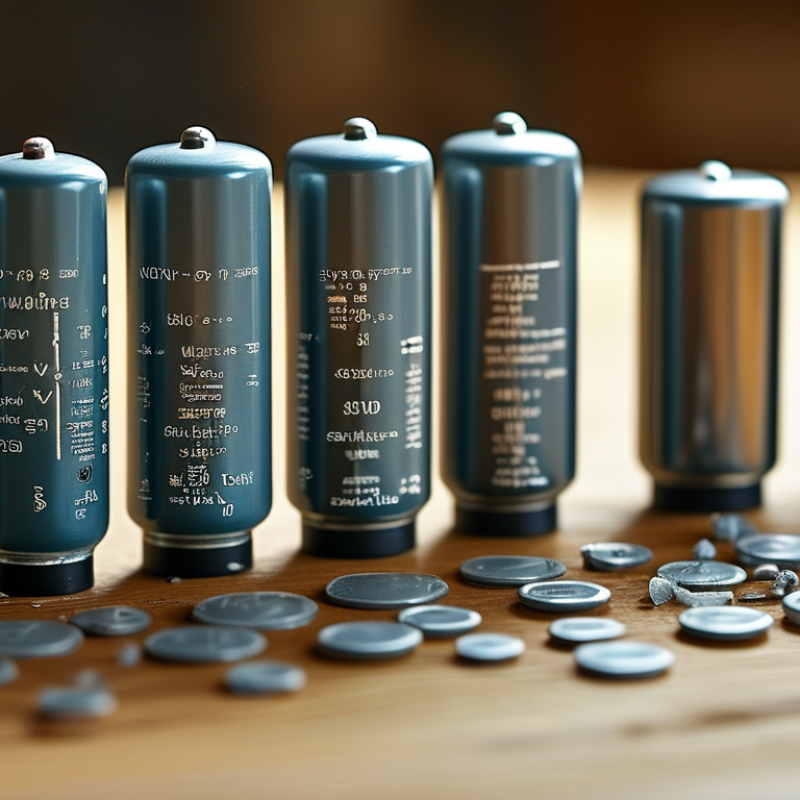
Resonant capacitors play a critical role in various electronic applications. They store and release electrical energy in sync with inductor components. This interaction creates resonant circuits that optimize performance in devices like oscillators and filters. According to industry reports, the demand for resonant capacitors is growing, driven by advancements in technology and increased applications in renewable energy systems.
When selecting resonant capacitors, consider their voltage ratings and capacitance values. These parameters are essential for ensuring the proper functioning of the circuit. Capacitors should also have low Equivalent Series Resistance (ESR) to minimize energy losses. A recent study revealed that capacitors with a lower ESR can enhance efficiency by up to 15%.
Tip: Always check the temperature coefficient of capacitors. It affects their behavior under different thermal conditions.
Another important factor is the dielectric material used in capacitors. Materials like ceramic or aluminum electrolytic have different properties, influencing performance. For critical applications, high-quality capacitors with stable specifications are vital for reliability. Research indicates that using high-grade materials can significantly extend the lifespan of these components.
Tip: Evaluate capacitor ratings and derating factors based on the application environment. This practice can prevent early failures.
By understanding the functionality of resonant capacitors, you can make informed choices that impact overall circuit performance. Balancing specifications with application requirements ensures optimal energy management in your systems.
Types of Resonant Capacitors: Characteristics and Applications
When selecting resonant capacitors, understanding their types and applications is crucial. Different capacitors have distinct characteristics that impact performance. Ceramic capacitors are known for their stability and reliability in high-frequency circuits. However, they may not handle voltage spikes well. Film capacitors offer excellent reliability, but they can be bulkier. Electrolytic capacitors are preferred for larger capacitance needs, yet they have a shorter lifespan.
Tips: Always check the voltage ratings before installation. A capacitor rated too low can fail unexpectedly.
Tantalum capacitors provide compact solutions with high capacitance. Despite this, they are sensitive to capacitance variance. For high-energy applications, ceramic capacitors can be a better choice. Their low equivalent series resistance (ESR) means less heat generation. Yet, costs can be a consideration, especially in large-scale applications.
Tips: Consider the working temperature range of your environment. Capacitors failing under extreme heat can lead to circuit failures. Choosing the right type involves weighing these factors carefully. Trust your data sheets for specifications. Celebrate and embrace the nuances in performance. They often inform the best decisions for your projects.
Factors to Consider When Selecting Resonant Capacitors
Choosing the right resonant capacitors demands careful consideration. One critical factor is the voltage rating. Ensure the capacitor can handle peak voltages in your application. Overspecifying voltage can lead to increased costs. Under-specifying may result in failure.
Another important aspect is the capacitance value. This value affects the resonant frequency of your circuit. Too high or too low a capacitance can lead to inefficiencies. Consider the temperature coefficient as well. Capacitors behave differently at various temperatures, impacting performance.
Lastly, think about the physical size and packaging. Smaller capacitors may fit tighter spaces but might sacrifice performance. Ease of soldering is essential too. Assessing these factors can prevent frustration later. Strive for a balance, but remember that no solution is perfect. Continuous evaluation and adjustments are necessary in the design process.
Evaluating Capacitor Ratings: Voltage, Capacitance, and ESR
Choosing the right resonant capacitors can be a daunting task, especially with many factors to consider. Evaluating capacitor ratings is crucial. Three key ratings to focus on are voltage, capacitance, and equivalent series resistance (ESR). Each plays a distinct role in the capacitor's performance in a circuit.
Voltage rating indicates the maximum voltage the capacitor can handle. Exceeding this can lead to failure. Many designers tend to overlook this aspect, thinking they can work close to the limit. This mindset can lead to catastrophic failures. Capacitors also have capacitance values that dictate how much charge they can store. Be sure to match this with your circuit's needs. Underestimating capacitance can severely impact performance.
ESR is another critical aspect. It represents the resistance that a capacitor exhibits at a specific frequency. A low ESR is generally preferred as it indicates better efficiency and less heat generation. However, achieving the right balance can be tricky. Some might lean towards ultra-low ESR types without considering other ratings. This oversight could lead to system instability. It’s essential to evaluate each rating carefully for effective component selection.
Applications of Resonant Capacitors in Various Industries
Resonant capacitors find applications in diverse industries due to their unique properties. In automotive electronics, they enhance the efficiency of power converters. A recent industry report indicated that over 40% of electric vehicles will employ resonant circuits by 2025. This shift reflects the industry's move towards lighter, more compact systems that improve overall performance and energy efficiency.
In telecommunications, resonant capacitors are crucial for signal processing. They filter noise, helping maintain signal integrity. Reports suggest that the telecom sector will invest more than $200 billion in enhancing network infrastructure by 2023. Higher quality capacitors may lead to improved data transfer rates and reduced latency. However, ensuring compatibility with existing systems can be challenging.
The renewable energy sector also relies on resonant capacitors in power inverters. As global investment in renewables exceeds $2.3 trillion, the need for efficient energy conversion is paramount. These capacitors optimize energy flow and enhance the reliability of solar and wind systems. Industry insights indicate this trend is expected to grow, but considerations about longevity and heat dissipation remain critical.
Applications of Resonant Capacitors in Various Industries