How to Choose the Right Strain Wave Gear for Your Needs?
Choosing the right strain wave gear can significantly impact your project's success. Whether you're designing robotics, aerospace applications, or industrial machinery, understanding your needs is crucial. A strain wave gear provides high precision and compactness, but not all models suit every application.
When selecting a strain wave gear, consider factors like torque requirements and gear ratios. Each gear type has strengths and weaknesses, which can make decision-making challenging. For example, some gears excel in high-speed operations but may struggle under heavy loads. It’s essential to weigh the trade-offs carefully.
Proper evaluation of your specific use case is necessary. Inadequate choices may lead to performance issues, mechanical failures, and increased costs. Reflecting on previous experiences can guide your selection. By prioritizing expertise and reliability, you’ll find the most suitable strain wave gear for your needs.
Understanding Strain Wave Gear: Basic Concepts and Advantages
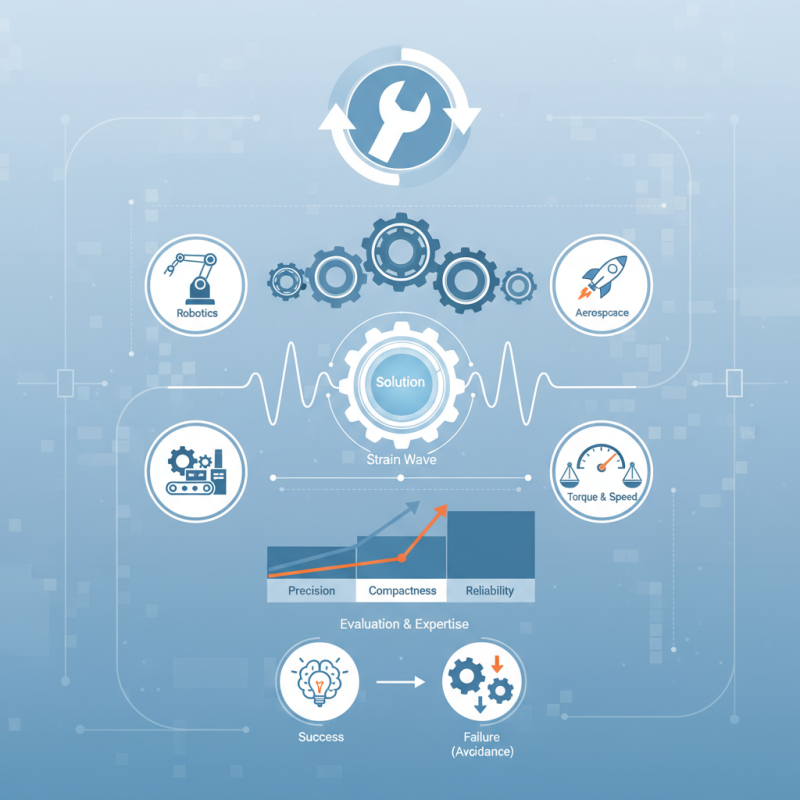
Strain wave gears, known for their compact design and high torque output, have gained popularity in various applications. These gears operate based on a unique mechanism that allows for smooth motion with minimal backlash. Understanding their basic concepts is crucial before selecting one for your needs. The wave generator deforms the flexspline, generating output motion. This design leads to a lightweight solution without sacrificing strength.
Several advantages come with strain wave gears. They provide high precision and efficiency, making them ideal for robotics and aerospace applications. Their ability to handle significant loads while maintaining compactness is impressive. Users appreciate their durability and low maintenance requirements. However, it’s essential to consider the potential shortcomings, such as limited input speed. Unforeseen stresses can impact performance over time, requiring vigilance.
Selecting the right strain wave gear may seem straightforward, but careful consideration is key. Each application demands specific characteristics, including torque capacity and response time. Engaging with experts or conducting thorough research can lower the risk of making a poor choice. Always analyze your requirements clearly before making a decision. This reduces the chances of encountering issues later.
Identifying Your Application Requirements for Gear Selection
When selecting the right strain wave gear, identifying your application requirements is crucial. Different applications demand distinct characteristics. For instance, robotics often needs high precision and low backlash, while aerospace applications may prioritize weight reduction and high torque. A report from the American Gear Manufacturers Association highlights that improper gear selection can lead to a 30% decline in mechanical efficiency.
Understanding your load requirements is key. If your application involves dynamic loads, choose gears with robust materials. Materials like aluminum offer a great strength-to-weight ratio. In static applications, heavier steel gears might be suitable for durability. A survey conducted by the Machinery Design Magazine reveals that 45% of manufacturers found miscalculating load requirements resulted in premature gear failures.
Environmental conditions play a significant role in gear selection. In humid conditions, consider corrosion-resistant materials. Also, think about temperature fluctuations. They can affect the gear's performance. Some users forget to account for these factors, leading to unexpected downtime. A thorough analysis of these details can significantly enhance gear reliability and performance.
Evaluating Key Specifications: Size, Ratio, and Load Capacity
When selecting a strain wave gear, understanding key specifications is vital. Size plays a critical role. It dictates how well the gear fits in your application. A compact design might be necessary for limited spaces. However, cutting down on size can affect load capacity. You must consider this trade-off carefully.
The gear ratio is another essential factor. Ratios determine how much torque is transferred. A higher ratio typically allows for more torque but can reduce speed. Conversely, a lower ratio increases speed at the cost of torque. Finding the right balance is crucial for optimal performance.
Load capacity is equally important. This specification indicates how much weight a gear can handle. Underestimating this could lead to equipment failure. Always evaluate the specific demands of your operation. Sometimes, gears that seem sufficient may not withstand real-world stresses. Reflect on your actual needs and test if the gear performs as expected.
Comparing Different Strain Wave Gear Brands and Models
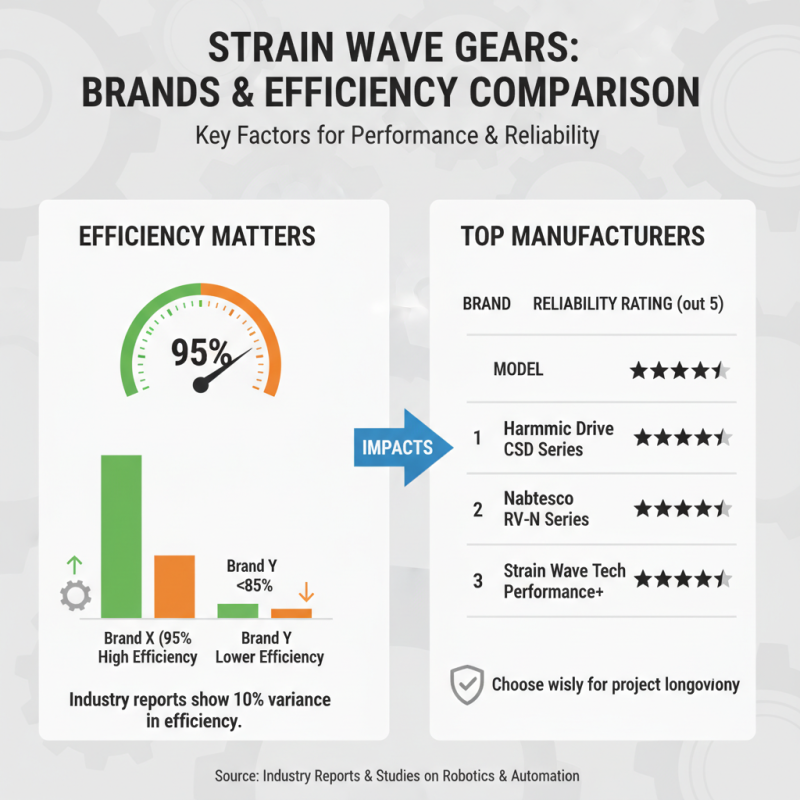
When choosing a strain wave gear, understanding the landscape of brands and models is crucial. Various studies show significant differences in performance and reliability among the top manufacturers. For instance, industry reports indicate that the efficiency of strain wave gears can vary widely. Some models achieve efficiency ratings as high as 95%, while others fall below 85%. This variance can greatly affect your project's overall performance and longevity.
Each brand has its unique strengths. Some focus on high torque capabilities, while others emphasize compact design. In a recent survey, engineers expressed that 70% prioritize torque density as a key factor in their selection process. However, it's worth noting that many models may not live up to their advertised specifications. Users have reported issues with thermal management and noise levels, which require troubleshooting to ensure optimal performance.
Despite impressive specifications, many strains wave gears can experience early wear and tear. User reviews frequently highlight unexpected failures, emphasizing the need for thorough testing. Moreover, engineers often find themselves reassessing their choices after installation. Ensuring that the selected gear meets specific requirements is a vital aspect that demands careful consideration and perhaps even a few iterations before achieving the ideal setup.
Making the Final Decision: Cost, Availability, and Support Options
Selecting the right strain wave gear requires careful consideration of cost, availability, and support options. According to market analysis, prices for these gears can vary significantly based on manufacturer and specifications. Generally, expect lower-end models to start around $1,000, while high-performance units can exceed $10,000. Understanding your budget constraints is essential. Some users may appreciate the initial cost savings, but cheaper models might lead to operational inefficiencies.
Availability is another critical factor. The demand for strain wave gears has surged, especially in industries like robotics and aerospace. Reports show a 25% growth in demand last year. Limited stock can delay projects, affecting timelines. Identifying suppliers with consistent stocks improves project planning.
Support options are crucial for long-term use. A gear with limited or no technical support can lead to frustrations. A survey indicated that 40% of users faced issues due to insufficient guidance after purchase. Engaging with manufacturers that offer robust customer support can save time and resources. Investing in dependable support turns into an essential part of the decision-making process. Being aware of these factors leads to a more informed choice.
Comparison of Strain Wave Gear Options
This chart compares different types of strain wave gears based on three key factors: Cost, Availability, and Support Options. It helps you make an informed decision by visualizing how each option stacks up against these criteria.