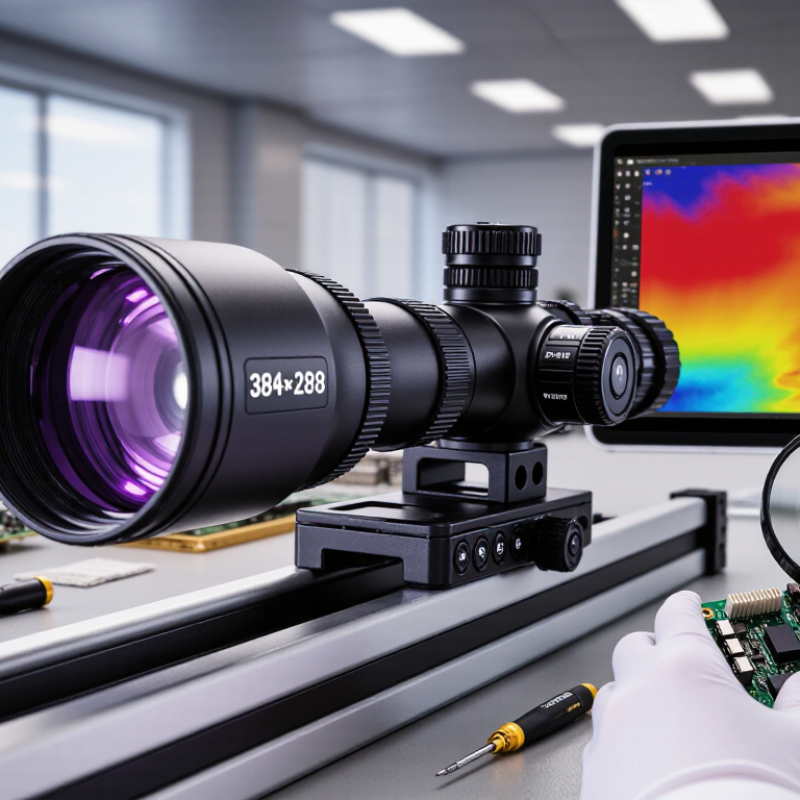
| Thermal Sensor Resolution | 256 × 192 for entry-level use; 384 × 288 for general-purpose field use; 640 × 512 for greater identification detail and longer observation distances. | Confirm native sensor resolution, pixel pitch, refresh rate, detector origin, calibration method, and image samples at the intended distance. | 20% | Higher native resolution can reduce the need for early replacement when identification requirements increase. |
| Indicative Unit Pricing | Approximately US$800–2,000 for 256 × 192; US$1,500–4,000 for 384 × 288; US$3,000–10,000 or more for 640 × 512, depending on optics, features, and sales channel. | Request a complete quotation covering scope, mount, battery, charger, software, export documentation, shipping, taxes, and service fees. | 15% | Compare total cost of ownership rather than purchase price alone. |
| Optical Configuration | Common objective lenses range from about 19 mm to 75 mm. Smaller lenses provide a wider field of view; larger lenses generally support longer detection and recognition distances. | Check focal length, aperture, field of view, manual or motorized focus, close-focus distance, and whether the lens can be replaced or upgraded. | 10% | A suitable lens configuration prevents performance compromises and costly replacement. |
| Customization Capability | Common options include logo and housing color, reticle design, firmware language, user interface, mounting interface, battery configuration, and packaging. | Ask for the customization list, engineering charges, minimum order quantity, sample approval process, ownership of firmware changes, and change-control procedure. | 10% | Documented customization processes reduce compatibility, quality, and reordering risks. |
| Customization Lead Time | Basic branding may take about 2–6 weeks; mechanical, firmware, or optical modifications commonly require approximately 8–20 weeks after technical approval. | Confirm prototype, validation, tooling, production, inspection, and shipment timelines separately. | 5% | Predictable lead times support inventory planning and reduce operational disruption. |
| Image Performance | Evaluate NETD, refresh rate, image processing, contrast modes, digital zoom, hot-spot tracking, and performance in fog, rain, and low-temperature scenes. Lower NETD generally indicates better sensitivity. | Request standardized test footage and published specifications under identical environmental and target conditions. | 15% | Consistent field performance is more valuable than high specifications that cannot be reproduced in testing. |
| Battery and Power System | Many compact uncooled thermal scopes provide roughly 5–10 hours of operation, depending on display, recording, wireless functions, temperature, and battery capacity. | Verify runtime test conditions, battery type, charging standard, replacement availability, cold-weather performance, and external power support. | 8% | Standardized and replaceable batteries usually simplify maintenance and extend product usability. |
| Durability and Environmental Protection | For outdoor equipment, IP-rated dust and water protection, shock resistance, operating temperature, and recoil tolerance should match the intended platform and environment. | Request test standards, ingress-protection rating, recoil test method, drop-test results, operating temperature range, and production inspection records. | 7% | Verified durability lowers failure rates, returns, and service costs. |
| Warranty and After-Sales Service | A 1–3 year limited warranty is commonly offered for electronic optics, with exclusions for misuse, unauthorized modification, and consumable components. | Confirm warranty duration, repair or replacement policy, turnaround target, international service address, spare-parts availability, and firmware support period. | 7% | Accessible service and parts can be more important than a small difference in initial price. |
| Supply Continuity and Compliance | Lead times, component availability, export controls, regional certifications, software support, and end-of-life notification policies vary by market and product configuration. | Check production capacity, quality certifications, traceability, regulatory documents, export classification, lifecycle roadmap, and written end-of-life notice periods. | 3% | Stable supply and compliance documentation reduce procurement and replacement risks. |