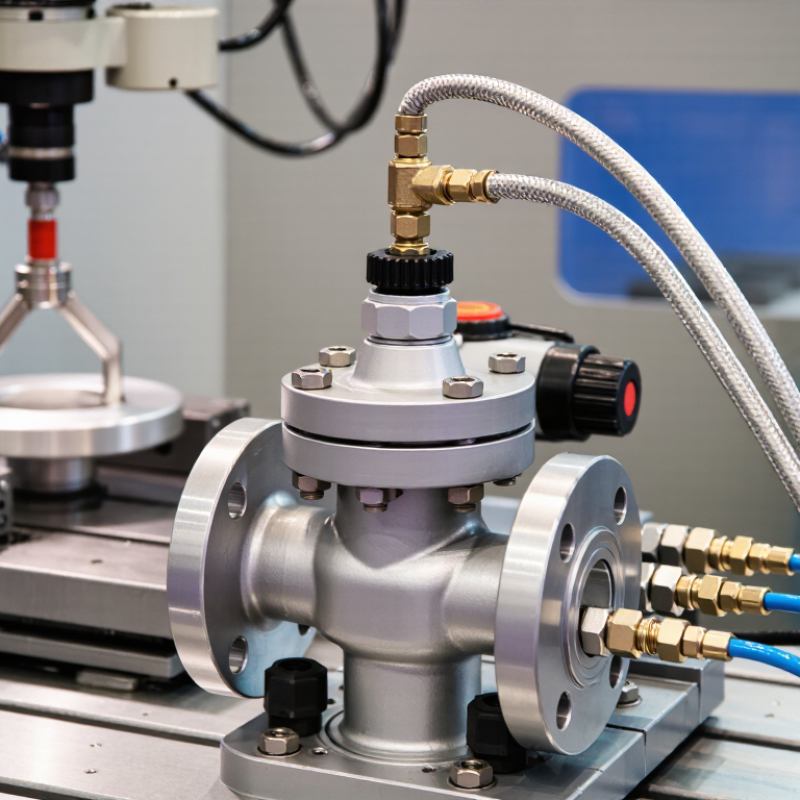
| Mechanical Differential-Pressure Sequence Valve | Opens or closes automatically when the pressure difference reaches a preset mechanical threshold, usually through a diaphragm, piston, or spring mechanism. | Atmospheric pressure down to approximately 10-2 mbar, depending on seal design and pressure-setting range. | Pressure differential; no external electrical supply required. | Typically 10-4 to 10-6 mbar·L/s with elastomer seals. | Approximately 50 ms to 1 s, depending on pressure change and valve size. | Automatic pump sequencing, rough-vacuum systems, and simple interstage protection. | Simple, self-contained, low energy consumption, and suitable for fail-safe mechanical operation. | Limited adjustment accuracy; switching pressure can vary with temperature, spring aging, and orientation. |
| Pneumatically Actuated Sequence Valve | A pneumatic actuator moves the valve element after receiving a control pressure signal from a pressure switch, controller, or pilot circuit. | Atmospheric pressure down to approximately 10-4 mbar for suitable elastomer-sealed designs. | Compressed air or inert gas, commonly 3 to 6 bar gauge. | Typically 10-5 to 10-7 mbar·L/s with properly maintained seals. | Approximately 30 ms to 500 ms, depending on actuator volume and control-line length. | Multi-pump systems, automated vacuum lines, load-locks, and processes requiring remote control. | Fast operation, good repeatability, flexible fail-open or fail-closed configurations. | Requires a clean control-gas supply and additional pneumatic components. |
| Solenoid-Actuated Sequence Valve | An electromagnetic coil shifts a plunger or pilot mechanism to open or close the vacuum path when energized or de-energized. | Typically atmospheric pressure down to approximately 10-3 mbar, depending on construction and seal material. | Direct electrical control, commonly 12, 24, or 110/230 V systems depending on the installation. | Typically 10-5 to 10-7 mbar·L/s for suitable vacuum-rated products. | Approximately 10 ms to 200 ms. | Compact automated equipment, low-to-medium vacuum systems, and applications requiring straightforward electrical integration. | Compact design, simple wiring, rapid switching, and easy integration with programmable controllers. | Coil heating, electrical power dependence, and possible sensitivity to contamination or voltage variation. |
| Pilot-Operated Sequence Valve | A small pilot valve controls a larger diaphragm or piston actuator, allowing a low-power signal to operate a larger valve. | Atmospheric pressure down to approximately 10-4 mbar, depending on the main-valve seal arrangement. | Pneumatic, solenoid-piloted, or pressure-controlled. | Typically 10-6 to 10-8 mbar·L/s when correctly specified. | Approximately 20 ms to 300 ms. | Large-aperture vacuum manifolds, high-throughput pumping lines, and automated process systems. | Low control power, high flow capacity, and effective operation of larger valve sizes. | More components to maintain; requires correct pilot pressure and control sequencing. |
| Normally Closed (NC) Sequence Valve | Remains closed without an actuation signal or sufficient pressure condition and opens only when the defined sequence is satisfied. | Application-dependent; commonly used from atmosphere to rough or medium vacuum. | Spring return, pneumatic, solenoid, or motorized actuation. | Determined by seal type and valve construction; elastomer-sealed versions commonly use 10-5 to 10-7 mbar·L/s specifications. | Approximately 20 ms to 1 s. | Protecting a chamber from accidental venting, isolating a pump during shutdown, and interlocked vacuum transfer. | Provides a closed position during loss of power or control signal when configured with spring return. | May restrict flow during startup and can increase cycle time in high-throughput systems. |
| Normally Open (NO) Sequence Valve | Remains open without an actuation signal and closes when the specified pressure, timing, or control condition is reached. | Application-dependent; commonly used from atmosphere to rough or medium vacuum. | Spring return, pneumatic, solenoid, or motorized actuation. | Determined by seal type and valve construction; commonly specified around 10-5 to 10-7 mbar·L/s for elastomer-sealed designs. | Approximately 20 ms to 1 s. | Maintaining a vent or bypass path, protecting equipment from overpressure, and providing flow during loss of control power. | Supports fail-open operation and can maintain pressure equalization or cooling flow during a fault. | Can allow unwanted gas entry or process exposure if the fail-open behavior is not suitable. |