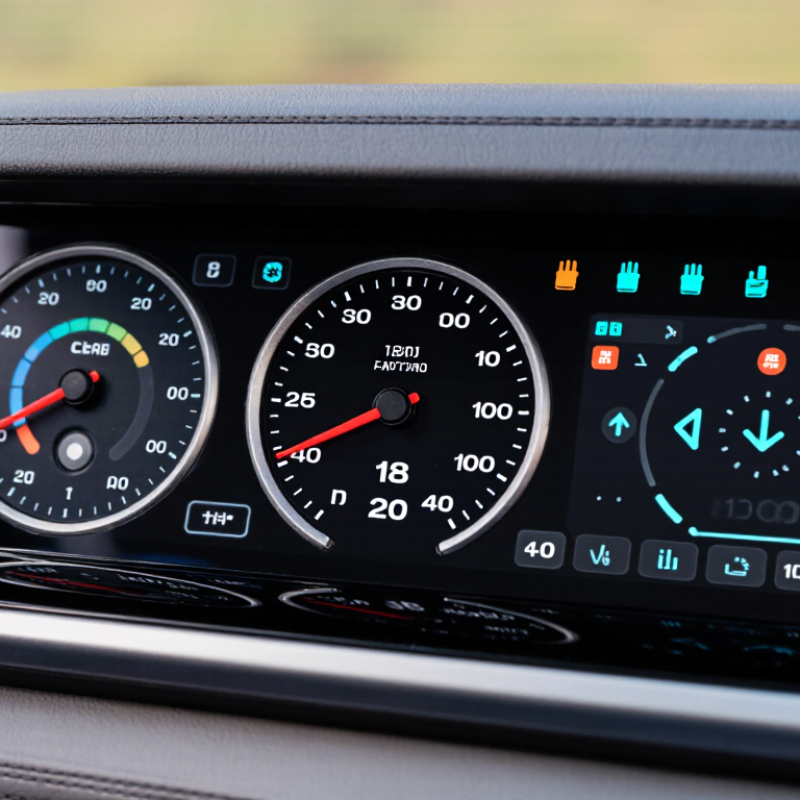
Dashboard instruments turn vehicle conditions into information a driver can read at a glance. The main types are analog gauges, digital instrument clusters, warning lights, and head-up displays.
Analog gauges use moving needles to show speed, engine speed, fuel level, or temperature. Their markings are easy to recognize, though small scales can be hard to read in dim light.
Digital clusters present similar information on screens, often with adjustable layouts. Warning lights and telltales use symbols or colors to signal conditions such as low fuel or an unfastened seat belt. They are not all the same: some indicate routine status, while others call for prompt attention. That distinction is easy to miss. Head-up displays project selected readings near the driver’s forward view, reducing the need to look down, but glare and poor positioning can still interfere.
Readability matters more than visual novelty.
NHTSA’s 2013 Visual-Manual Driver Distraction Guidelines use glance-duration criteria of two seconds or less per glance and 12 seconds or less of total eyes-off-road time for evaluated tasks. These are interface evaluation criteria, not a guarantee that every dashboard is safe.
In practice, clear labels, consistent warning colors, and uncluttered layouts help drivers find information quickly. A display can still feel confusing when too many readings compete for attention.