How to Drive Technology Innovation for Business Growth in 2025
In the rapidly evolving landscape of business, the necessity to effectively drive technology innovation has become paramount for sustainable growth. As we look towards 2025, the integration of advanced technologies such as artificial intelligence, machine learning, and automation presents unprecedented opportunities for organizations to enhance their operational efficiency and customer engagement. According to a report by McKinsey, companies that successfully leverage digital technologies can experience a revenue increase of up to 25% over five years, highlighting the critical role of technology in shaping competitive advantage.
Industry expert Dr. Emily Chang, a renowned technology strategist, emphasizes the importance of embracing innovation to drive technology transformation. She states, "To drive technology effectively, businesses must cultivate a culture of experimentation and agility, allowing them to adapt swiftly to emerging trends." This sentiment echoes the findings of a recent Deloitte study, which noted that organizations prioritizing innovation strategies are 1.6 times more likely to achieve significant growth. As we prepare for 2025, it is essential for companies to not only adopt cutting-edge technologies but also foster an environment where technological creativity can thrive, thus ensuring long-term resilience and success.

Driving Innovation through Emerging Technologies: The 2025 Landscape
In the fast-evolving landscape of 2025, emerging technologies are set to redefine business operations and drive innovation. With advancements in artificial intelligence, the Internet of Things (IoT), and blockchain, organizations have unprecedented opportunities to enhance efficiency, create new revenue streams, and improve customer experiences. AI, in particular, will transform data analysis and decision-making, allowing companies to leverage big data for predictive insights and personalized services. By embracing automation and intelligent systems, businesses can streamline their processes, thereby reducing costs and increasing productivity.
Moreover, the integration of IoT will enable businesses to connect and monitor devices in real-time, fostering a more interconnected and responsive operational model. This connectivity not only enhances supply chain management but also facilitates proactive maintenance and resource optimization. As companies navigate through 2025, the adoption of these technologies will fuel innovation, encouraging organizations to explore new business models and collaborative ecosystems. Organizations that invest in these emerging technologies will be better positioned to adapt to market changes and meet evolving consumer demands, ultimately achieving sustainable growth in a competitive landscape.
Integrating AI and Data Analytics for Enhanced Decision Making
Harnessing the power of AI and data analytics is paramount for organizations seeking to drive technology innovation and business growth in 2025. By integrating these advanced technologies into their operations, businesses can transform raw data into valuable insights that enhance decision-making processes. AI algorithms can analyze vast datasets to uncover trends and patterns that might not be visible to human analysts, thereby enabling companies to make informed choices rapidly and efficiently.
Moreover, data analytics can provide a comprehensive view of customer behavior, market conditions, and operational efficiency. This newfound clarity allows businesses to anticipate market shifts, respond to consumer needs more effectively, and strategize their growth initiatives with a data-driven approach. By leveraging predictive analytics, organizations can identify potential challenges and opportunities before they arise, ensuring they stay ahead of the competition while fostering a culture of innovation.
In this evolving landscape, the integration of AI and data analytics will be pivotal for businesses aiming to thrive in an increasingly complex and dynamic environment.
Leveraging IoT for Operational Efficiency and Customer Engagement
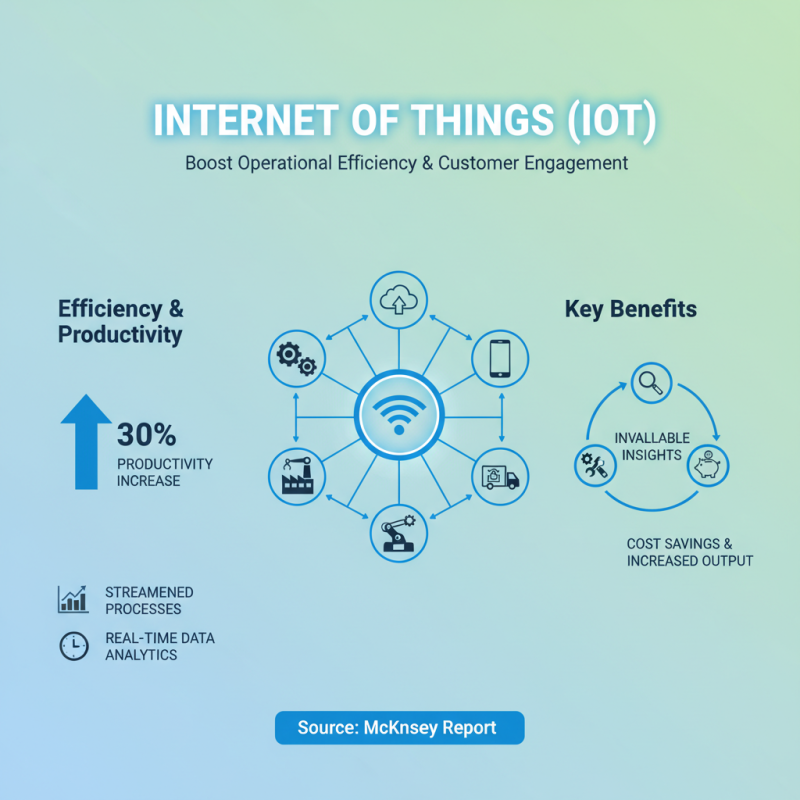
The Internet of Things (IoT) has emerged as a transformative technology that can significantly boost operational efficiency and enhance customer engagement. According to a recent report by McKinsey, companies that have successfully implemented IoT solutions have seen productivity improvements of up to 30%. This efficiency is primarily due to the streamlined processes and real-time data analytics that IoT offers. By connecting devices and systems, businesses can gain invaluable insights into their operations, allowing for immediate adjustments that lead to cost savings and increased output.
Moreover, IoT facilitates enhanced customer engagement by enabling personalized experiences through data-driven insights. A study by Gartner showed that 63% of organizations that leverage IoT have reported a marked improvement in customer satisfaction levels. By utilizing connected devices, firms can monitor customer preferences and behaviors, allowing them to tailor offerings to individual needs. For instance, smart sensors can track how customers interact with products, providing companies with the information necessary to optimize their services and products to better meet customer expectations, ultimately driving loyalty and repeat business. As businesses look toward 2025, the strategic adoption of IoT solutions will be integral to fostering growth in an increasingly competitive landscape.
Harnessing Blockchain for Transparency and Supply Chain Innovation
Blockchain technology has emerged as a pivotal force in enhancing transparency and innovation within supply chains. By providing a decentralized ledger, it enables all stakeholders to access real-time information regarding the movement of goods. This accessibility not only builds trust among partners but also reduces the risk of fraud and errors. In 2025, businesses that harness blockchain will likely enjoy a competitive edge by ensuring that products can be traced back to their origin, thus assuring consumers of authenticity and quality.
Moreover, the application of smart contracts within blockchain systems streamlines operations by automating processes. These self-executing contracts can enforce agreements without the need for intermediaries, reducing transaction times and costs. As companies tackle complex supply chain challenges, the integration of blockchain technology allows for increased efficiency and responsiveness. In a rapidly changing market, those who adopt these innovations will be better positioned to adapt to consumer demands and operational hurdles, ultimately driving sustained business growth.
Adopting Agile Methodologies to Accelerate Technological Adaptation
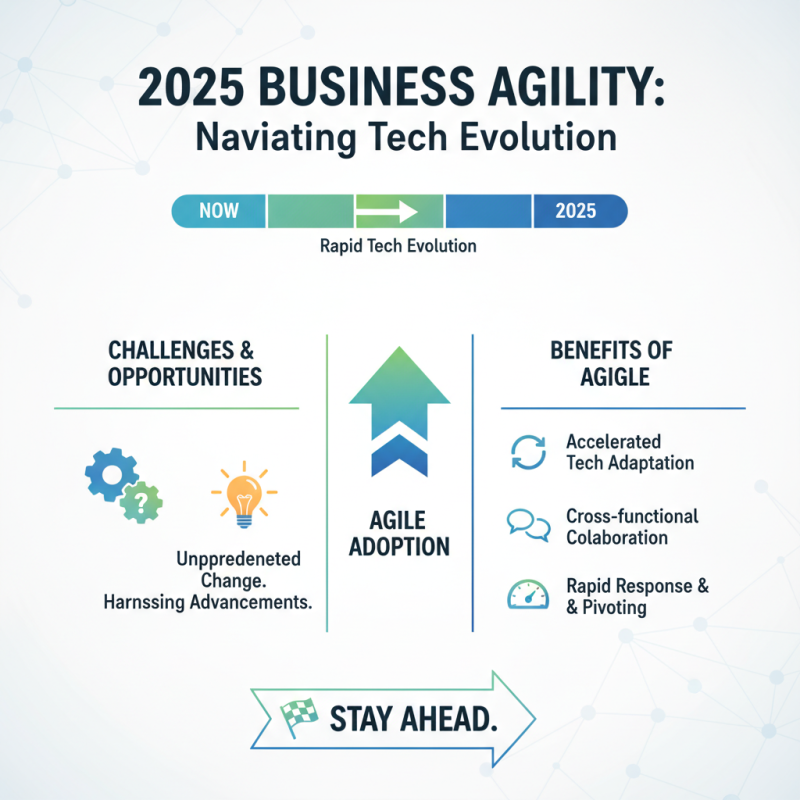
In 2025, businesses will face unprecedented challenges and opportunities as technology continues to evolve rapidly. To harness the potential of these advancements, adopting agile methodologies will be crucial for organizations seeking to accelerate their technological adaptation. Agile practices, characterized by iterative development, cross-functional collaboration, and a focus on user feedback, empower teams to respond swiftly to changes in the market and customer needs. This flexibility allows businesses to pivot their strategies and solutions in real-time, ensuring they stay ahead in an ever-changing landscape.
Implementing agile methodologies requires a cultural shift within organizations, emphasizing transparency, continuous improvement, and responsiveness. Teams are encouraged to work in sprints, fostering frequent communication and collaboration that promote innovative problem-solving. By involving stakeholders throughout the development process, businesses can gain valuable insights that help refine products and services, ultimately driving better results and alignment with market demands. Moreover, this iterative approach reduces the risks associated with technological investments, allowing companies to experiment and learn without large upfront costs. Thus, agility becomes not just a methodology but a vital driver of technological innovation and, consequently, business growth in the digital age.