Why Are Automation Solutions Essential for Modern Businesses?
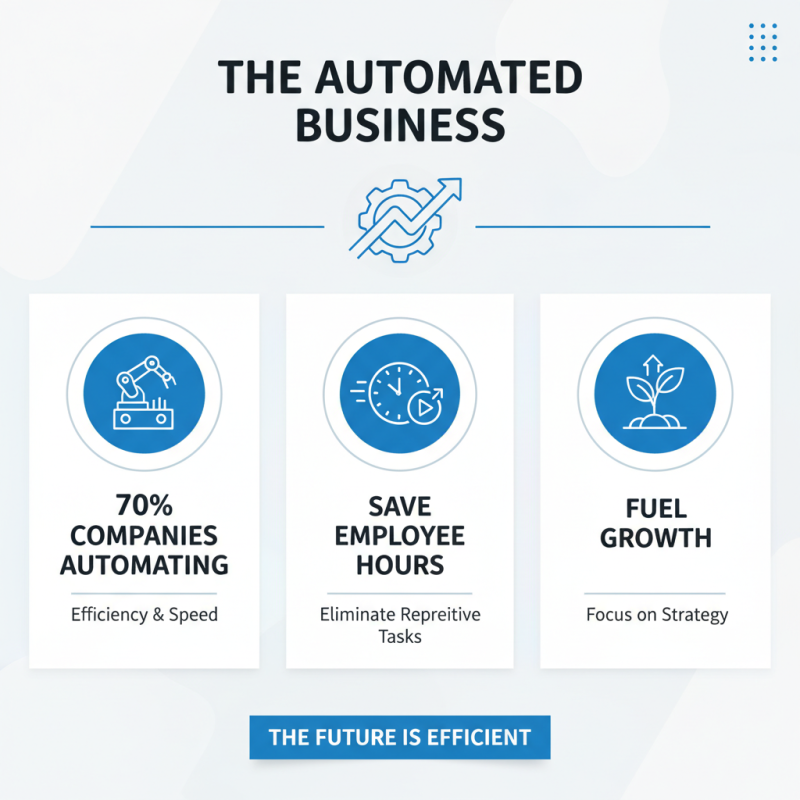
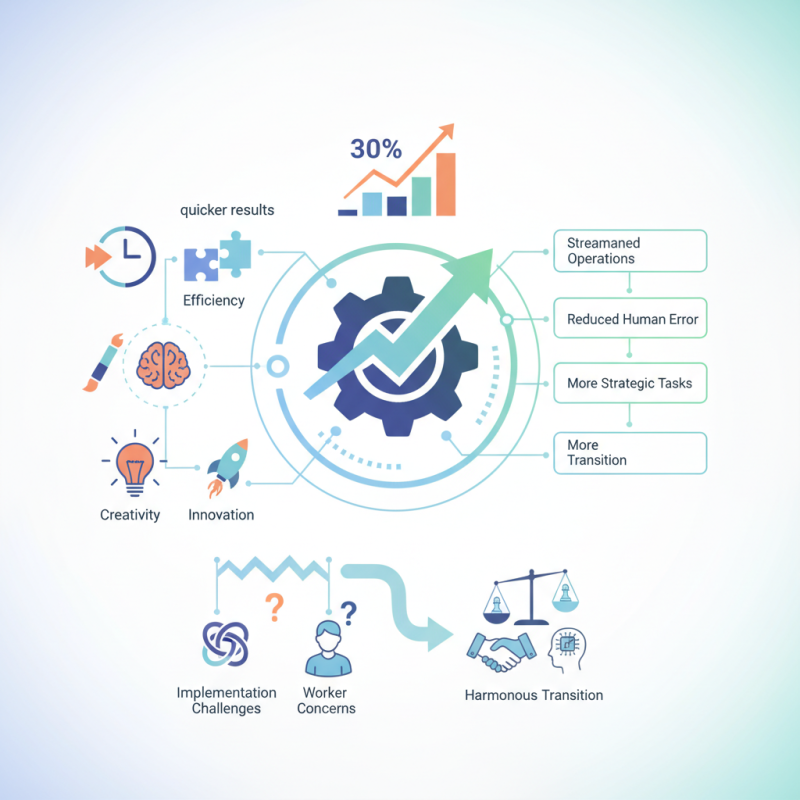
In today’s fast-paced business landscape, automation solutions are no longer optional. According to a recent report by McKinsey, companies that invest in automation can see productivity gains of up to 30%. These figures emphasize the growing importance of efficiency in operations. As organizations face mounting pressure to deliver quicker results, automation becomes crucial for staying competitive.
Experts in the field, like Dr. Emily Chen, a renowned automation strategist, state, “Automation solutions can transform businesses not just in productivity, but in creativity and innovation.” This statement reflects a changing paradigm where technology enables human capabilities rather than replaces them. Automation solutions help businesses streamline operations, reducing human error and freeing up resources for more strategic tasks.
However, the transition to automation is not without challenges. Many organizations struggle with implementation and integration issues. Workers may feel threatened by the introduction of new technologies. A thoughtful approach is necessary to address these concerns and ensure a harmonious transition. Balancing technology with human input remains a critical factor in leveraging automation solutions effectively in modern businesses.
The Role of Automation in Enhancing Operational Efficiency
In the fast-paced world of business, operational efficiency is key. Automation plays a crucial role in achieving this. By streamlining repetitive tasks, companies can focus on strategic initiatives. Automation reduces human error and increases accuracy. For instance, processing invoices through automated systems minimizes delays and mistakes.
Tips: Identify tasks that consume time. Delegate them to automated solutions. This gives your team more capacity for creative work.
Automation also fosters better data management. With automated systems, data entry and analysis become seamless. Employees can easily access real-time information, boosting decision-making. Nevertheless, not all processes should be automated. Some tasks require a human touch. Assess which areas truly benefit from automation.
Tips: Regularly review processes for potential enhancements. Engage employees to understand their pain points. Their insights can highlight areas for improvement.
Impact of Automation on Operational Efficiency (2023)
Impact of Automation on Cost Reduction and Profit Margins
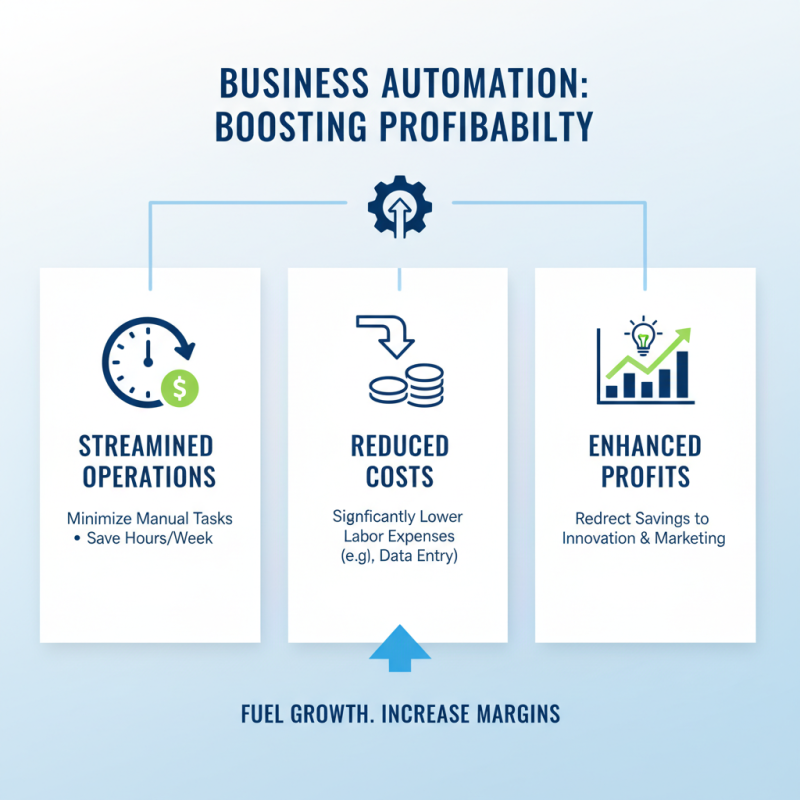
In today's fast-paced business environment, automation allows companies to streamline operations. This can dramatically reduce costs and enhance profit margins. By implementing automation, businesses can minimize manual tasks, reducing labor costs significantly. For example, automating data entry can save hours of work each week. These savings can be redirected towards innovation or marketing efforts.
However, the transition to automation is not always smooth. Companies face challenges in integrating new technologies. Employees may feel threatened by potential job losses. This can lead to resistance and decreased morale. It's crucial for businesses to address these concerns through transparent communication. Training programs can also help staff adapt to new roles. This investment can ultimately lead to greater productivity and efficiency.
Moreover, while automation can cut costs, it can also create new expenses. Initial setup costs for automated systems can be high. Regular maintenance is essential too. Businesses must evaluate whether the long-term savings outweigh these upfront investments. Therefore, careful planning and regular assessments of automated processes are needed to ensure they remain cost-effective.
How Automation Solutions Improve Customer Experience and Satisfaction
Automation solutions are transforming the way businesses interact with customers. According to a recent study,
75% of consumers prefer self-service options for simple tasks.
This trend highlights the importance of providing automated solutions that enhance customer experiences.
When customers can resolve issues quickly, satisfaction increases.
However, not all automation strategies meet expectations. Some implementations can feel impersonal and frustrating.
In fact, a survey found that 40% of consumers believe chatbots do not understand their needs.
This gap can lead to dissatisfaction. Businesses must ensure their automation tools are user-friendly and genuinely assist customers.
Furthermore, the use of automation can lead to significant time savings, with some companies reporting up to a
30% reduction in service response times. Yet, this benefit can be overshadowed if
automation creates barriers. For instance, too many automated steps may confuse users. Striking a balance is key.
Automation should simplify workflows while maintaining a human touch, ensuring customers feel valued.
Future Predictions: The Growth of Automation in Various Sectors
Automation is reshaping various sectors rapidly. As businesses strive for efficiency, automation offers powerful solutions. Industries like manufacturing and logistics have adopted robotics. These innovations streamline workflows and reduce human error. Companies can save costs and time through automation. However, it is not without challenges.
In healthcare, automation is transforming patient care. But the reliance on technology raises questions. What happens when systems fail? There is a risk of data breaches, and patient safety may be compromised. Training staff to interact with automated systems is vital but often overlooked.
The finance sector is also seeing growth in automation. Algorithms now handle tasks like trading and risk assessment. Yet, the accuracy of these algorithms must be scrutinized. What if they make poor decisions? Businesses must navigate these uncertainties. Embracing automation requires careful planning and ongoing evaluation.
Why Are Automation Solutions Essential for Modern Businesses?
| Sector |
Current Automation Adoption Rate |
Predicted Automation Growth (2025) |
Key Benefits |
| Manufacturing |
60% |
80% |
Increased efficiency, cost reduction |
| Healthcare |
45% |
70% |
Improved patient care, reduced errors |
| Retail |
50% |
75% |
Enhanced customer experience, inventory management |
| Finance |
55% |
78% |
Faster transactions, fraud detection |
| Logistics |
65% |
85% |
Improved delivery times, cost savings |