10 Essential Tips for Choosing the Right Strain Wave Gear
Selecting the right strain wave gear can significantly impact your mechanical design’s performance. These gears are unique in their operation, providing high torque density in a compact form. With such critical applications, understanding how to choose the right strain wave gear is essential for engineers and designers alike.
Experience shows that many face challenges in making this choice. There are various factors to consider, like load capacity, backlash, and environmental conditions. Each decision will affect the gear’s efficiency and lifespan. It can be overwhelming to sift through the technical jargon and specifications.
In this guide, we will simplify the process. You will discover practical tips that empower you to make informed decisions. By focusing on essential criteria, you can enhance your design's reliability. Keep in mind; the right gear does not merely fulfill specifications but also aligns with your project’s unique requirements.
Understanding Strain Wave Gears: A Comprehensive Overview
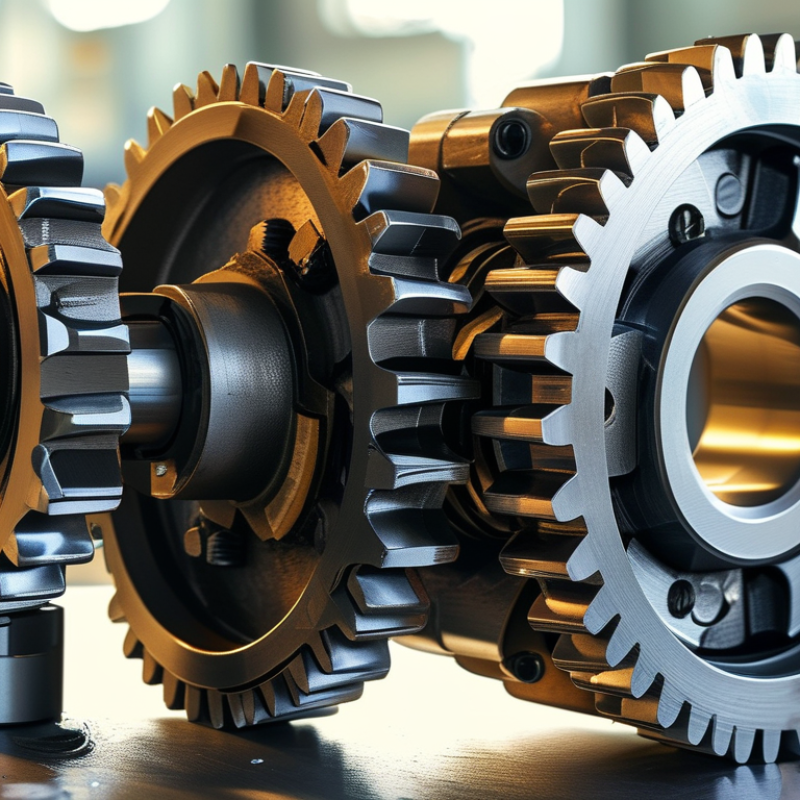
Strain wave gears, also known as harmonic gears, play a crucial role in various applications. They provide high precision and compactness, essential for robotics and aerospace engineering. According to a recent report by MarketsandMarkets, the global harmonic drive market is expected to reach over $1 billion by 2025. This highlights the growing demand for strain wave gears across industries.
Understanding their mechanics is vital. Strain wave gears utilize the flexibility of a wave generator to create strain in a circular spline. This design allows for significant speed reduction and torque multiplication. A study by the American Society of Mechanical Engineers (ASME) indicates that these gears can achieve gear ratios of up to 100:1 with minimal backlash. However, the complexity in their design can lead to challenges, such as setup and maintenance.
When selecting a strain wave gear, consider key factors such as load capacity and thermal performance. Knowledge from industry experts shows that inadequate thermal management can reduce efficiency by 30%. Yet, many overlook this factor. Properly assessing the working environment will enhance gear longevity and effectiveness. Always evaluate your specific needs to avoid potential pitfalls that could arise from miscalculations.
Key Factors Influencing Gear Performance: Load Capacity and Efficiency
When selecting strain wave gears, load capacity and efficiency stand out as key performance factors. Load capacity determines how much weight the gear can handle without failure. Reports indicate that strain wave gears can support loads ranging from a few hundred Newtons to over ten thousand, depending on the size and materials used. Understanding these ratings is crucial, as insufficient load capacity can lead to gear distortion or premature wear.
Efficiency is another critical aspect. Many high-quality strain wave gears boast efficiency ratings above 90%. However, factors such as friction, backlash, and material quality can impact this efficiency. Each design may present trade-offs. For instance, optimizing gear shape for higher efficiency might sacrifice load capacity. Others may struggle to balance size and operational load. Industry case studies suggest that inefficient gears can lead to 15-20% energy loss in applications, which adds up over time.
Engineers must prioritize these aspects carefully during selection. Seeking out reliable industry reports can help clarify the capabilities of each gear type. It’s essential to review actual performance data. There exists a learning curve regarding real-world applications. Continuous testing is necessary to evaluate gear performance and durability under various loads. Recognizing the weaknesses in previous gear choices can lead to better-informed decisions in future projects.
Material Selection for Strain Wave Gears: Affects Durability and Weight
When selecting materials for strain wave gears, durability is a primary concern. Strong materials like steel provide excellent load-bearing capabilities. However, they can also increase weight, impacting the overall performance of your machinery. Lightweight alternatives, such as aluminum or composites, reduce weight but may compromise longevity. Understanding these trade-offs is essential for decision-making.
Design considerations also play a crucial role in material selection. The right material must withstand environmental factors like temperature and corrosion. Some materials perform better in high-stress environments while others excel in less demanding conditions. Evaluate the operating conditions to find the best match.
Moreover, not all custom applications will fit the same solutions. Testing materials in real-world conditions can reveal unexpected weaknesses. This trial and error approach might lead to better choices than theoretical models alone. Being open to refining your material selection process is vital for achieving optimal performance.
Applications of Strain Wave Gears: Industry Trends and Demands
Strain wave gears are increasingly prevalent in various industries due to their compact design and high torque capabilities. These gears are utilized in robotics, aerospace, and medical devices. According to a recent market report, the strain wave gear market is projected to grow by 8.5% annually, reflecting the rising demand for precision motion systems. Companies are seeking efficient solutions to enhance machine performance and reliability.
In the robotics sector, strain wave gears provide the necessary precision for robotic arms and automation systems. Their ability to handle heavy loads while maintaining accuracy is unmatched. As the demand for automation increases, experts predict growth in sectors like manufacturing and healthcare. This has led to a surge in innovative applications for strain wave gears. Yet, with such rapid growth, manufacturers face challenges related to production quality and material sustainability.
However, not all applications will benefit equally from using strain wave gears. Some industries may require more robust solutions due to environmental factors. The need for testing and validation remains critical. Understanding the specific requirements of each application is essential. Continuous refinement of engineering processes ensures that strain wave gears meet the evolving demands of modern technology.
10 Essential Tips for Choosing the Right Strain Wave Gear - Applications of Strain Wave Gears: Industry Trends and Demands
| Tip Number |
Tip Description |
Application Area |
Industry Trend |
| 1 |
Understand load requirements |
Robotics |
Growing demand for automation |
| 2 |
Consider the torque requirements |
Aerospace |
Increased precision needs |
| 3 |
Evaluate space constraints |
Medical Devices |
Miniaturization trends |
| 4 |
Assess backlash requirements |
Industrial Automation |
Focus on precision control |
| 5 |
Select the right material |
Energy Sector |
Sustainability focus |
| 6 |
Understand heat dissipation |
Telecommunications |
Heat management innovations |
| 7 |
Determine speed ratios |
Manufacturing |
Increasing production efficiency |
| 8 |
Research maintenance needs |
Automotive |
Longer lifecycle focus |
| 9 |
Ensure compatibility with existing systems |
Robotics |
Adaptation and integration trends |
| 10 |
Consult with experts |
Various Industries |
Expertise-driven demand |
Evaluating Precision and Backlash: Measuring Gear Quality Standards
When selecting strain wave gears, precision and backlash are critical metrics. A recent industry report noted that backlash can affect performance by as much as 15%. This means that even a small deviation in gear quality can lead to significant inaccuracies, especially in high-precision applications. Measuring gear quality standards involves using specialized tools to assess backlash. A micrometer or dial indicator can provide accurate readings that ensure optimal functioning.
Understanding how to evaluate precision is vital. High-end applications often require gear systems with backlash less than 5 arc minutes. However, achieving this tight tolerance can be challenging. Manufacturers sometimes struggle to maintain consistent quality. Inconsistent machining processes or material defects contribute to variability. Therefore, an in-depth evaluation of the manufacturing process is essential.
Investing time in assessing these parameters can save time and resources in the long run. It's important to think critically about the gear assembly process. While specifications provide some guidance, real-world conditions may differ. Testing gears in actual operating environments is crucial. This hands-on approach can uncover imperfections not visible during initial assessments. Many engineers have found this approach invaluable when troubleshooting gear issues.