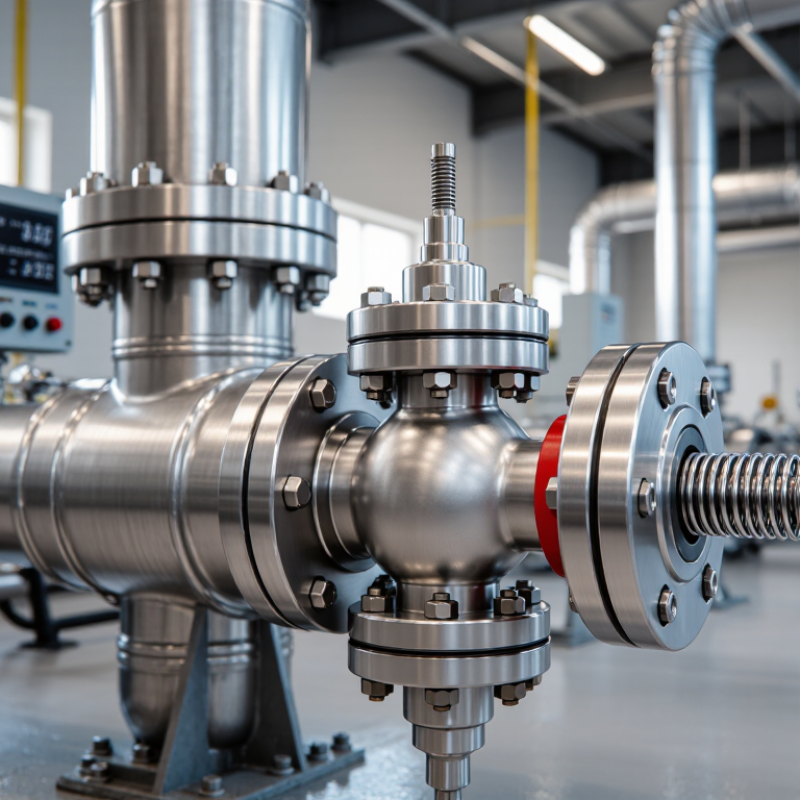
| Purpose | Pressure relief valve | An automatic device that opens when system pressure reaches a defined value and discharges fluid to prevent pressure from exceeding a safe limit. | Confirm the protected equipment’s allowable pressure, required relieving capacity, fluid properties, and discharge destination. | Used on pressure vessels, boilers, piping systems, compressors, pumps, and thermal expansion sections. |
| Valve Type | Safety valve | A pressure relief valve designed to open rapidly, typically with a pop action, when the set pressure is reached. | Choose when rapid pressure reduction is required, especially for compressible fluids such as steam or gas. | Commonly applied to steam and gas service; discharge may be accompanied by an audible release. |
| Valve Type | Relief valve | A pressure-operated valve that normally opens progressively in proportion to increasing pressure. | Often selected for liquid service, where controlled discharge and stable reseating are important. | Liquid relief valves are commonly installed on pumps, hydraulic systems, and liquid-filled equipment. |
| Valve Type | Safety relief valve | A general term for a valve capable of relieving pressure using either pop action or proportional opening, depending on design and service. | Useful when the service may involve either liquids or compressible fluids, but the exact certified design must be verified. | The terminology can vary by industry and jurisdiction, so the applicable code and certification should be checked. |
| Valve Type | Direct spring-loaded valve | A spring directly opposes the process pressure acting beneath the disc. | Select for simple, independent operation and moderate pressure ranges; check spring temperature limits and backpressure sensitivity. | Widely used because of its relatively simple construction, easy maintenance, and reliable fail-open behavior. |
| Valve Type | Pilot-operated pressure relief valve | A pilot control uses system pressure to control the opening of the main valve. | Consider for high flow capacity, high operating-to-set-pressure ratios, or applications requiring reduced simmer. | Requires clean, compatible pilot-system fluid and careful evaluation of sensing lines, freezing, fouling, and loss of pilot pressure. |
| Valve Type | Balanced-bellows valve | A bellows arrangement reduces the effect of variable or built-up backpressure on the spring and set-pressure behavior. | Choose when discharge backpressure is significant or variable and conventional spring loading may be affected. | The bellows must be compatible with the process and protected from corrosion, plugging, or mechanical damage. |
| Valve Type | Vacuum relief valve | Opens when external pressure exceeds internal pressure by the specified vacuum setting, preventing excessive vessel vacuum. | Use when tanks or vessels may experience vacuum during draining, cooling, condensation, or blocked-in conditions. | A pressure-only relief valve may not provide vacuum protection; positive-pressure and vacuum duties may require separate devices. |
| Core Terminology | Set pressure | The inlet pressure at which the valve is adjusted to begin the specified opening action under defined test conditions. | Set pressure must not exceed the allowable pressure of the protected equipment, subject to the governing code. | It is normally stated in bar, kPa, MPa, psi, or another approved pressure unit. |
| Core Terminology | MAWP | Maximum allowable working pressure: the highest pressure permitted at a specified temperature for the protected equipment. | Use the lowest applicable MAWP among the protected components when establishing the protection basis. | MAWP is equipment-specific and is not interchangeable with normal operating pressure. |
| Core Terminology | Overpressure | The pressure increase above set pressure during the valve’s relieving operation, usually expressed as a percentage. | The allowable value depends on the applicable design code, service, and certified valve capacity. | Do not assume a universal percentage; confirm the required code limits for the installation. |
| Core Terminology | Accumulation | The pressure increase above MAWP while a relieving device is discharging during an overpressure event. | Evaluate together with the design code and the specific credible overpressure scenario. | Accumulation and overpressure may have different reference pressures, so they should not be treated as identical terms. |
| Core Terminology | Blowdown | The difference between the set pressure and the pressure at which the valve reseats, commonly expressed as a percentage of set pressure. | A smaller blowdown can reduce product loss but may increase the risk of unstable operation if the system is poorly designed. | The actual blowdown depends on valve design, service conditions, and adjustment. |
| Sizing Data | Required relieving capacity | The mass or volume flow rate that must be discharged to prevent pressure from exceeding the permitted limit during a defined scenario. | Calculate the governing scenario, such as blocked outlet, fire exposure, tube rupture, thermal expansion, or control-valve failure. | Typical units include kg/h, kg/s, Nm³/h, Sm³/h, L/min, or gal/min. |
| Sizing Data | Relieving pressure and temperature | The pressure and temperature at the valve inlet during the relief event, including applicable overpressure. | Use these conditions—not only normal operating conditions—for capacity calculations and material selection. | Gas, vapor, steam, liquid, and two-phase flow may require different sizing methods. |
| Installation | Backpressure | Pressure at the valve outlet caused by discharge-system pressure, including superimposed and built-up components. | Determine whether the backpressure is constant or variable and select a suitable valve design or discharge arrangement. | Excessive backpressure can reduce capacity, alter set-pressure behavior, or cause instability in some spring-loaded valves. |
| Installation | Inlet pressure loss | The pressure drop between the protected equipment and the relief-valve inlet during discharge. | Keep inlet piping short and properly sized; excessive loss can cause unstable opening and closing. | Evaluate fittings, reducers, isolation valves, and the full inlet flow path. |
| Materials | Fluid compatibility | The compatibility of wetted materials, seals, and internal components with the process medium. | Check corrosion, erosion, toxicity, flammability, viscosity, solids content, and temperature effects. | Material selection must consider both normal conditions and the most severe credible relieving condition. |
| Compliance | Applicable design code | The legal, regulatory, or engineering standard governing valve design, sizing, testing, installation, and inspection. | Identify the jurisdiction and equipment category before selecting a certified valve or sizing method. | Common references include pressure-vessel, boiler, piping, and relief-device standards; requirements vary by location and service. |
| Final Selection Checklist | Minimum specification data | A complete selection normally requires valve function, fluid phase, composition, normal and relieving conditions, set pressure, capacity, backpressure, materials, connection size, and discharge arrangement. | Do not select by nominal pipe size or set pressure alone; verify certified capacity and installation limitations. | Final sizing and code compliance should be reviewed by a qualified pressure-systems engineer. |