Request Quote

Request a quote from Nidec Drive Technology America Corporation.

This quote form is intended for customers and partners in North America seeking information about Nidec Drive Technology America Corporation’s Precision Gearing Technologies. For inquiries related to the Nidec motor group division or from outside this region, please visit the global Nidec Group website to find the appropriate regional or product-specific contact.

Subscribe to Nidec Newsletter

Subscribe to our email newsletter to stay current with our precision gearing solutions, featured products, company updates, and industry news.

How to Choose Roll Filter Media for Your Business in 2026?

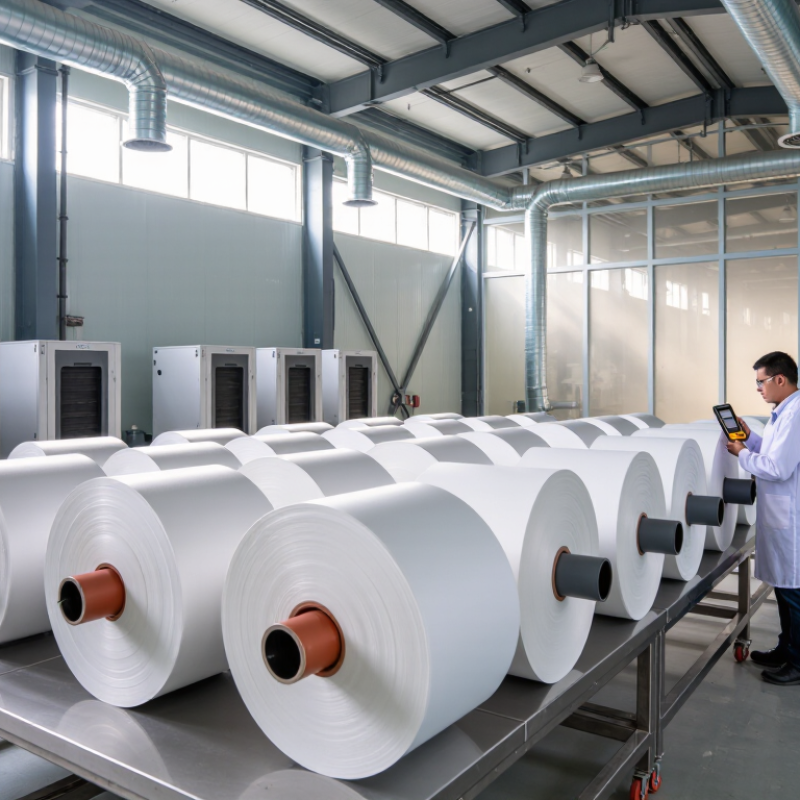
In 2026, choosing Roll Filter Media is a practical decision about air quality, operating costs, and production uptime. A roll that looks suitable on paper may clog quickly in a dusty workshop or struggle in a humid loading area. Small details matter.

MarketsandMarkets estimated the global air filters market at USD 14.3 billion in 2023. Its report projected growth to USD 20.4 billion by 2028. This figure covers air filters broadly, not roll media alone, so it offers context rather than a direct forecast for your purchase. Harvard healthy-buildings researcher Dr. Joseph Allen has said, “The air we breathe is a public health issue.” His point reinforces why filter choices deserve more than a price comparison.

Compare efficiency, pressure drop, dust-holding capacity, media weight, and roll dimensions against your actual equipment and airflow. Ask suppliers for test data and the test method behind each claim. Then check how the media handles moisture, changing dust loads, and your line’s feed speed. A neat spec sheet can still mislead. A short trial, with pressure readings and changeout dates recorded, can reveal what routine operation costs. There is no perfect selection for every site; the best fit depends on your process, maintenance capacity, and acceptable downtime. Weigh those trade-offs before committing to bulk orders.

How to Choose Roll Filter Media for Your Business in 2026?

Identify Your Business’s Air Filtration Requirements

Before choosing roll filter media for your business in 2026, define what the air system must capture. Identify the dust or particles present, their likely sources, and whether they vary by shift or process. Check the required airflow, operating temperature, humidity, and available space in the filter housing. These details help narrow down media options without relying on a generic efficiency rating alone. Measure before ordering.

Tips: Review equipment manuals and recent maintenance records. Note how quickly existing filters load with dust, and check pressure readings if available. A short site walk can reveal leaks, uneven airflow, or unusually dusty work areas.

Match the media’s filtration performance to the particles and the system’s operating limits. A finer option may capture smaller particles, but it can also increase airflow resistance if the system is not designed for it. Ask a qualified filtration professional to review your measurements and confirm compatibility. Keep a record of airflow and pressure before and after installation. Conditions can change, so reassess after production changes or seasonal shifts. One honest limitation: a paper estimate may miss local airflow patterns. That is why actual operating checks matter.

Compare Roll Media Types, Efficiency Ratings, and Limits

How to Choose Roll Filter Media for Your Business in 2026?
Compare Roll Media Types, Efficiency Ratings, and Limits

Fiberglass rolls are often a low-cost choice for capturing larger particles in basic intake systems. They may need frequent replacement in dusty settings. Polyester media can offer stronger dust-holding capacity and resist moisture better, depending on construction. Progressive-density media catches larger particles near the front and finer dust deeper inside. It can last longer, but only when airflow and loading conditions suit the system.

Compare efficiency ratings carefully. A higher rating does not automatically mean better performance for your equipment. Check the test standard, particle size, airflow, and initial pressure drop behind the figure. Also consider how quickly resistance rises as dust collects. A tightly loaded roll may raise fan energy use or reduce airflow. The rating alone can mislead. I would verify the supplier’s test data against actual operating conditions; even good data cannot predict every dusty shift or damp season.

Tips: Measure the roll width and thickness before ordering. Track pressure drop during use, not just replacement dates. If readings are unavailable, inspect the media regularly and record changes. Small checks help, though they are not a substitute for system-specific testing.

How to Choose Roll Filter Media for Your Business in 2026?

Compare indicative MERV ranges for common roll-media options. Higher ratings indicate greater particle-capture performance, but can also mean higher resistance to airflow.

How to use this chart: Treat these ranges as a screening guide, not a guaranteed rating for every product. Actual MERV performance and pressure drop depend on the specific media and test results. Check supplier data for the tested rating, airflow, pressure drop, dust-holding capacity, and replacement limits before selecting media.

Check Compatibility with Existing HVAC and Filter Systems

Before ordering roll filter media, check the system it must fit. Measure the existing filter track, including its width, height, and usable depth. A roll may look suitable on paper but bunch inside a narrow frame. That can leave gaps around the edges. Air will take the easier path.

Check the HVAC unit’s recommended filter thickness and pressure-drop limits. Denser media can capture more particles, but it may also restrict airflow. Review the equipment manual and compare the media’s published resistance at the expected airflow. Small details matter. Note the frame style, access-door clearance, and how the media will be held in place. If the system uses a supporting grid, confirm that the roll can be cut cleanly and secured without sagging. Measure twice. It sounds obvious, but rushed measurements are common.

Compatibility also depends on the job. Dust levels, operating hours, and maintenance intervals affect how quickly media loads. Ask the facilities team how often filters are changed, then compare that schedule with the media supplier’s guidance. Do not assume a higher efficiency rating is automatically better for an older fan. Test a small section first, and record airflow or pressure readings before and after installation. Real systems can behave differently than expected. That is worth checking.

Evaluate Lifecycle Costs, Compliance, and Supply Reliability

A roll filter may look inexpensive on a quote, yet replacement frequency can change the real cost. Compare media price with usable roll length, changeout labor, disposal, and energy use. Track pressure drop at installation and near changeout. A fast rise can increase fan demand or shorten service intervals. That cost is easy to miss. Keep a basic log. Record roll length, operating hours, dust conditions, and change dates. The numbers will not be perfect; shifts in production can distort comparisons. Still, even rough records beat relying on memory.

Check the media against your facility’s filtration requirements and applicable local rules. Ask for current technical data, test methods, and lot traceability, not just a broad efficiency claim. Confirm that the stated rating matches your operating conditions, including airflow and particle loading. Paperwork matters. Then assess supply reliability: typical lead time, available roll widths, minimum order quantities, and notice of material changes. A low unit price offers little protection if stock arrives late. Set a practical reserve using actual consumption, not an optimistic forecast. A short trial on one line can expose fit or handling issues before a wider change. It will not predict every season. That limitation deserves a place in the buying decision.

Test and Select Media Based on Operating Performance

How to Choose Roll Filter Media for Your Business in 2026?
Test and Select Media Based on Operating Performance

Choose roll filter media by testing it under conditions close to your actual system. Record airflow, initial pressure drop, particle capture, and dust-holding capacity. Then repeat the measurements as dust accumulates. A media that captures more particles may also raise fan energy use or need replacement sooner. Measure it. ASHRAE Standard 52.2 rates filters by particle-size efficiency; its MERV 13 thresholds include at least 50% efficiency for 0.3–1.0 micrometre particles, 85% for 1.0–3.0 micrometres, and 90% for 3.0–10 micrometres. These are test benchmarks, not a guarantee of performance in every installation.

For a fair comparison, use the same face velocity, dust challenge, and test duration for each sample. Track pressure drop at set intervals, and note when airflow falls below your process requirement. Check how the media behaves in damp areas, around fine process dust, and during roll changes. Not in theory. In the plant. A practical trial should also record media consumption, disposal frequency, and unplanned stoppages. Compare total operating cost, not just the price per roll. One weakness in many selection plans is testing clean media only; I would treat that as an incomplete result, even when the first efficiency reading looks excellent. Cite the applicable ASHRAE 52.2 test method in your purchasing specification, and retain test conditions with the results.

How to Choose Roll Filter Media for Your Business in 2026? - Test and Select Media Based on Operating Performance

Compare media under the airflow, dust conditions, humidity, and change-out limits of the actual installation. The descriptions below are general material characteristics, not guaranteed performance ratings. Confirm product data and test results with the supplier before selection.

Media construction Typical operating fit Potential advantages Limitations to check Useful selection tests
Flat synthetic nonwoven
Commonly polyester or polypropylene fibers
General ventilation prefiltration where a replaceable roll is convenient. Can be lightweight, easy to cut, and available in a range of fiber structures and thicknesses. Dust capacity and resistance to moisture, heat, and chemicals depend on the fiber, binder, and construction. Measure initial resistance at the intended face velocity; assess particle capture and dust loading in the installed frame.
Progressive-density synthetic
Looser upstream side, denser downstream side
Applications where loading through the media depth is preferred over rapid surface loading. The gradient structure can use more of the media depth for dust storage, depending on dust type and airflow. Orientation matters; incorrect installation may reduce performance. Actual service life is site-dependent. Verify airflow direction, resistance increase during loading, and dust holding capacity to the site's change-out limit.
Fiberglass roll media Some ventilation and equipment prefilter applications, subject to installation and handling requirements. Available in different thicknesses and fiber structures; may suit applications that specify glass-fiber media. Check fiber containment, edge sealing, handling procedures, and compatibility with downstream equipment and workplace rules. Inspect for fiber shedding and bypass; test resistance and particle capture in the intended frame and airflow conditions.
Tackified synthetic media
Media treated to help retain captured dust
Dusty air applications where retention of captured particles is a consideration. The treatment can help reduce particle release from the media, depending on formulation and operating conditions. Confirm compatibility with temperature, humidity, process contaminants, and any downstream surfaces that could be affected by the treatment. Check particle release, pressure-drop change, and treatment compatibility using representative operating conditions.
High-loft synthetic media
Thicker, open-structure nonwoven
Installations that can accommodate greater media depth and need a balance of airflow and dust storage. A deeper structure may provide more space for dust accumulation than a thin, flat construction. Confirm that the frame supports the media and prevents sagging, bypass, or contact with moving components. Test resistance, loading behavior, fit, and mechanical stability at the intended airflow.

Operating-performance test plan

Performance dimension What to record How to use the result
Airflow and face velocity Air volume, effective media area, and calculated face velocity. Face velocity is airflow divided by effective filter area. Compare candidate media at the same conditions as the installation; results from different face velocities may not be directly comparable.
Initial pressure drop Pressure difference across clean media at the test airflow, using the same holder and measurement setup for each candidate. Check that the clean-media resistance is compatible with available fan capacity and system airflow requirements.
Dust loading and service life Resistance increase as representative dust is added, dust retained at the selected terminal resistance, and observed loading pattern. Use the site's allowable terminal resistance and dust conditions to compare change-out frequency; there is no universal service-life value.
Particle capture and release Particle-size-resolved efficiency where relevant, plus any downstream particle release or shedding observed during operation. Match the test method and target contaminant to the application. A raw media result is not automatically the rating of a complete filter.
Environmental and mechanical fit Performance at expected temperature and humidity; media strength, sagging, edge sealing, and fit in the actual frame. Reject options that cannot maintain a seal or remain stable under site conditions, even if their clean-media data look favorable.
Total operating cost Media use, labor, disposal, downtime, and fan energy over the evaluation period. Compare candidates using the same operating schedule and system boundary rather than purchase price alone.

Rating note: ISO 16890 classifications apply to tested air-filter elements under the standard's specified procedures; they should not be inferred from a roll-media description alone. Request the applicable test method, conditions, and product documentation when a formal efficiency classification is required.