Request Quote

Request a quote from Nidec Drive Technology America Corporation.

This quote form is intended for customers and partners in North America seeking information about Nidec Drive Technology America Corporation’s Precision Gearing Technologies. For inquiries related to the Nidec motor group division or from outside this region, please visit the global Nidec Group website to find the appropriate regional or product-specific contact.

Subscribe to Nidec Newsletter

Subscribe to our email newsletter to stay current with our precision gearing solutions, featured products, company updates, and industry news.

How to Choose the Best Bathroom Towel Holder in 2026?

A Bathroom Towel Holder seems like a small purchase. Its placement affects daily comfort and where damp towels end up. In a narrow ensuite, a swing-arm holder or compact ring may clear a door; a shared family bathroom may need a longer bar or several hooks. Small details matter. Measure the wall, towel width, and door clearance before comparing styles. Check whether the surface is tile, drywall, or another material, since each may require different mounting hardware.

A good choice balances reach, capacity, durability, and appearance. Stainless steel and coated finishes are common options, but labels alone do not prove quality. Review product specifications, warranty terms, and cleaning guidance. A holder near the shower faces frequent moisture, while one behind a door may be awkward to reach. Think about who uses it, how many towels need to dry, and whether drilling is acceptable. Follow the manufacturer’s installation instructions, especially for anchors and weight limits. It sounds obvious. It is often missed.

This guide compares bars, rings, hooks, freestanding racks, and heated designs. It explains how to match each type to room size and routine, then looks at materials, mounting, maintenance, and value. There is no universal winner. Even careful measuring can miss a household habit: a towel used every morning needs a different spot from a guest towel. Consider that before buying.

How to Choose the Best Bathroom Towel Holder in 2026?

Identify Your Bathroom Layout and Towel-Storage Needs

Before choosing a towel holder, map the bathroom’s usable space rather than relying on a quick glance. Measure the wall beside the shower, the distance from the sink, and any door swing. A tape measure and a simple sketch can prevent a crowded installation. Check where towels can hang without touching the toilet, floor, or a damp shower curtain. Small bathrooms need careful planning. Give wet towels room to spread, not just a place to hang. For shared bathrooms, count how many towels need daily access and where each person can reach them. That detail matters.

Match the holder to your routine and layout. A long bar suits a clear wall and lets bath towels dry more evenly. Hooks use less wall space, though folded or bunched towels may stay damp longer. A freestanding rack can help in a rental, but it needs stable floor space and can obstruct a narrow path. Check cabinet doors and drawers before settling on a spot. It is easy to overlook them. A common planning mistake is choosing an empty-looking wall before testing how the room moves. Hold a towel in place, open nearby doors, and walk through the space. If the location feels awkward now, daily use probably will too. Measuring twice may feel fussy, but drilling in the wrong spot is worse.

Compare Towel Holder Types and Space Requirements

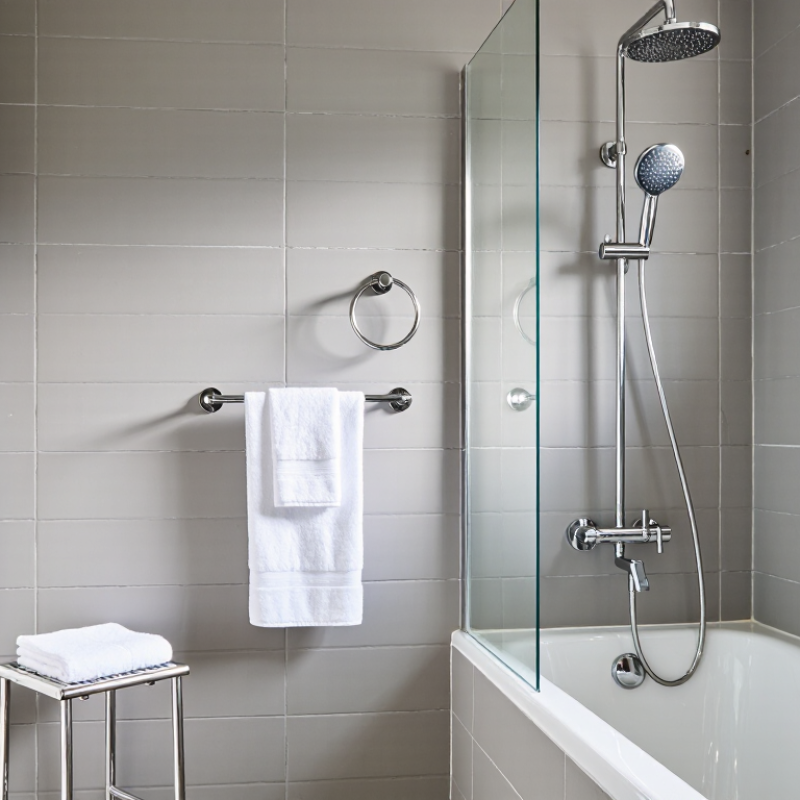
A wall-mounted towel bar suits shared bathrooms because it holds several towels without using floor space. Common 18- and 24-inch bars fit different wall widths, but check the folded towel’s depth near a door or shower screen. A towel ring needs less wall length and works well beside a sink, though it usually holds one hand towel. Hooks are the smallest option. They are easy to fit behind a door, but damp towels can bunch and dry slowly.

Freestanding racks add flexible storage, yet their feet compete with baskets, doors, and walking paths. In a narrow bathroom, that trade-off matters. The National Kitchen & Bath Association’s Bathroom Planning Guidelines use a 30-by-48-inch clear-floor-space benchmark at fixtures; treat it as a useful planning reference when mapping a rack’s footprint. Measure twice. A paper template taped to the wall can reveal awkward reach or door collisions before drilling.

For wall holders, mark the towel’s full hanging width, not just the hardware. Keep bars reachable from the shower without placing them where spray soaks the towel. The right choice is not always the largest one. I would still check the actual towel size first; standard dimensions can be surprisingly misleading.

How to Choose the Best Bathroom Towel Holder in 2026? — Compare Towel Holder Types and Space Requirements

Holder Type Typical Size or Space Needed Towel Capacity Installation and Clearance Advantages Best For Things to Consider
Wall-mounted towel bar Common bar lengths are 18, 24, and 30 in (46, 61, and 76 cm). Allow about 3–5 in (8–13 cm) of projection from the wall. Usually 1–2 bath towels, depending on bar length and how they are folded. Requires a clear wall section close to the length of the bar. Leave enough room for towels to hang without touching nearby fixtures. Provides a broad hanging area and lets towels dry unfolded or neatly folded. Bathrooms with an available wall and regular use of bath towels. A 24–30 in bar is generally more practical for a full-size bath towel. Secure the fixings to suitable wall structure or use appropriate anchors.
Towel ring Typically about 6–8 in (15–20 cm) across, plus room for the towel to hang below it. One hand towel or washcloth. Needs a small wall area near the sink. Check that the hanging towel will not brush the basin, counter, or floor. Compact and convenient for handwashing areas. Powder rooms, small bathrooms, and the area beside a vanity. Less suitable for bath towels; a towel may dry more slowly if it hangs folded over a small ring.
Wall-mounted hooks Each hook commonly projects about 2–4 in (5–10 cm). Allow roughly 8–12 in (20–30 cm) between hooks for separate towels. Usually one towel per hook; capacity depends on the number and spacing of hooks. Needs a small wall section. Place hooks high enough to keep towels off the floor and leave room for them to hang freely. Flexible placement and a small footprint; towels are easy to grab. Shared bathrooms, family bathrooms, and narrow wall sections. Towels bunch more easily on hooks than on bars, which can slow drying. Avoid overcrowding multiple towels on one hook.
Over-the-door towel rack or hooks Designed to fit over a door; common racks are approximately 12–24 in (30–61 cm) wide. Check the product’s door-thickness range. Often 2–5 towels or garments, depending on the number of bars or hooks. Requires a suitable door and enough space behind it for towels. Confirm that the door can close freely with the rack fitted. No wall drilling and makes use of otherwise unused door space. Rentals and bathrooms with limited free wall area. May scratch or interfere with the door, trim, or neighboring hardware if the fit or clearance is unsuitable.
Freestanding towel rack A common footprint is about 18–24 in (46–61 cm) wide and 12–18 in (30–46 cm) deep; overall height varies by design. Often 2–4 towels across multiple bars or rails. Needs clear floor space and a stable, level surface. Keep it outside door swings and main walking routes. Portable and does not require wall mounting. Bathrooms with spare floor space or homes where drilling is not desired. Uses more floor area than wall-mounted options and can be less stable if overloaded or placed on an uneven floor.
Heated towel rail Common models are roughly 18–24 in (46–61 cm) wide, but sizes vary. Check the unit’s projection and mounting requirements. Capacity depends on the number and spacing of rails; many compact models hold 1–2 towels. Requires a suitable wall location and access to power. Electrical installation must follow local regulations and the manufacturer’s instructions. Warms towels and can help them dry between uses. Bathrooms where warm towels are a priority and a suitable installation point is available. Check the electrical rating, bathroom-location requirements, running costs, and clearance specified for the specific model.

Note: Dimensions and capacity are typical ranges, not fixed standards; actual measurements vary by design. Measure the available wall or floor area, account for door swings and nearby fixtures, and check the product specifications before purchasing.

Evaluate Materials, Finishes, and Moisture Resistance

Start with the room’s humidity and how often towels stay damp. Stainless steel is a dependable choice for many bathrooms, but its grade matters. Grade 304 handles ordinary indoor conditions well; near salty coastal air, grade 316 may offer better corrosion resistance. Solid brass is another sturdy option, though its protective finish still needs care. Lower-cost alloys can work, but chipped plating may expose metal underneath. Small detail, big difference.

A finish affects both upkeep and appearance. Brushed surfaces tend to disguise fingerprints and water spots better than polished chrome. Matte black can look striking, yet mineral deposits may show clearly on dark finishes. No finish is maintenance-free. Wipe the holder dry now and then, and use cleaners suited to its care instructions. Check that screws and wall anchors are corrosion-resistant, too; a durable bar can still loosen in damp drywall. Good bathroom ventilation helps, but it does not fix poor materials. One trade-off is easy to miss: the most attractive finish in a showroom may need more frequent cleaning at home.

Check Mounting Methods, Load Capacity, and Installation Needs

A bathroom towel holder should fit both the wall and your daily routine. A long bar lets a bath towel spread out and dry faster, while a ring takes less wall space near a sink. Measure the available area before choosing; a door handle or cabinet edge can block a holder that looked suitable online. Small detail, big annoyance.

Mounting method matters as much as appearance. Screw-mounted holders usually feel more secure, especially when fixed into a wall stud or suitable masonry anchor. Check what lies behind the tile before drilling, and use a bit designed for the surface. Adhesive mounts avoid holes, but warm, damp bathrooms can weaken some adhesives over time. Follow the product’s curing instructions, and don’t hang a wet towel immediately. I’d still inspect the bond after installation; it can be hard to judge at a glance.

Check the stated load capacity, but consider what you will actually hang. A soaked bath towel weighs more than a dry hand towel, and people sometimes pull on a bar for balance without thinking. That is not what it is for. Confirm that the holder, fasteners, and wall can handle the expected load together. If installation requires drilling through tile or locating hidden framing, allow extra time and use the correct tools rather than forcing a quick fit.

Balance Features, Maintenance, and Price for Your 2026 Needs

Choosing a bathroom towel holder in 2026 means weighing daily convenience against upkeep and cost. A Houzz 2024 U.S. Bathroom Trends Study reported a $15,000 median spend for primary bathroom remodels. That figure covers much more than accessories, but it shows why small purchases still deserve a budget. Compare installed cost, not just the shelf price: drilling into tile may require extra tools or professional help. A fixed bar suits a busy family bathroom; a hook can work better beside a compact shower.

Material matters. Stainless steel and solid brass generally resist moisture better than inexpensive plated finishes, though quality varies by construction and coating. Check the mounting hardware, weight rating, and cleaning instructions before buying. A polished surface can show water spots; textured finishes may hold dust. No finish is completely maintenance-free. I learned that the hard way.

Tips: Measure the towel’s width and the available wall space. Keep the holder away from direct spray, and use a stud or suitable wall anchor. For rentals or frequent layout changes, a securely mounted over-door option may avoid new holes, but check that the door still closes smoothly. Compare replacement-part availability and warranty terms, too. A low price can be a false saving if the finish peels or the mount loosens.

How to Choose the Best Bathroom Towel Holder in 2026

Compare common materials across corrosion resistance, cleaning ease, and upfront affordability. Higher scores indicate a more favorable trade-off.

Scores are comparative guidance based on typical material characteristics, not laboratory test results. Actual performance and price vary with finish, construction, bathroom humidity, and care.