| Reach-In Refrigerator | Usually has an adjustable thermostat or digital controller. Choose a model that can maintain the required food temperature during normal kitchen use. | Compare the manufacturer’s tested energy-use figures for models with similar capacity and configuration. Solid doors generally reduce exposure to warm air compared with frequently opened glass doors. | Look for a clear temperature display, audible or visual high-temperature alarms, and shelves that can be cleaned easily. | Everyday ingredient and prepared-food storage in kitchens with limited space. | Check usable capacity, door swing, shelf adjustability, gasket condition, and whether the unit can maintain temperature in the expected room conditions. |
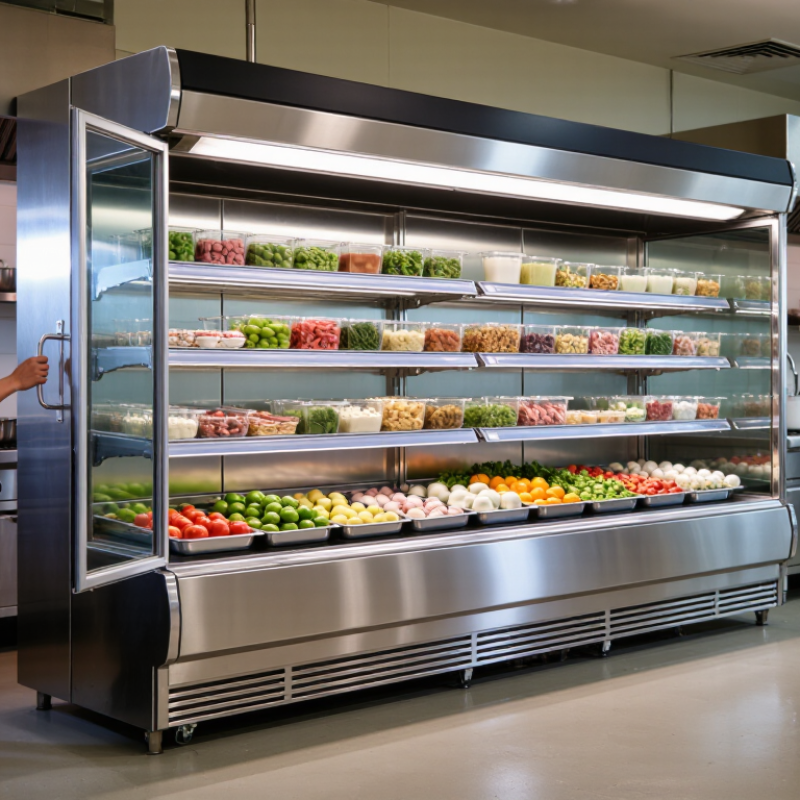
| Glass-Door Merchandiser | Temperature range and control vary by model. Confirm that the unit is designed for the food being stored; beverage merchandisers may not be suitable for all food-storage needs. | Lighting, door openings, glass-door design, and ambient temperature affect energy use. Compare energy figures only between units with similar size and intended use. | Use only where the equipment is rated for the intended food. Verify product temperature with a suitable thermometer rather than relying solely on the display. | Packaged drinks or approved packaged foods that need customer-facing display. | Confirm the listed application, operating-temperature range, lighting controls, door-closing performance, and applicable local requirements. |
| Refrigerated Prep Table | Separate controls may manage the refrigerated base and ingredient pans. Verify that both areas hold suitable temperatures during service. | Frequent lid or rail access and uncovered pans can increase cooling demand. Efficient work habits and properly fitted covers help limit warm-air exposure. | Look for accessible temperature monitoring, removable food-contact components, and a design that allows thorough cleaning around pans and seals. | Sandwich, salad, and pizza stations where ingredients are accessed repeatedly during preparation. | Check pan configuration, usable refrigerated storage, cleaning access, airflow around the unit, and temperature performance with the pans loaded as intended. |
| Walk-In Cooler | A dedicated controller should regulate the room temperature. Use a separate, suitable thermometer to verify conditions at representative locations. | Insulation, door seals, traffic, room size, and the temperature of incoming products all influence energy use. Properly sized equipment and well-maintained seals help reduce unnecessary load. | Consider a temperature alarm, an easily readable thermometer, an interior door-release mechanism, and surfaces that can be cleaned and maintained. | High-volume operations that need substantial bulk or pallet storage. | Assess required capacity, shelving or rack layout, door access, floor and wall condition, drainage, and the installer’s sizing calculations. |
| Undercounter Refrigerator | Typically uses a built-in thermostat or digital control. Check temperature recovery after repeated opening, especially in busy service areas. | Its smaller size does not guarantee lower total energy use; compare tested consumption and consider ventilation clearance and ambient kitchen temperature. | A visible temperature display and cleanable door seals support routine checks. Store food in covered, labeled containers with space for air circulation. | Small kitchens, bars, or stations that need ingredients close to the work area. | Measure the installation space, allow the manufacturer’s specified ventilation clearance, and confirm door or drawer access suits the workflow. |