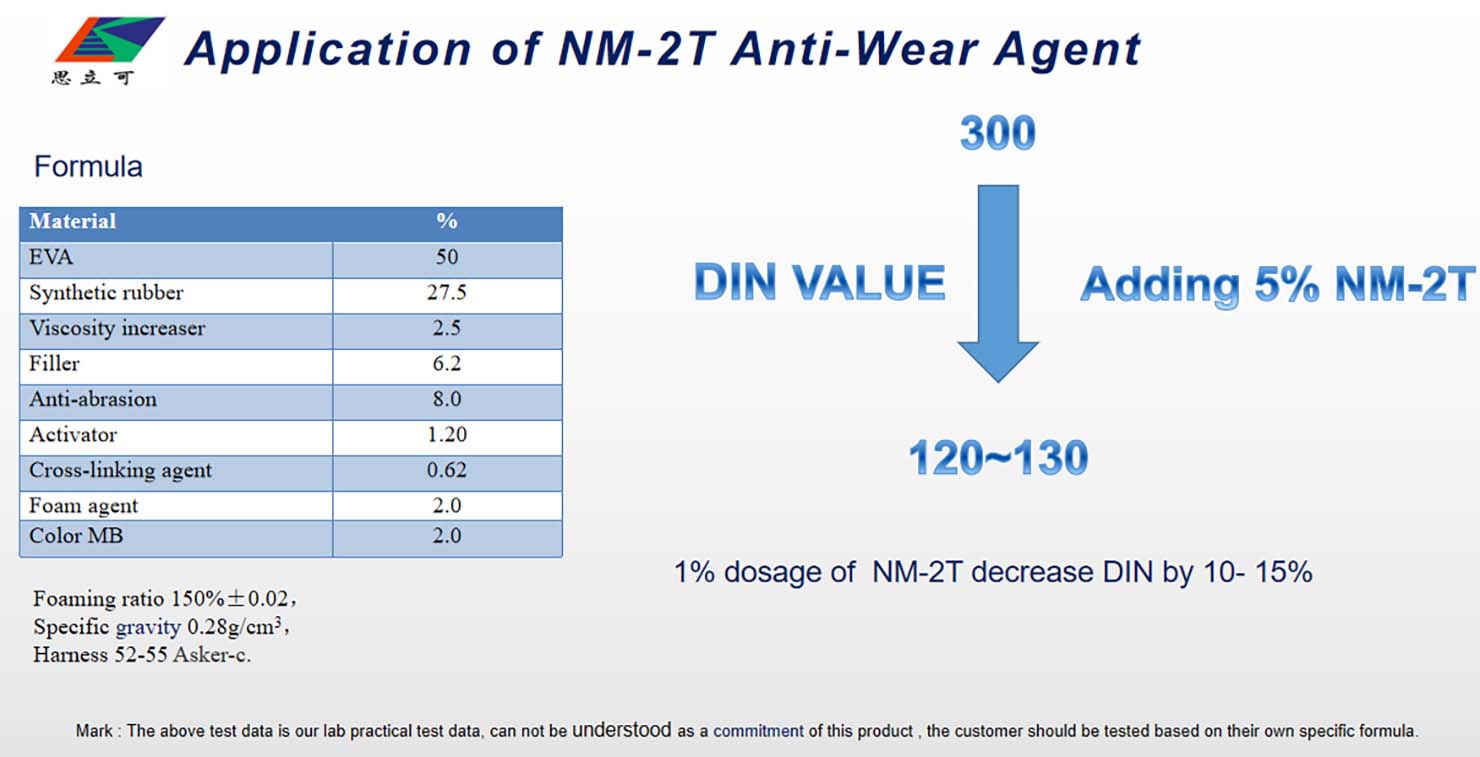
Published SILIKE application observations indicate reductions in DIN abrasion loss in selected EVA formulations.
Actual performance depends on the base compound, foam structure where applicable, processing conditions, and testing method.
TPU Footwear: Anti-abrasion Agent NM-6 Application Example
TPU offers useful elasticity and durability for footwear, but its abrasion behavior depends on polymer chemistry, hardness, processing, and contact conditions.
SILIKE NM-6 is a TPU-carried anti-abrasion masterbatch designed for compatible TPU outsole formulations.
In an application example published by SILIKE, adding 0.5% NM-6 to a TPU compound with a hardness of 85 Shore A was associated with a reduction in the reported DIN abrasion value from 100 to 60.
The result illustrates potential abrasion improvement in the evaluated formulation. It should not be interpreted as a universal performance guarantee.
Rubber Outsoles: Wear Resistance Additive NM-3C Application Example
Rubber outsoles are used in sports, outdoor, work, and safety footwear where abrasion resistance, traction, and durability are important.
Performance depends on elastomer selection, filler reinforcement, compound hardness, and vulcanization conditions where applicable.
SILIKE Anti-abrasion Masterbatch NM-3C is developed for compatible rubber outsole formulations, including selected NR, SBR, BR, NBR, and EPDM systems.
According rubber footwear maker feedback, 2% NM-3C was associated with a reduction in the recorded DIN abrasion value from approximately 170 to 139.
As with other footwear additives, abrasion results should be considered alongside hardness, elasticity, traction, and processing requirements.
For additional anti wear additive product specifications, application examples, and material-specific guidance, visit SILIKE Anti-Abrasion Masterbatch Solutions for Shoe Soles.
Frequently Asked Questions About Polymer Wear Resistance
What additives can improve polymer wear resistance?
Potential options include fillers and reinforcement, PTFE and other solid lubricants, silicone-based wear additives and surface modifiers, and specialized anti-abrasion masterbatches. The appropriate choice depends on the polymer, wear mechanism, and operating conditions.
How can POM wear resistance be improved?
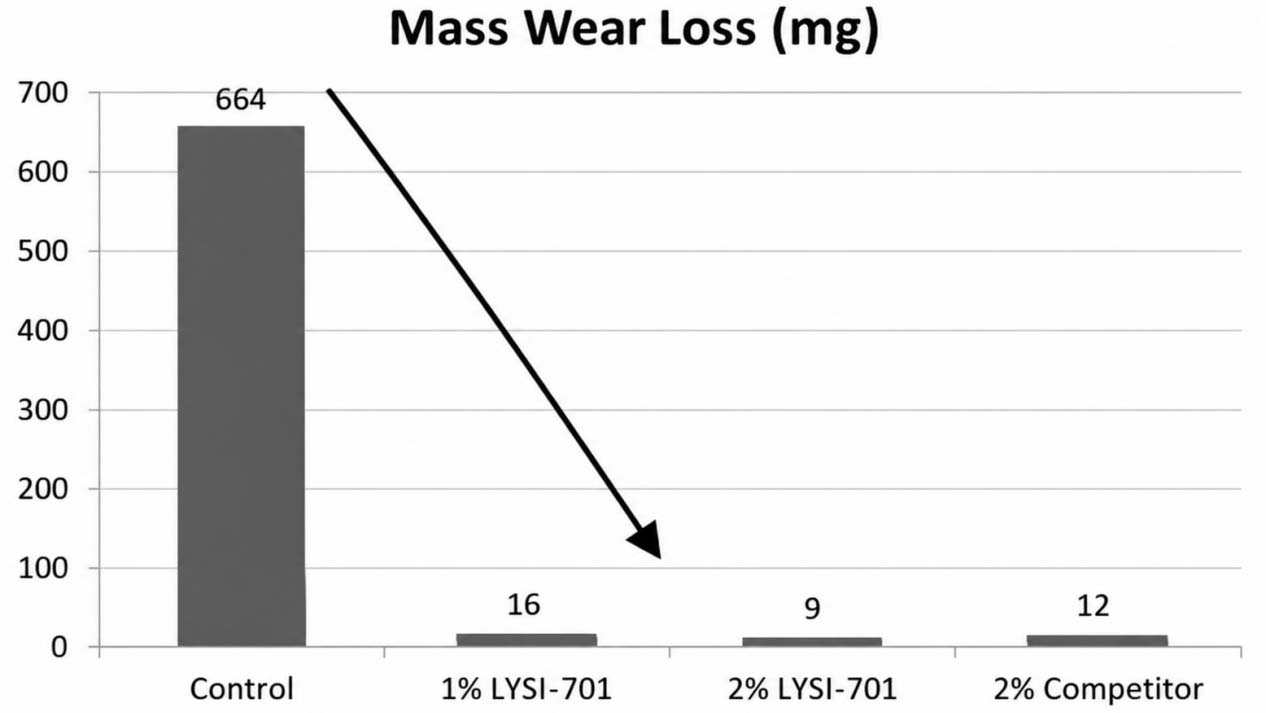
You can improve POM wear performance through formulation optimization, controlled processing, and compatible friction and wear modifiers. SILIKE abrasion-resistance additive LYSI-701 is one option for comparative testing in POM compounds.
Can silicone additives improve PA6 or PA66 wear resistance?
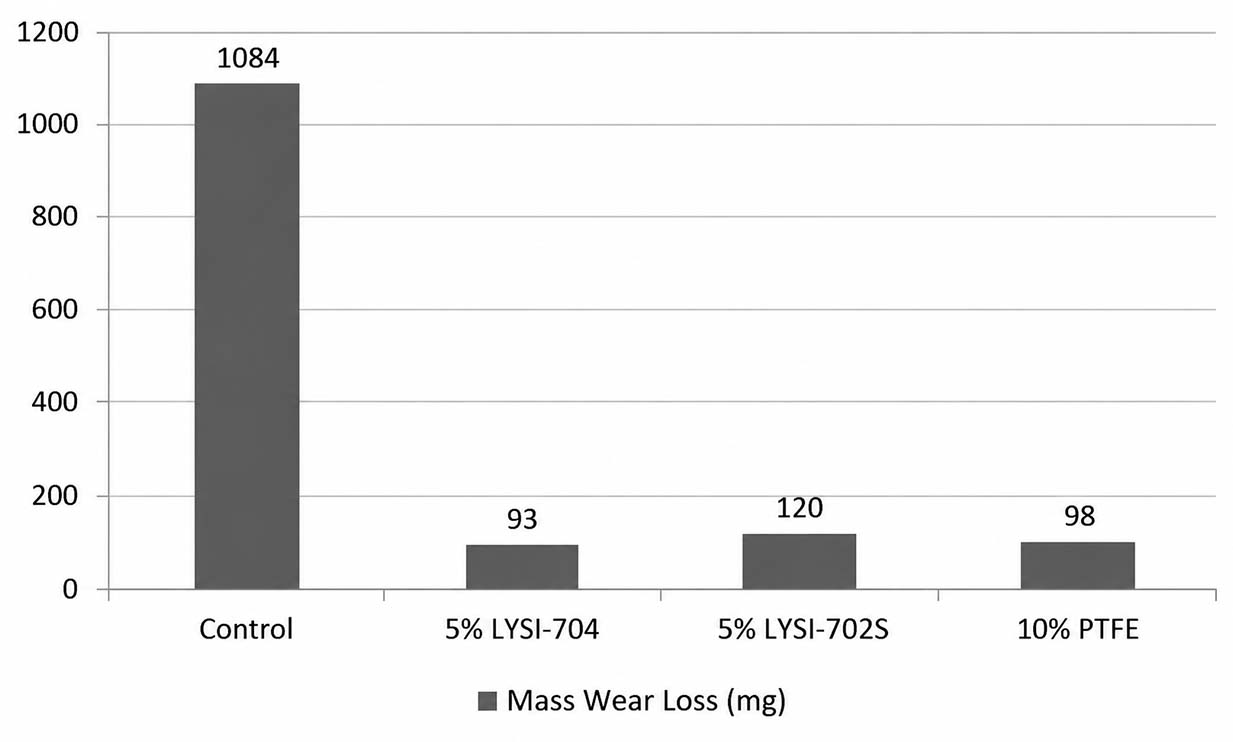
Certain silicone-based modifiers can be evaluated for friction and wear modification in suitable nylon formulations. SILIKE LYSI-704 and LYSI-702S provide evaluation options, subject to polymer compatibility and controlled testing.
Which anti-abrasion additives are suitable for shoe soles?
SILIKE offers all kinds of material anti-abrasion solutions, including NM-2T for EVA, NM-6 for TPU, NM-1Y and LYSI-10 for selected TPR/TR systems, and NM-3C or NM-3 for compatible rubber outsole formulations. PVC applications require grade-specific compatibility evaluation.
Can silicone-based wear modifiers replace PTFE?
Silicone-based additives may be evaluated as PTFE-free alternatives in selected engineering plastics. Equivalent friction, wear, processing, and mechanical performance must be confirmed in the target formulation.
Conclusion: Better Polymer Wear Resistance Starts with the Right Material Strategy
Improving the wear resistance of polymer materials requires an understanding of wear mechanisms, polymer chemistry, formulation design, and operating conditions.
Resin selection, reinforcement, processing optimization, and suitable functional additives can all contribute to improved performance when applied appropriately.
SILIKE's comparative POM and PA6 evaluations illustrate the potential of specialized silicone-based wear modifiers in engineering plastics, while its anti-abrasion masterbatches provide targeted modification options for EVA, TPU, TPR/TR, and rubber footwear compounds.
The most effective solution is the formulation that delivers reproducible wear-performance improvements while maintaining the mechanical, processing, and surface properties required by the finished product.
Looking for Wear-Resistant Additives for Engineering Plastics or Footwear?
Whether you're looking to reduce friction and wear in POM or PA6/PA66 engineering plastics, or improve abrasion resistance in EVA, TPU, TPR/TR, PVC, and rubber outsoles, selecting the right additive starts with understanding your formulation and performance requirements.
Tell us what material you're working with and the wear challenges you're facing. SILIKE can help identify suitable silicone-based wear additives or anti-abrasion masterbatches and provide samples for evaluation.
Website: https://www.siliketech.com/
Email: sale@cvlmotor.com