| Safety | Safety glasses and hearing protection | Wear eye protection while drilling; use hearing protection when operating a power drill for extended periods. | Helps protect against flying chips, dust, and drilling noise. |
| Measuring and marking | Tape measure, pencil, and combination square | Mark the hinge locations from a consistent reference edge and check that the marks are square to the door edge. | Consistent, square marks help keep the door aligned and reduce uneven gaps. |
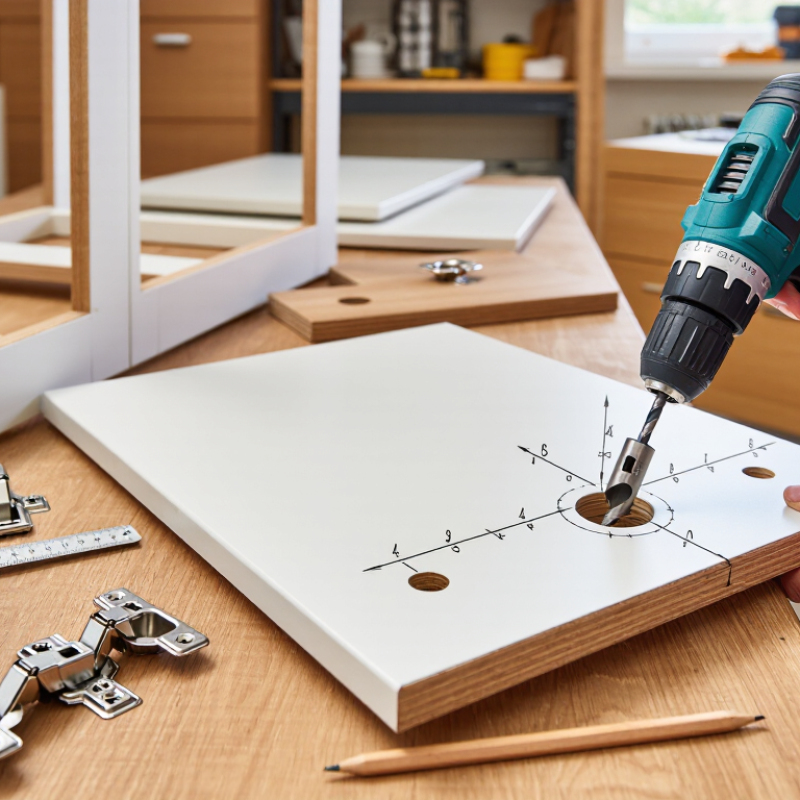
| Drilling | Drill, suitable bit, and depth stop | Use the cup-hole diameter and depth specified for the selected hinge. A 35 mm cup is common, but it is not universal; confirm the hinge instructions before drilling. | The correct hole size and controlled depth help prevent a loose fit or drilling through the door face. |
| Holding and fastening | Clamps and a screwdriver or adjustable driver | Secure the workpiece before drilling, and use the screw type and size supplied or specified for the hinge and cabinet material. | A stable workpiece improves accuracy; suitable screws help avoid stripped holes or damaged panels. |
| Hinge specification | Hinge instructions or drilling template | Confirm the hinge’s required cup diameter, cup depth, edge distance, mounting-plate position, and opening clearance before marking the door. | Dimensions and clearances vary by hinge design, door thickness, and cabinet layout. |
| Door preparation | Door inspection and layout | Check that the door is flat and undamaged. Mark the hinge positions using the hinge template and confirm the door’s thickness is within the hinge’s stated range. | A sound, correctly marked door provides a reliable base for the hinge cups. |
| Cabinet preparation | Cabinet-side inspection and layout | Check that the cabinet side is secure and reasonably square. Identify the mounting-plate positions and make sure they do not overlap shelves, fittings, or damaged material. | Secure, unobstructed mounting areas support the hinge and allow adjustment. |
| Opening clearance | Dry-fit and clearance check | Before drilling, check the hinge’s stated 180-degree opening conditions and confirm nearby walls, handles, adjacent doors, and cabinet features will not obstruct movement. | The achievable opening angle depends on the hinge, mounting arrangement, and surrounding space. |