| Steel and component suppliers | Supply the raw materials and purchased components used by rack producers. | Structural steel sections, plate, fasteners, base plates, and coating materials. Material selection depends on the rack design and intended loads. | Material traceability, agreed specifications, consistency of supply, and inspection documentation. | Confirm that material grades and dimensions match the approved design and project requirements. |
| Rack manufacturers | Turn steel inputs into cantilever rack components and complete systems. | Columns, bases, arms, bracing, connectors, and single- or double-sided rack layouts. Products may be made for indoor or outdoor use. | Manufacturing controls, dimensional accuracy, weld quality, component fit, and documented quality checks. | Ask whether the quoted scope includes engineering, fabrication, finish, packaging, and installation support. |
| Engineering and design teams | Translate inventory, site, and handling requirements into a rack layout and structural design. | Load calculations, bay layouts, arm spacing, clearances, anchorage details, and drawings for project review. | Design assumptions, stated load limits, review process, and alignment with applicable local requirements. | Provide product dimensions, unit weights, handling equipment details, floor information, and site conditions. |
| Surface-treatment providers | Apply finishes intended to protect steel and suit the operating environment. | Common options include powder coating and hot-dip galvanizing; the appropriate finish depends on exposure and service conditions. | Specified coating system, surface preparation, coverage, finish inspection, and suitability for the environment. | For outdoor or corrosive environments, define the exposure conditions and finish requirements before ordering. |
| System integrators and project contractors | Coordinate racks with warehouse layouts, handling equipment, and project installation. | Site coordination, installation planning, layout integration, and, where included, commissioning or handover documentation. | Installation method, project references, schedule coordination, safety procedures, and after-sales support. | Clarify responsibility for unloading, floor checks, anchors, installation, and final inspection. |
| Export and distribution channels | Connect domestic production with overseas buyers and local project teams. | Export packing, shipping coordination, documentation, communication, and coordination with local distributors or contractors. | Clear commercial terms, packing details, lead-time assumptions, document accuracy, and response process. | Confirm the delivery scope, transport responsibilities, spare-parts arrangements, and who handles local support. |
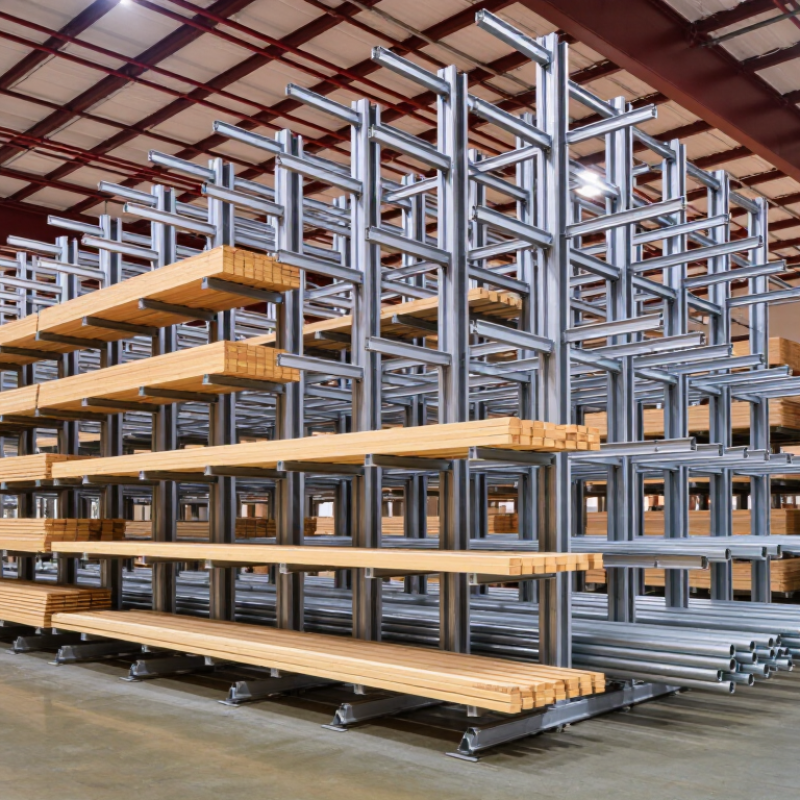
| Cantilever rack product configurations | Serve storage needs for long, bulky, or irregularly shaped loads that are difficult to store on conventional pallet rack beams. | Single-sided or double-sided layouts; adjustable arms are common. Systems can be specified for different load lengths and handling methods. | Arm and column capacity, load distribution, rack height, aisle clearance, stability, and compatibility with the handling equipment. | Capacity is design-specific; compare systems only when load assumptions and configuration are equivalent. |
| Quality and safety verification | Check that the supplied system matches its approved design and stated use. | Drawing review, production inspection, installation checks, operating instructions, and load-rating documentation as applicable. | Traceable records, inspection scope, clear operating limits, and documented procedures for changes or damage. | Do not infer a safe working load from appearance alone; request project-specific documentation. |