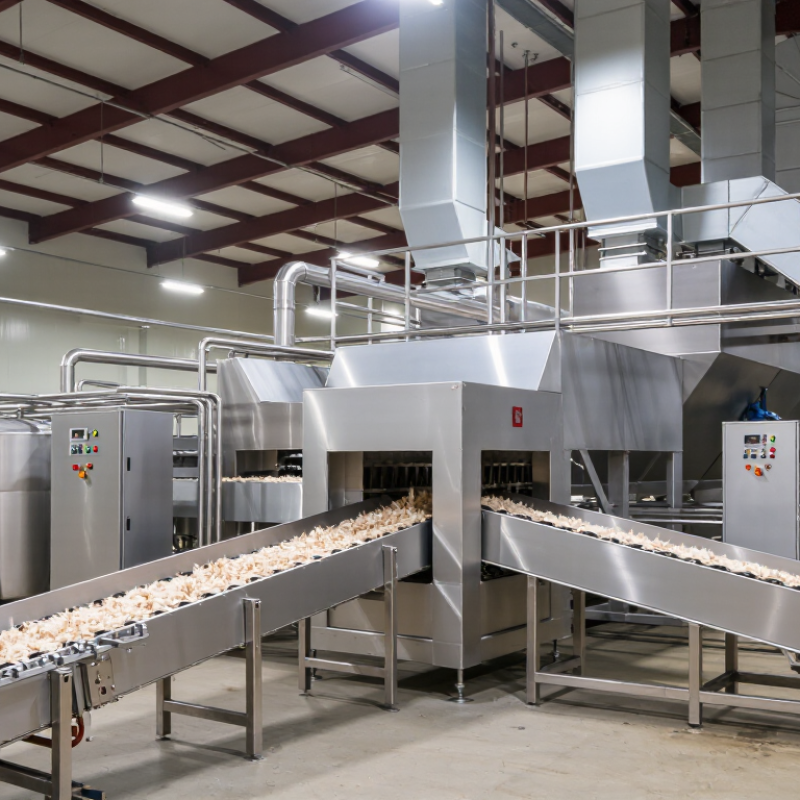
| Raw material preparation | Feather cutter or size-reduction unit | Reduces long feathers into shorter, more manageable pieces before thermal treatment. | Cut feathers with a more consistent size for feeding and processing. | Equipment should be suitable for fibrous material and designed to limit blockages. |
| Feeding and transfer | Screw conveyor or enclosed feeder | Moves feathers between preparation equipment and the hydrolysis system at a controlled rate. | A steady feed of feathers into the next processing stage. | Enclosed conveying can help contain loose material and reduce spills. |
| Hydrolysis | Pressure hydrolyzer or batch cooker | Uses heat, moisture, and pressure to treat keratin-rich feathers and make the material more suitable for meal production. | Hydrolyzed feather material. | Time, temperature, pressure, moisture, and loading need to be managed according to the equipment design and process requirements. |
| Moisture removal | Rotary, disc, or other industrial dryer | Removes moisture from treated material to produce a drier intermediate or finished meal. | Dried feather material ready for size reduction or further handling. | Drying conditions should be controlled to achieve the required final moisture without unnecessary heat exposure. |
| Grinding | Hammer mill or other industrial mill | Breaks dried material into smaller particles to create a more uniform meal. | Ground feather meal. | Screen selection and mill settings influence particle size; dust control is an important consideration. |
| Particle-size control | Vibrating or rotary screener | Separates particles by size and can return oversize material for additional grinding. | Meal with a more consistent particle-size distribution. | Screen openings should match the intended product specification and downstream handling needs. |
| Finished-product handling | Storage bin, hopper, or packaging system | Receives and stores finished meal or transfers it to a weighing and packaging station. | Feather meal ready for bulk handling or packaging. | Equipment should support clean, controlled transfer and protect the product from moisture contamination. |
| Air and dust management | Dust-collection system | Captures airborne particles generated during conveying, grinding, screening, and transfer. | Collected process dust and improved control of airborne material. | Collection points and filters should be selected for the process layout and applicable workplace requirements. |