Request Quote

Request a quote from Nidec Drive Technology America Corporation.

This quote form is intended for customers and partners in North America seeking information about Nidec Drive Technology America Corporation’s Precision Gearing Technologies. For inquiries related to the Nidec motor group division or from outside this region, please visit the global Nidec Group website to find the appropriate regional or product-specific contact.

Subscribe to Nidec Newsletter

Subscribe to our email newsletter to stay current with our precision gearing solutions, featured products, company updates, and industry news.

Top Rake System Manufacturers for Global Buyers

Choosing reliable suppliers requires more than comparing prices on a spreadsheet. Global buyers need a Rake System that matches operating conditions, material loads, installation limits, and maintenance resources. A dependable manufacturer should demonstrate consistent engineering, controlled production, and responsive technical support. These qualities matter when equipment works across changing climates, transport networks, and jobsite conditions.

This guide reviews leading Rake System manufacturers through practical purchasing criteria. It considers product design, material quality, customization, testing procedures, documentation, and after-sales service. Real buying decisions often depend on small details, such as tine spacing, frame strength, coating durability, spare-part availability, and shipping protection. A supplier may offer an attractive catalog, yet its real performance appears during commissioning and routine maintenance. That gap deserves attention.

Supplier credibility also requires evidence. Buyers should look for clear specifications, traceable quality records, realistic delivery commitments, and references from comparable applications. Manufacturers should explain their inspection process instead of relying on broad marketing claims. Independent verification helps, too. No supplier is perfect. Even experienced factories can misunderstand a regional requirement or underestimate field conditions. Honest communication reduces that risk.

The manufacturers discussed here are assessed for technical capability, production experience, international readiness, and service reliability. The comparison is not a final verdict. Buyer priorities differ. A contractor may value fast replacement parts, while an original equipment manufacturer may focus on integration and customization. Use this overview as a practical starting point, then confirm every critical detail before placing an order.

Top Rake System Manufacturers for Global Buyers

Rake Systems: Types, Functions, and Industrial Applications

Rake Systems: Types, Functions, and Industrial Applications

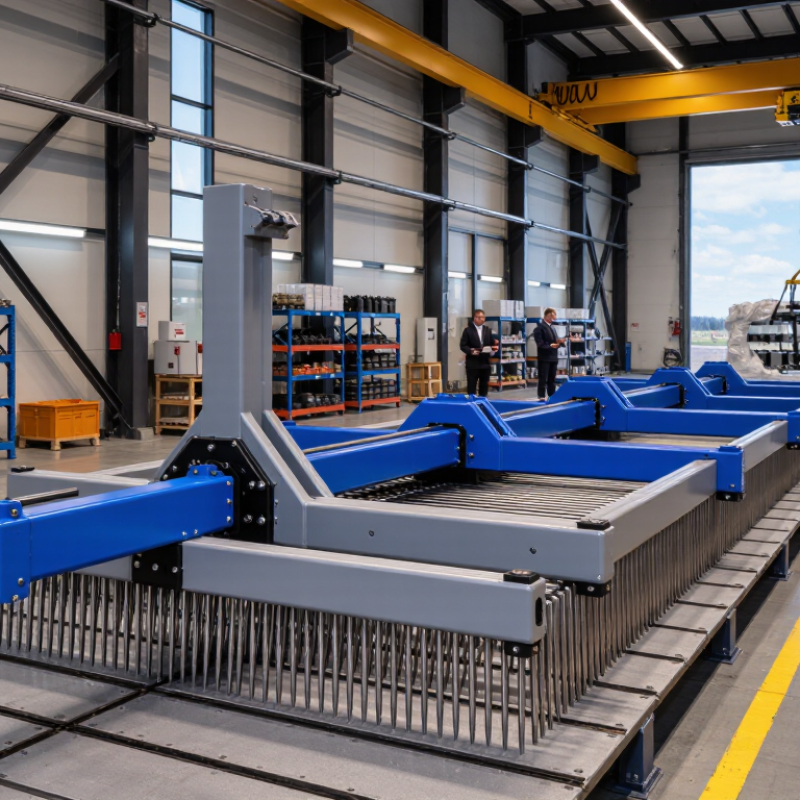
Rake systems remove floating and suspended debris before it damages pumps, screens, or downstream equipment. Bar rakes suit municipal channels and cooling-water intakes. Rotary drum rakes handle continuous flow with limited operator attention. Coarse and fine screens serve different capture targets. The wrong spacing can increase head loss and flood risk.

UNESCO’s World Water Development Report estimates that over 80% of global wastewater is discharged without treatment. This figure explains why reliable screening remains essential in expanding treatment networks. Market research from MarketsandMarkets projects the global water and wastewater treatment equipment market to reach tens of billions of dollars this decade. Rake systems represent one practical part of that investment.

Application conditions should guide manufacturer selection. Wastewater plants need corrosion-resistant steel, automatic cleaning, and safe debris discharge. Hydropower and industrial cooling channels often require stronger rakes for timber, plastics, and heavy solids. Food-processing sites may prioritize hygienic surfaces and easy washdown. Maintenance matters. Operators should check rake speed, tooth geometry, motor load, and emergency access during trials. A common mistake is choosing capacity from average flow alone. Storm surges, seasonal debris, and uneven loading can expose that weakness. Published performance data helps, but field testing still deserves more attention.

Key Criteria for Evaluating Global Rake System Manufacturers

Global rake system manufacturers should be evaluated through field evidence, not catalogue photographs. The 2024 MarketsandMarkets Agricultural Equipment Market report projects growth from about USD 207 billion in 2023 to USD 285 billion by 2028. This expansion increases supplier choice, but it also increases quality variation. Ask manufacturers for working-width data, pickup losses, fuel use, and performance records from comparable soil and crop conditions. A glossy brochure is not evidence.

Engineering depth matters. Examine tine material, rotor balance, bearing protection, frame welding, and adjustment accuracy. For hay and forage applications, the 2024 Grand View Research report identifies mechanization and productivity as major market drivers. A reliable manufacturer should explain how its rake maintains windrow consistency at different speeds. Request test results, service intervals, spare-part drawings, and operator training records. Short trials help. They can expose vibration, uneven raking, or difficult hydraulic settings before a large order.

Global buyers also need measurable supplier reliability. Review factory quality procedures, inspection documents, warranty response times, and parts availability in the destination region. ISO 9001 certification can support process credibility, but certification alone proves little about field durability. Compare total ownership cost, including shipping, maintenance, downtime, and local technician support. I would question any supplier promising zero maintenance. Machines work in dust, moisture, and rough fields; failures remain possible. The better manufacturer reports them honestly and shows how design changes followed.

Top Rake System Manufacturers for Global Buyers - Key Criteria for Evaluating Global Rake System Manufacturers

Evaluation Dimension Recommended Buyer Benchmark Key Data to Request Why It Matters for Global Buyers
Application Compatibility The rake system should be matched to the intended crop, material, soil condition, terrain, and operating method. Application list, crop compatibility, operating environment, and recommended use limitations. Prevents underperformance, excessive wear, and unsuitable-machine purchases.
Working Width Compare the effective working width in metres, not only the overall machine width. Minimum and maximum working width, adjustment method, and width tolerance. Working width directly affects field coverage, productivity, and transport planning.
Operating Speed Evaluate the manufacturer’s recommended operating-speed range in kilometres per hour for the specific application. Recommended speed, maximum speed, field-condition assumptions, and test results. Higher speed is valuable only when it maintains collection quality and limits crop or material loss.
Theoretical Field Capacity Use the formula: theoretical capacity (ha/h) = working width (m) × speed (km/h) ÷ 10. Working width, operating speed, estimated field efficiency, and tested output. Provides a consistent basis for comparing productivity between different configurations.
Power and Hydraulic Requirements The required tractor power, PTO speed, hydraulic flow, and hydraulic pressure must be compatible with the buyer’s equipment. Minimum power rating, PTO requirement, hydraulic flow in L/min, pressure in bar, and connection type. Avoids compatibility problems, downtime, and additional adaptation costs.
Rake Adjustment Prefer systems with tool-free or easily accessible adjustment for tine height, angle, pressure, and windrow formation. Adjustment range, adjustment time, locking mechanism, and operator instructions. Improves performance across changing field and material conditions.
Material and Wear Resistance Critical tine and contact components should have documented material specifications and replaceable wear parts. Material grade, hardness data where applicable, coating method, wear-part drawings, and replacement intervals. Durable components reduce maintenance frequency and total operating cost.
Frame and Structural Design Assess frame rigidity, load distribution, weld quality, and protection against deformation during transport and operation. Frame material, structural drawings, weld inspection records, static-load data, and fatigue-testing information. A robust frame supports stable performance and a longer service life.
Transport and Storage Check folded transport width, transport height, total weight, parking requirements, and road-safety provisions. Folded dimensions, shipping dimensions, gross weight, lifting points, locking devices, and lighting requirements. Important for international shipping, warehouse layout, and local road regulations.
Quality Management A documented quality-management system, such as ISO 9001 certification, should be independently verifiable. Certificate number, issuing body, scope, validity date, inspection records, and corrective-action process. Helps buyers assess production consistency and process control.
Safety and Regulatory Compliance The system should include guards, warning labels, operating instructions, and documentation required for the destination market. Risk assessment, conformity declaration where applicable, safety manual, guarding details, and test reports. Reduces legal, operational, and workplace-safety risks.
Testing and Demonstration Require documented tests under conditions comparable to the buyer’s intended application. Test date, site conditions, machine configuration, output, loss rate, photographs, and signed test report. Independent or repeatable evidence is more reliable than catalogue claims alone.
Spare Parts Availability Common wear parts should be identifiable by part number and available through a defined international supply process. Parts catalogue, stock locations, normal lead time, emergency lead time, and minimum order quantities. Reliable parts access limits seasonal downtime and service interruptions.
Warranty and Service Compare warranty duration, coverage exclusions, claim procedures, response time, and technical-support channels. Written warranty terms, service-level commitment, troubleshooting procedure, and authorized service coverage. Clear after-sales obligations reduce disputes and lifecycle risk.
Documentation and Localization Technical documents should be complete, revision-controlled, and available in the buyer’s required language. User manual, parts list, installation guide, maintenance schedule, drawings, and language options. Good documentation improves installation accuracy, training, and maintenance quality.
International Logistics Evaluate export experience, packaging protection, shipping terms, customs documents, and delivery reliability. Incoterms, packaging specification, HS classification, export documents, production lead time, and delivery record. Reduces customs delays, transit damage, and landed-cost uncertainty.
Total Cost of Ownership Compare purchase price together with freight, installation, consumables, maintenance, spare parts, energy use, and expected service life. Five-year cost estimate, maintenance schedule, consumable prices, replacement-part prices, and resale assumptions. The lowest initial price does not necessarily provide the lowest operating cost.

Buyer note: Performance figures should be verified for the exact rake-system configuration, operating conditions, destination-market requirements, and written commercial terms before purchase.

Leading Rake System Manufacturers by Product Capabilities

Top Rake System Manufacturers for Global Buyers

Leading Rake System Manufacturers by Product Capabilities

Reliable rake system manufacturers differ mainly in product capability, not catalog size. Experienced producers offer rotary, wheel, belt, and tine rake designs for varied field conditions. Their equipment should handle crop density, moisture, working width, and transport limits. Strong manufacturers also provide hydraulic adjustment, replaceable wear parts, and clear maintenance instructions. These details reduce downtime during narrow harvesting windows.

Tips: Ask for field data, not promises. Request torque figures, tine durability records, spare-part lead times, and service procedures. Check whether the frame suits your tractor’s horsepower and hydraulic output. A factory video helps, but a live machine test is better. Small oversights matter.

Global buyers should study manufacturing control as carefully as product range. Traceable materials, consistent welding, balanced rotors, and documented inspections indicate dependable production. Export-ready packing also protects painted frames and delicate hydraulic fittings during long transport. However, no catalog is complete. Some manufacturers list impressive options but provide limited testing evidence. That gap deserves direct questions. A lower purchase price may become expensive when local technicians cannot identify a failed bearing or bent tine. Buyers should compare total operating effort, not only the invoice. Feedback from users in similar soil and climate conditions remains valuable, although it can be incomplete.

Comparing Quality, Customization, Certifications, and Support

Top Rake System Manufacturers for Global Buyers

Quality should be judged beyond polished brochures. Inspect weld consistency, frame alignment, coating thickness, and moving-part performance. A reliable manufacturer should provide material records, dimensional drawings, load-test results, and clear inspection procedures. Ask how the system performs after repeated use, not only when it leaves the factory. Small flaws matter. They can increase maintenance costs later.

Customization separates capable manufacturers from simple resellers. Discuss rake width, tooth spacing, mounting interfaces, operating conditions, and transport limits before requesting a quotation. Experienced engineering teams can revise drawings and identify weak points early. Certifications also require careful checking. Confirm whether documents apply to the exact model, production site, and destination market. ISO 9001 may support process control, but it does not prove every product is suitable for your application. That distinction is often missed.

Tips: Request a sample inspection report and two recent customer references. Compare warranty terms, spare-parts availability, response times, and installation guidance. A useful supplier should explain limitations honestly. If every answer sounds perfect, investigate further. Support is tested after delivery, when a replacement tooth, manual, or technical adjustment is urgently needed. Leave room for improvement in your evaluation; even a strong supplier may need clearer communication across languages and time zones.

How Global Buyers Can Select and Purchase Rake Systems

Top Rake System Manufacturers for Global Buyers

Global buyers should select a rake system by application, not by catalog appearance. Define the working width, material type, operating speed, and daily workload. A system handling wet crop residue may need stronger tines and corrosion-resistant components. Soil conditions also matter. Test data is useful, but field performance matters more.

Ask manufacturers for drawings, load ratings, spare-parts lists, and installation instructions. Confirm whether the system fits your existing tractor, conveyor, or processing line. Check adjustment methods carefully. Tools should not be required for every minor setting. Request a sample unit or a supervised demonstration when possible. Small details often decide labor costs.

Supplier evaluation should include production capacity, quality controls, export experience, and technical support. Review inspection records and ask how defects are handled. A low initial price can hide expensive freight, replacement parts, or difficult maintenance. Get a complete quotation with packaging, delivery terms, warranty coverage, and training included. Keep communication in writing.

Do not accept vague performance claims.

Experienced buyers should also examine local safety requirements and electrical standards before ordering. Specifications can change during installation, especially when site measurements are incomplete. That mistake is common. Recheck dimensions, connection points, and clearance zones before approving production. A reliable purchase usually comes from clear documents, practical testing, and a supplier willing to discuss limitations openly.

Top Rake System Manufacturers for Global Buyers

How Global Buyers Can Select and Purchase Rake Systems

Bar spacing is one of the most important technical criteria when comparing rake systems. Coarse screens commonly use 50–150 mm spacing for large debris, medium screens typically use 20–50 mm spacing, and fine screens generally use 5–20 mm spacing for smaller solids. Buyers should also verify channel dimensions, flow rate, head-loss limits, material selection, cleaning mechanism, automation, maintenance access, and compliance requirements before placing an order.

Article Source: