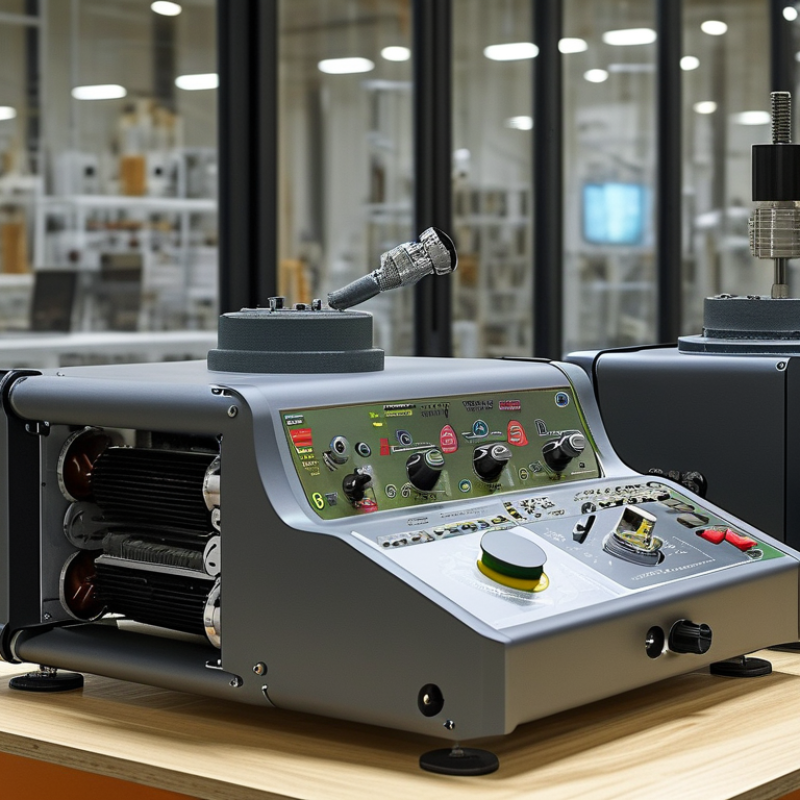
| Electrodynamic Shaker | A test system that uses an electromagnetic force to move an armature and reproduce controlled vibration profiles. | Approximately 5–3,000 Hz, depending on system configuration | Primarily linear motion; vertical or horizontal testing with a slip table | Electronics, automotive components, aerospace equipment, batteries, telecommunications hardware | Excellent frequency control, rapid profile changes, sine and random testing capability | Force rating, stroke, payload, cooling method, armature size, controller compatibility and facility power |
| Servo-Hydraulic Shaker | A vibration system driven by hydraulic actuators and servo valves to generate high force and long-stroke motion. | Approximately 0.5–200 Hz, depending on actuator and test setup | Linear motion with high displacement and high force capability | Large vehicle structures, civil engineering components, railway equipment, heavy machinery and seismic simulation | Suitable for large payloads, high force levels and low-frequency endurance testing | Hydraulic power requirements, oil maintenance, noise control, stroke, load stability and installation space |
| Mechanical Vibration Machine | A rotating or cam-driven machine that produces vibration through eccentric masses or mechanical imbalance. | Typically about 5–100 Hz | Usually fixed-frequency sinusoidal or repetitive motion | Packaging transport simulation, material screening, hopper flow improvement and basic component endurance tests | Simple construction, comparatively low operating cost and straightforward maintenance | Limited waveform flexibility, fixed operating frequency, mechanical wear and lower test-data control |
| Electromagnetic Vibrator | A compact electromagnetic actuator that converts electrical signals into oscillating mechanical motion. | Approximately 10–10,000 Hz for small-load systems | Small-amplitude linear vibration | Small electronic assemblies, sensors, switches, laboratory demonstrations and product screening | Compact footprint, fast response and convenient electronic frequency adjustment | Limited payload and displacement, heat generation, mounting method and controller accuracy |
| Pneumatic Vibrator | An air-powered device that creates vibration through a turbine, piston or ball mechanism. | Commonly about 10–20,000 Hz, depending on design and air pressure | Circular, rotary or linear vibration | Bulk-material handling, powder discharge, silo and hopper flow, foundry equipment and process machinery | Suitable for hazardous or wet environments and capable of continuous operation | Compressed-air quality, operating pressure, noise, air consumption, mounting orientation and maintenance access |
| Vibration Screening System | A production-line or laboratory system used to expose products to controlled vibration and identify weak assemblies or loose connections. | Application-dependent; commonly low- to mid-frequency testing | Sine sweep, fixed-frequency or broadband random vibration | Consumer electronics, power supplies, automotive modules, connectors and industrial control assemblies | Improves manufacturing quality by detecting latent defects before shipment | Throughput, repeatability, fixture design, product orientation, data logging and operator safety |
| Vibration Monitoring System | A measurement system using accelerometers or velocity and displacement sensors to assess machine vibration during operation. | Sensor-dependent; commonly from below 1 Hz to several kHz | Measures acceleration, velocity, displacement, frequency and phase | Predictive maintenance for motors, pumps, fans, compressors, gearboxes, turbines and production lines | Supports early fault detection, condition-based maintenance and reduced unplanned downtime | Sensor bandwidth, mounting quality, sampling rate, environmental protection, alarm limits and software integration |
| Seismic or Earthquake Simulator | A large multi-axis test platform that reproduces recorded or synthetic earthquake motions for structural evaluation. | Generally low frequency, often below 50 Hz | Single-axis or multi-axis translational motion | Buildings, bridges, pipelines, industrial equipment, tanks and infrastructure components | Enables controlled evaluation of structural integrity and seismic response | Platform size, payload, displacement, acceleration, multi-axis coordination and foundation requirements |