Top Levitating Air Blower Innovations for Global Buyers?
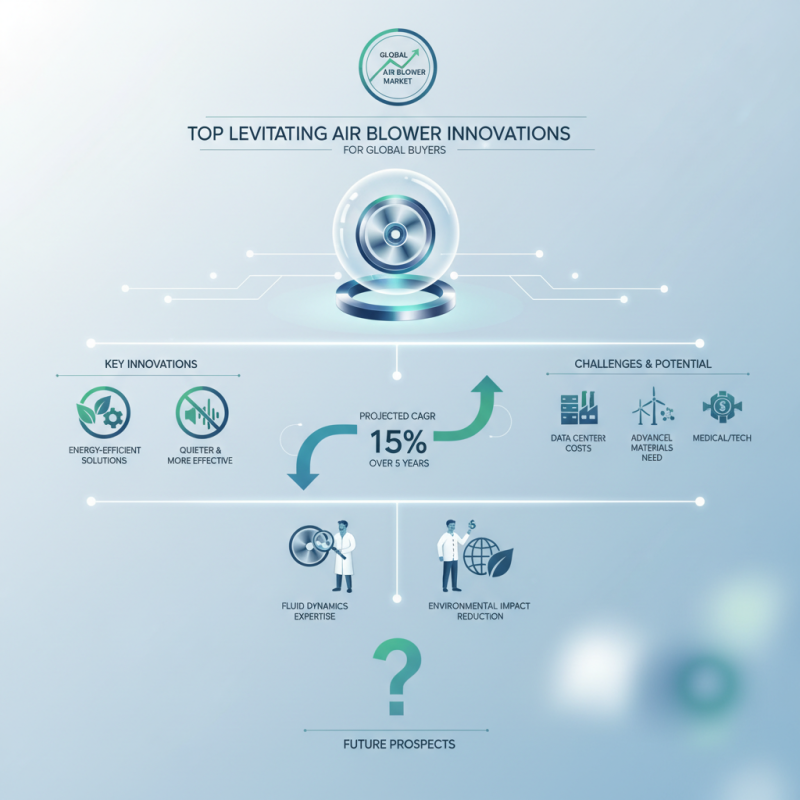
The "Levitating Air Blower" market is experiencing rapid innovation and transformation. According to a recent industry report by Market Research Future, the global levitating air blower market is projected to grow at a CAGR of 15% over the next five years. This growth is driven by rising demand for energy-efficient solutions across multiple sectors. The unique design of the levitating air blower provides a quieter and more effective alternative to traditional blower systems.
Dr. Emily Chen, a leading expert in fluid dynamics, emphasizes the significance of these advancements. She states, "The levitating air blower not only improves operational efficiency but also reduces environmental impact." This highlights how this technology aligns with global sustainability goals.
However, challenges remain. Many manufacturers still grapple with high production costs and the need for advanced materials. Additionally, the technology requires further refinement for broader applications. Despite these hurdles, the potential for levitating air blowers in various industries is promising.
Emerging Technologies in Levitating Air Blower Design
The emerging technologies in levitating air blower design demonstrate significant advancements. These innovations utilize magnetic levitation to create a frictionless airflow. The result is enhanced efficiency and reduced noise levels. Engineers focus on optimizing airflow patterns to achieve desirable performance.
Recent designs incorporate smart sensors for real-time monitoring. These sensors adjust airflow based on environmental conditions. This adaptability makes these blowers more effective in various settings. However, while technology evolves, challenges remain. The integration of sensors increases complexity and can raise costs.
Another noteworthy development is energy efficiency. New models consume less power while maintaining performance. This reduces operational costs and environmental impact. Yet, the balance between functionality and sustainability can be tricky. Users may overlook maintenance needs, impacting long-term efficiency. Addressing these issues is crucial for widespread adoption.
Key Features Driving Innovation in Air Blower Performance
Innovations in levitating air blowers are reshaping how we approach air movement. Key features include enhanced efficiency and user-friendly designs. These innovations aim to create powerful airflow while minimizing energy consumption. Some systems utilize advanced motor technology that allows for quieter operation.
In addition, smart sensors are becoming increasingly common. They can automatically adjust airflow based on environmental conditions. This functionality not only improves performance but also adds to user convenience. However, one challenge remains: achieving optimal balance between performance and energy use. Industry experts continue to explore how to address this. Some designs currently struggle with heat management, showcasing the need for ongoing improvement.
Another driving feature is portability. Lightweight materials make air blowers easier to handle. Users want flexibility in applications, whether for home or industrial use. However, a trade-off may occur between weight and durability. As innovation continues, manufacturers must carefully consider these aspects. Balancing weight and efficiency is crucial for future success in the market.
Major Players in the Levitating Air Blower Market
The levitating air blower market has seen significant advancements. These innovations come from various players aimed at enhancing air movement and efficiency. They focus on integrating new technologies that enhance performance while reducing energy consumption. The prominent players are investing in research and development to create more effective models. These companies are exploring materials that are both lightweight and durable, ensuring the blowers are efficient and long-lasting.
Sustainability is now a crucial factor in product development. Innovations in these blowers often reflect a commitment to environmentally friendly practices. Manufacturers are looking for eco-friendly materials and energy-efficient designs. These changes resonate with consumers who prioritize sustainability in their purchasing decisions. However, some methods still require refinement to balance performance and ecological impact. This challenge offers opportunities for improvement in future product iterations.
Global interest in these products is rising. Companies are expanding their market reach, but competition remains fierce. Some players struggle to keep pace with innovation, risking market share. A focus on collaboration between industry leaders could foster advancements that benefit all. As the marketplace evolves, maintaining transparency and accountability will be key to gaining consumer trust.
Applications of Levitating Air Blowers Across Industries
Levitating air blowers are gaining traction across industries due to their unique capabilities. These innovative devices utilize magnetic levitation to reduce friction. As a result, they offer a quieter and more efficient airflow. This technology is especially beneficial in cleanroom environments, where contamination control is crucial. By minimizing contact with surfaces, these blowers enhance the cleanliness of sensitive areas.
In manufacturing, the versatility of levitating blowers shines. They can be employed for cooling mechanisms or material handling. The precise control of air pressure makes them ideal for delicate applications. However, implementing these systems requires careful consideration. The initial investment may be high, and their long-term reliability is still under investigation. Therefore, industries must weigh their benefits against potential drawbacks.
Moreover, the energy consumption of levitating air blowers varies significantly depending on usage. It is essential to monitor this aspect for sustainability. Integrating these devices may lead to unexpected challenges. For example, the complexity of maintenance can deter some users. However, as technology advances, these issues may be addressed, paving the way for broader adoption.
Applications of Levitating Air Blowers Across Industries
This chart illustrates the diverse applications of levitating air blowers across various industries, highlighting the key sectors that benefit from this innovative technology.
Future Trends in the Development of Air Blower Solutions
Future trends in air blower technology promise to reshape industries worldwide. Recent studies indicate that the global air blower market is projected to reach $30 billion by 2026, driven by innovations in efficiency and technology. One key area of development is the levitating air blower, which minimizes friction and increases airflow efficiency. These advancements lead to reduced energy costs for manufacturers and are more sustainable.
The integration of smart technology into air blowers enhances performance. Sensors can monitor airflow and energy consumption in real time. According to the International Energy Agency, businesses that adopt smart technology can improve energy efficiency by up to 30%. Each innovation pushes the boundaries of what air blowers can achieve.
**Tip:** When evaluating air blower solutions, consider their energy efficiency ratings. Look for products with smart technology capabilities. Regular maintenance can help maintain performance and prolong the lifespan of your equipment.
Top Levitating Air Blower Innovations for Global Buyers - Future Trends in the Development of Air Blower Solutions
| Innovation Type | Key Features | Market Applicability | Future Trends |
| Electrostatic Levitation | Reduced noise, energy-efficient, enhanced air flow | Industrial, Commercial | Increased adoption in cleanroom environments |
| Maglev Blower Technology | Uses magnetic levitation for minimal friction | HVAC, Automotive | Expansion in energy-saving regulations |
| Smart Air Blowers | IoT connectivity, real-time monitoring | Residential, Commercial | Integration with smart home systems |
| Variable Speed Control Blowers | Adjusts airflow based on demand | Manufacturing, Warehousing | Increasing need for energy efficiency |
| Portable Levitation Blowers | Lightweight design, easy to transport | Construction, Outdoor Events | High demand in temporary setups |