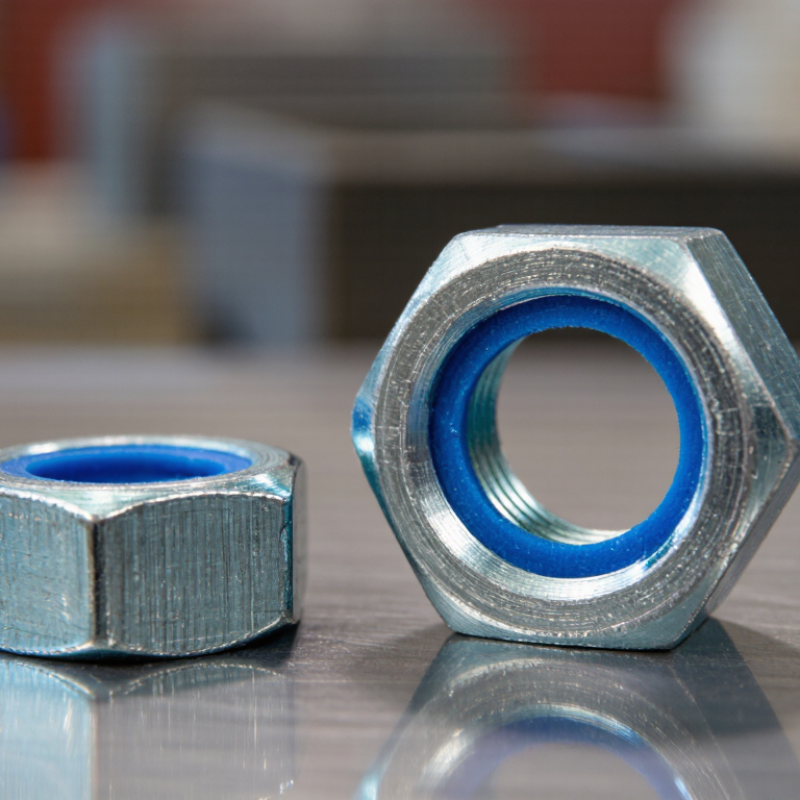
| Component type | A prevailing-torque lock nut with a nylon insert near one end of the nut. | Provides resistance to loosening in threaded joints exposed to vibration or movement. |
| Main metal body | Usually manufactured from carbon steel, stainless steel, or another specified nut material. | Carries the clamping load and engages with the bolt or screw threads. |
| Nylon ring or insert | A polymer ring partially blocks the thread opening and is deformed by the mating bolt thread. | Creates friction and interference that helps prevent the nut from rotating freely. |
| Thread engagement | The bolt first engages the metal threads and then contacts the nylon insert as the nut is tightened. | The metal threads provide strength, while the insert produces locking resistance. |
| Locking mechanism | The nylon is compressed and conforms around the bolt threads, increasing prevailing torque. | Reduces the risk of loosening caused by vibration, small movements, and changes in load. |
| Installation method | Install with a compatible wrench or socket and tighten to the specified fastener torque. | Ensures the joint develops the intended clamping force without damaging the insert or threads. |
| Torque behavior | Part of the tightening torque is consumed by friction at the nylon insert; the exact value depends on size, material, lubrication, and reuse. | Torque specifications should account for the nut type and follow the applicable standard or engineering instruction. |
| Vibration resistance | The insert supplies prevailing torque, but it does not create a permanent mechanical lock. | Suitable for many general fastening applications, provided the joint is correctly designed and tightened. |
| Temperature consideration | The usable temperature range is limited by the nylon grade and the nut specification; excessive heat can soften or degrade the insert. | Requires a metal-only locking method when operating temperatures exceed the selected nylon insert’s rating. |
| Chemical resistance | Nylon resistance varies with the chemical, concentration, temperature, and exposure time. | Chemical compatibility should be checked before using the nut in aggressive environments. |
| Reuse | The nylon insert can lose locking effectiveness after repeated installation and removal. | Inspect the nut and replace it if the insert is damaged, loose, cracked, or no longer provides prevailing torque. |
| Correct bolt fit | The nut thread must match the bolt’s nominal diameter, thread pitch, thread form, and tolerance class. | Correct matching prevents cross-threading and allows the nylon insert to function as intended. |
| Common applications | Equipment panels, machinery, vehicles, appliances, structural assemblies, and general maintenance work. | Useful where moderate vibration resistance and straightforward installation are required. |
| Key limitation | The nylon insert may be unsuitable for high-temperature, highly corrosive, or applications requiring repeated disassembly. | Alternative locking nuts, all-metal lock nuts, prevailing-torque devices, or other joint designs may be required. |