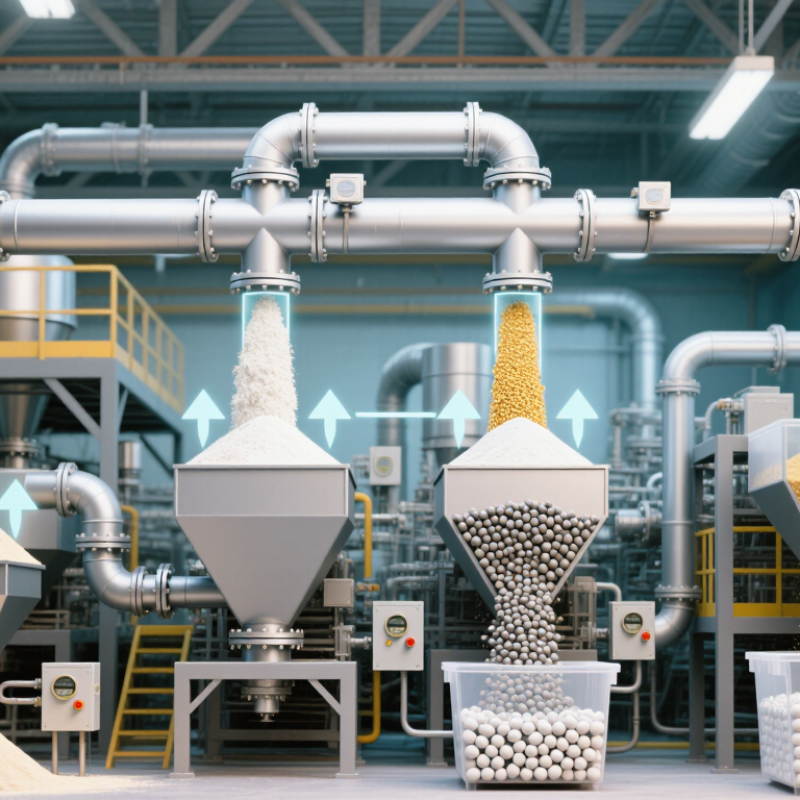
A pneumatic conveyor moves dry bulk material through a sealed pipe using air pressure or vacuum. Common loads include flour, sugar, starch, plastic pellets, grain, cement, lime, and fly ash. In food plants, enclosed lines can reduce spills between storage bins and mixers. In cement facilities, they move powders from mills to silos. The route may run overhead, around equipment, or across a production floor.
Scale matters. The USDA’s Crop Production 2024 Summary reports 14.9 billion bushels of U.S. corn production that year. That figure shows the scale of grain logistics, not the share handled pneumatically.
The USGS Mineral Commodity Summaries 2025 estimates U.S. cement production at 84 million metric tons in 2024. Cement plants use pneumatic systems for fine powders, where sealed transfer can help limit dust escape.
The details matter. Fast, dilute-phase airflow suits many light materials; slower, dense-phase movement can reduce damage to fragile pellets. But bends, moisture, and changing particle sizes can cause blockages or uneven flow. A clean-looking layout can still be difficult to maintain. Operators need suitable filters, pressure controls, and access points for clearing lines. Dust collection and material testing should inform system design, especially when powders behave differently across seasons or batches.