What is Precision Gearing and Its Top Applications in 2026?
Precision gearing is a critical component in various industries, providing enhanced accuracy and efficiency. As Dr. Emily Johnson, a leading expert in precision engineering, states, "The future of precision gearing lies in its ability to revolutionize manufacturing processes." This technology is expected to push the boundaries of precision across different applications by 2026.
In sectors like automotive, aerospace, and robotics, precision gearing plays an indispensable role. Its ability to minimize backlash and provide smooth torque transmission is unmatched. However, challenges persist. Many manufacturers struggle with integrating advanced precision gearing into existing systems. There's a need for continuous innovation to address these integration issues.
Further, as industries evolve, the demand for custom solutions grows. Companies must adapt or risk falling behind. While precision gearing offers numerous advantages, careful consideration of design and implementation is essential. Striking a balance between standardization and customization could be the key to success. The journey may have bumps, but the potential rewards are significant.

What is Precision Gearing? An Overview and Definition
Precision gearing is an essential element in various mechanical systems. It refers to gears manufactured with high accuracy and tight tolerances. This precision allows for smoother operation and greater efficiency. These gears are crucial in applications where accuracy is paramount, such as robotics and aerospace engineering.
One notable feature of precision gears is their ability to minimize backlash. Backlash can lead to errors in positioning. By reducing this backlash, the system operates flawlessly. This is particularly vital for applications like CNC machines where precision impacts overall performance.
Tips: When selecting precision gears, consider material and design. Choosing the right material can increase durability. Also, pay attention to the gear teeth profile. This can influence efficiency and lifespan. Remember, not all designs are ideal for every application. Sometimes, testing various configurations is necessary to find the best fit.
Precision gearing remains a fascinating area of engineering. Its role in innovation cannot be understated. As technology advances, the need for precision will likely grow. Therefore, understanding its fundamentals is crucial for future developments. Whether in small machines or large systems, precision gearing plays a key role.
Key Features of Precision Gears: Accuracy, Efficiency, and Durability
Precision gearing is integral to many modern applications, particularly in engineering and technology sectors. These gears enable machines to achieve unmatched accuracy. Their unique design minimizes backlash, leading to smoother operations. This quality is crucial in robotics and aerospace industries, where precision dictates performance.
Efficiency is another hallmark of precision gears. They are engineered for minimal friction and wear, thus optimizing energy transmission. In a world where every watt counts, this efficiency translates to effective functioning. However, achieving perfect efficiency can be a challenge. Even slight imperfections in gear teeth can result in energy loss. Engineers must constantly evaluate these components to enhance design.
Durability further sets precision gears apart. They are often crafted from high-quality materials that withstand significant stress and wear. Gears are subjected to varying conditions; some may not endure as expected. Regular maintenance and inspections become necessary. Balancing durability with weight can sometimes lead to compromises. This ongoing challenge drives innovation in gear design.
Market Trends and Growth Projections for Precision Gearing by 2026
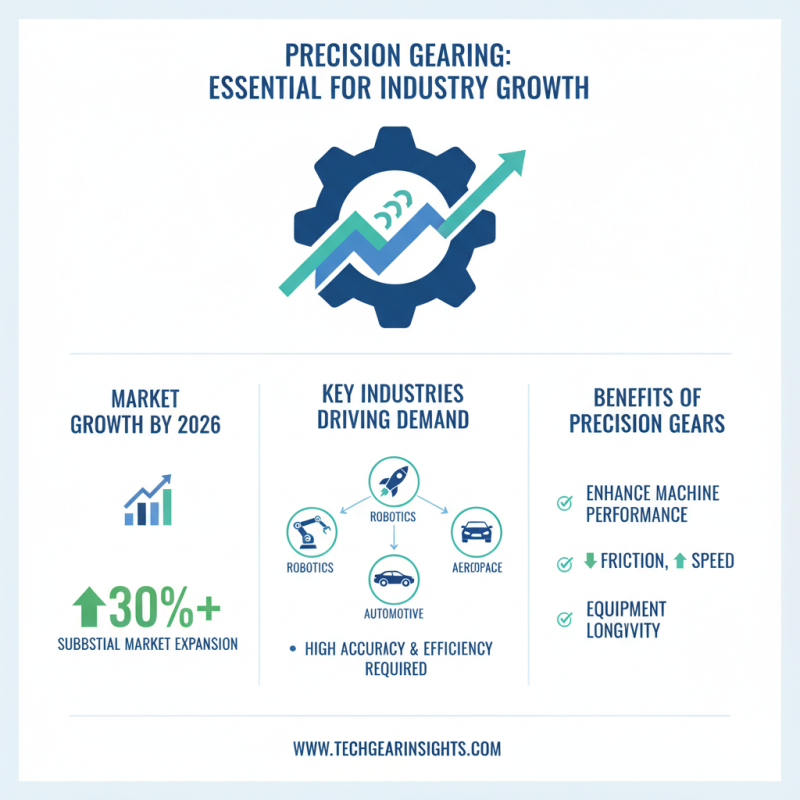
Precision gearing is essential in many industries. By 2026, this market is expected to see substantial growth. Demand continues to rise in robotics, aerospace, and automotive sectors. These industries require high accuracy and efficiency. Precision gears enhance performance in machines. They reduce friction, improve speed, and increase longevity.
Market trends indicate a shift toward advanced materials and manufacturing techniques. Lightweight composites and 3D printing are becoming more popular. These innovations promise to enhance the capabilities of precision gears. Companies are investing in research to push boundaries. However, challenges like cost and technical barriers still exist.
With new applications emerging, the future looks promising. Industries are not only focusing on performance but also sustainability. There is an urge to create eco-friendly solutions. The gap between technology and market needs might lead to new opportunities. Stakeholders should consider both innovation and practical implementation. Balancing these aspects can pave the way for growth by 2026.
Top Industries Utilizing Precision Gearing: Aerospace, Robotics, and Beyond
Precision gearing plays a crucial role in various industries. In aerospace, for example, precision gears ensure smooth operation. They help control flight systems and improve accuracy. However, getting these gears perfectly right is challenging. Small errors can lead to significant issues in flight safety.
Robotics also heavily relies on precision gearing. It allows robots to perform intricate tasks. From assembling products to navigating complex environments, precise movements are key. But achieving the right tension and alignment can sometimes be tricky. Engineers often find themselves troubleshooting unexpected results.
Beyond aerospace and robotics, many industries are tapping into precision gears. Automotive, medical devices, and manufacturing sectors are using them for improved efficiency. Yet, the demand for precision comes with pressure. Companies must balance cost and quality. This can lead to mistakes and setbacks. Addressing these challenges is critical for future advancements.
Top Applications of Precision Gearing in 2026
Innovative Developments in Precision Gearing Technology for Future Applications
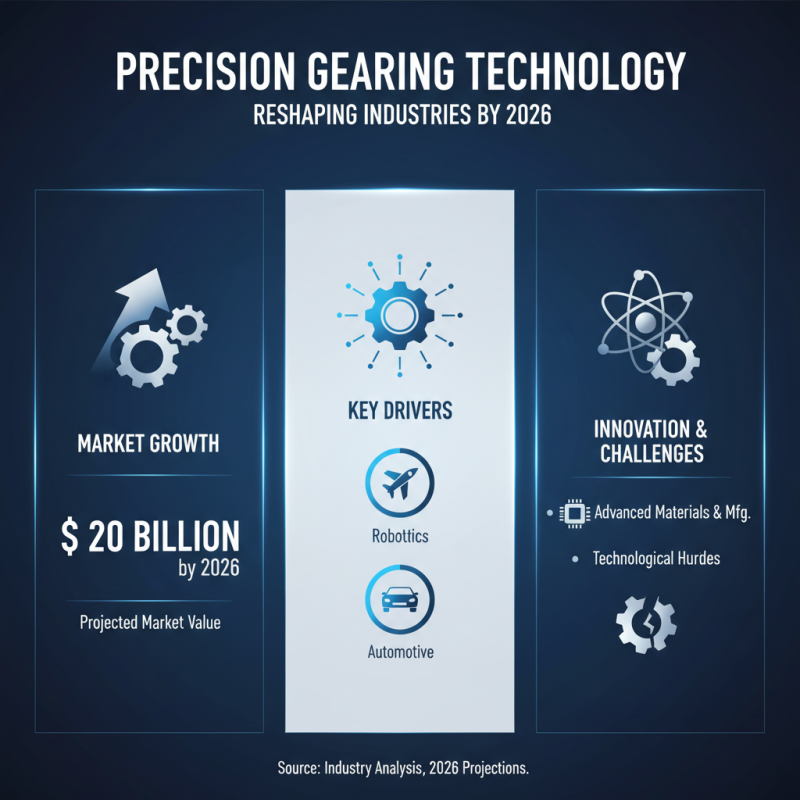
Precision gearing technology is evolving rapidly. In 2026, it is expected to see advancements that could reshape numerous industries. The market for precision gears is projected to reach approximately $20 billion by 2026, fueled by higher demand in robotics, aerospace, and automotive sectors. Innovations in materials and manufacturing techniques are pushing boundaries, but challenges remain.
One significant development is the adoption of additive manufacturing in gear production. This allows for intricate designs that were previously impossible to create. In fact, a report indicates that 30% of manufacturers are exploring 3D printing for precision gearing. However, these techniques often come with high costs and require skilled operators to ensure quality control.
Additionally, smart gear systems are gaining traction. Integrating sensors into gears enables real-time monitoring and predictive maintenance. This innovation could potentially reduce downtime by 20%. However, the complexity involved in these systems poses integration challenges. With rapid technological advancements, the industry must address these issues to fully harness the potential of precision gearing.