7 Safety Harness Buying Tips for Global Buyers
For global buyers, choosing a Safety Harness is not a simple price comparison. A product that looks sturdy on a screen may feel restrictive during a full shift. Fit, intended task, compatible connectors, and clear instructions all affect whether workers can use it correctly. Small details matter. Ask how the harness supports the specific work, including climbing, positioning, or restraint, rather than relying on a broad product description. Confirm that sizing options suit the people who will wear it, and review adjustment points with gloves on. A poor fit can undermine confidence, even when the paperwork appears complete.
Buying across borders adds another layer. Product markings, documentation, language, after-sales support, and applicable requirements can differ by destination and job site. Request current technical documents and traceable product identification, then verify them with the supplier and a qualified safety professional. Do not treat a certificate alone as proof that a harness suits every task. Check material and stitching details, compatibility with the planned system, inspection guidance, and replacement support. If possible, examine a sample before ordering in volume. That step takes time. It can prevent an expensive mismatch. This guide presents seven practical buying tips for comparing suppliers and products with care. Some choices remain uncertain until workers test the equipment in realistic conditions. That is worth admitting. A spreadsheet cannot reveal every pressure point. Use evidence, field feedback, and local expertise together, and revisit the decision when tasks or users change.
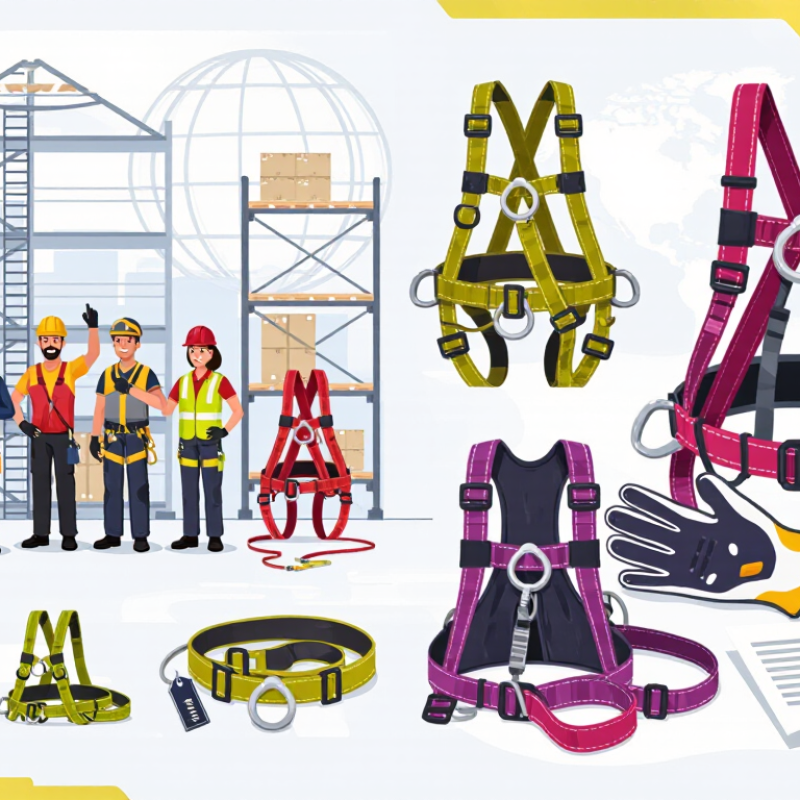
Identify Work-at-Height Risks and Select the Right Harness Type
Before comparing harnesses, map the work area and identify realistic fall hazards. Look for unguarded edges, fragile roof panels, ladder transitions, and openings hidden by materials. Ask how workers will reach each task and whether they can stay away from the edge. Small details matter. A restraint setup may prevent a worker from reaching a hazard, while a fall-arrest setup is intended to stop a fall. These are not interchangeable choices. Consider possible swing falls, sharp edges, and the clearance below the worker. A lanyard that seems suitable on paper may allow contact with a lower level.
Match the harness to the task, the worker, and compatible equipment. Check fit with the clothing and tools used on site; loose straps can shift, while poorly adjusted straps can restrict movement. Confirm that the selected system’s instructions cover the anchor point and connection being used. A harness alone does not make a safe system. Workers also need training, inspection procedures, and a workable rescue plan for a suspended person. Requirements vary by location, so verify applicable standards with a qualified safety professional before purchasing. A checklist helps, but it can miss changing site conditions. Reassess when the work area, access route, or task changes.
Compare Safety Standards in Your Target Markets
Safety harness standards are not universal, even when products look nearly identical. Buyers in the United States may need to consider OSHA requirements and ANSI/ASSP Z359 criteria. European purchasers commonly check EN 361 for full-body harnesses. Australia and New Zealand use AS/NZS 1891.1, while Canadian projects may specify CSA Z259.10. These references have different scopes and are not automatically interchangeable.
Start with the country where the harness will be used, not just where it is manufactured. Ask suppliers for the exact standard edition, relevant conformity documents, test reports, and clear photos of product labels. Confirm that the harness suits the task and its attachment points are approved for that use. A label alone is not enough. Check compatibility with connectors, lanyards, and rescue equipment as well.
Compare local inspection and documentation requirements, too. Look for readable instructions in the user’s language and a clear process for recording inspections. A familiar conformity mark can create false confidence if it does not cover the specific harness model or intended application. This comparison takes time. It can also expose gaps in a purchasing checklist; that is worth correcting before placing a bulk order.
Evaluate Fit, Adjustability, Materials, and Comfort
A safety harness should fit the worker, not just the purchase specification. Check the size range against actual users, then test the harness over the clothing and layers worn on site. Shoulder straps should lie flat, and leg straps should feel secure without pinching. Try it while moving, bending, and reaching. Try it loaded only in a controlled setting, following the manufacturer’s instructions. Small details matter.
Adjustability is useful when several workers share equipment, but excess strap tails can snag or flap. Look for buckles that workers can operate with gloves on, and confirm adjustments stay put during movement. Materials also deserve close inspection: webbing should feel substantial, seams should be even, and labels must remain readable. The U.S. Bureau of Labor Statistics reported 885 fatal workplace injuries involving falls, slips, or trips in 2023. That figure covers many incident types, not harness failures alone, but it underlines why a poor fit is not a minor inconvenience.
Comfort affects whether workers wear equipment correctly throughout a shift. Compare weight, breathable contact areas, and pressure around the thighs and shoulders during a realistic wear trial. A harness that feels fine for five minutes may rub after an hour. Specifications help, but they cannot predict every body shape or work posture. That limitation is worth admitting. Keep written fit-check records, gather worker feedback, and reassess after clothing or task conditions change.
7 Safety Harness Buying Tips for Global Buyers
A practical guide to evaluating fit, adjustability, materials, comfort, and other essential buying factors.
Ratings are illustrative guidance on a 1–5 scale, not survey results or product test data. Confirm harness fit and compatibility for the intended task, and verify applicable local standards and certification requirements before purchase.
Verify Supplier Quality, Testing, and Product Traceability
Fall protection purchasing is a quality decision, not just a price comparison. The U.S. Bureau of Labor Statistics reported 885 fatal workplace injuries involving falls, slips, and trips in 2023, in its Census of Fatal Occupational Injuries. This figure covers many hazards, not harness failures, but it underlines why dependable equipment matters. Ask suppliers for the applicable standard, model-specific test reports, and production inspection records. A certificate alone cannot confirm every batch is consistent.
Tips: Request reports from an ISO/IEC 17025-accredited laboratory. Check that each report identifies the same model, materials, and configuration you plan to buy. Inspect stitching, buckles, labels, and webbing samples against approved specifications. Ask how failed units are quarantined. Keep it specific.
Traceability should reach each harness, not stop at the factory door. Require a readable serial or lot number linked to material batches, inspection dates, and shipment records. Before approval, inspect a sample under bright light; uneven bar-tacks, frayed edges, or faded labels deserve questions. Request written controls for design changes and a documented recall contact. Records matter, but they cannot replace hands-on checks. Supplier paperwork may look tidy while workmanship varies.
Compare Total Cost, Availability, and After-Sales Support
A harness quote can look attractive until freight, customs charges, and documentation are added. Compare the full delivered cost per usable unit, not just the factory price. Ask whether packaging, inspection records, and replacement components are included. Look beyond price. A low quote may still make sense, but only when the specification and service match your needs.
Availability affects project schedules. Request current stock figures, production lead times, and realistic shipping estimates for your destination. Confirm that the quoted model, size range, and components will remain consistent across repeat orders. Stock matters. A delayed shipment can leave workers waiting, while rushed substitutions may complicate fitting and training. Build a small buffer into your schedule, especially when deliveries cross several transport hubs.
After-sales support should be specific, not just a promise to help. Ask who handles fit questions, product records, inspection guidance, and replacement-part requests. Clarify response times, warranty terms, and what evidence is needed for a claim. Keep instructions and traceability documents with each delivery. Have a qualified person review harness condition and suitability before use. I would not treat a warranty as a substitute for clear support; that assumption is easy to make and harder to fix later.
