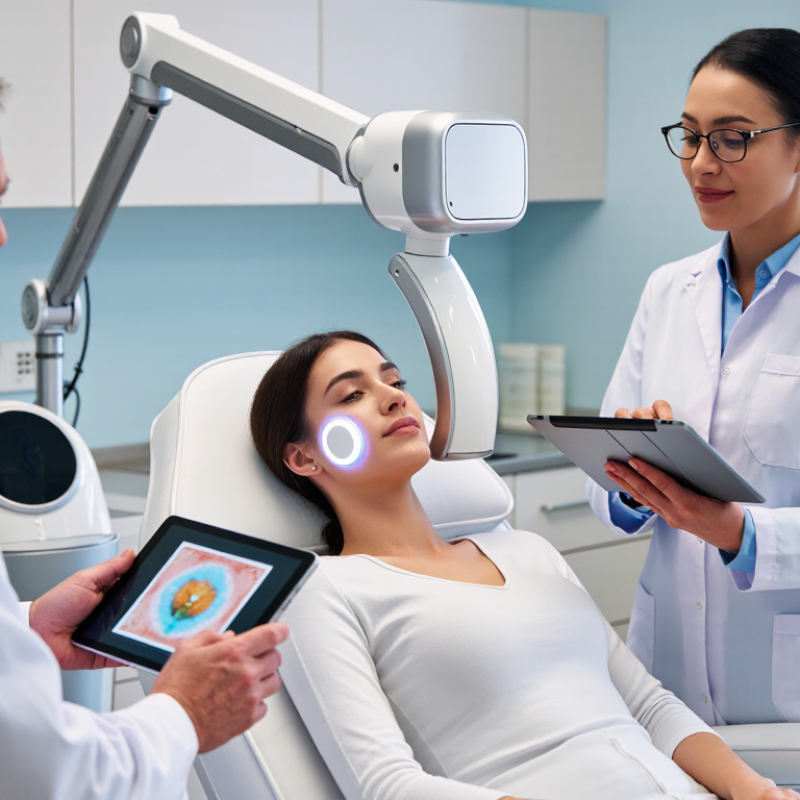
| Diagnostic Equipment | Multispectral Skin Analyzer | Visible-light imaging combined with selected ultraviolet or polarized-light modes to support the assessment of surface texture, pores, pigmentation, redness, and other visible skin characteristics. | Common systems provide approximately 3–8 imaging modes and capture several standardized facial views. | Confirm whether the device uses consistent lighting, fixed positioning, repeatable imaging, and clearly defined measurement outputs. |
| Diagnostic Equipment | Moisture and Oil Measurement Tools | Probe-based measurements for skin hydration and surface sebum, often used alongside photographic analysis during consultations. | Measurements are generally comparative indicators rather than medical diagnoses; results can vary with cleansing, temperature, and humidity. | Ask for calibration instructions, sensor replacement intervals, cleaning procedures, and documented operating conditions. |
| Diagnostic Equipment | Portable or Handheld Analyzer | Compact camera or sensor unit designed for mobile consultations, retail counters, salons, clinics, or home-visit services. | Usually powered by USB or rechargeable batteries and connected to a computer, tablet, or mobile application. | Evaluate portability, battery life, connection stability, image quality, and compatibility with the buyer’s operating system. |
| Software | Analysis and Reporting Platform | Client profiles, image storage, comparison views, measurement summaries, consultation notes, recommendations, and printable or digital reports. | Useful platforms commonly support user roles, data export, report customization, and multiple language options. | Review data ownership, export capability, privacy controls, subscription terms, and whether reports can be customized without unsupported claims. |
| Software | Progress-Tracking Function | Comparison of images and measurements taken during different visits to help document changes in appearance and routine adherence. | Reliable comparisons require consistent camera distance, lighting, facial position, and measurement conditions. | Check whether the system records capture conditions and prevents misleading comparisons caused by inconsistent imaging. |
| Installation | Equipment Setup and Configuration | Device assembly, software installation, account creation, network configuration, user permissions, and initial test measurements. | Setup may be completed remotely or on-site, depending on equipment complexity and distributor coverage. | Request a written installation scope, estimated completion time, required workspace conditions, and responsibility for integration issues. |
| Training | Operator Training | Instruction on imaging technique, measurement procedures, device cleaning, result interpretation, report generation, and customer communication. | A practical training program should include demonstrations, supervised practice, and operating documentation. | Prioritize distributors that teach limitations and repeatability instead of presenting analyzer results as a medical diagnosis. |
| Technical Support | Remote and On-Site Support | Troubleshooting, software assistance, replacement-part guidance, user-account support, and escalation for hardware faults. | Service quality is commonly defined by support hours, response targets, communication channels, and escalation procedures. | Obtain the response-time policy, support contact details, excluded services, and fees for travel or out-of-warranty assistance. |
| Maintenance | Calibration and Preventive Maintenance | Inspection of cameras, sensors, lighting components, cables, software versions, and measurement consistency. | Maintenance frequency depends on usage, environment, device design, and manufacturer instructions. | Ask who performs calibration, whether certificates or service records are provided, and how downtime is handled. |
| Consumables | Replacement and Cleaning Supplies | Protective covers, sensor accessories, cleaning materials, cables, lighting components, and other approved replacement items. | Consumable requirements vary by analyzer design; contact surfaces should be cleaned according to documented instructions. | Confirm availability, lead times, storage requirements, compatibility, and the total recurring cost of ownership. |
| Compliance | Documentation and Regulatory Support | Product manuals, technical specifications, electrical safety information, warranty terms, and documents relevant to the destination market. | Requirements differ by country and by whether the product is marketed as cosmetic, wellness, or medical equipment. | Verify applicable registrations, labeling, electrical conformity, language requirements, and whether marketing claims are legally appropriate. |
| Commercial Terms | Warranty and Replacement Policy | Coverage for hardware defects, software issues, replacement parts, repair procedures, and return or exchange conditions. | Coverage period, exclusions, shipping responsibility, and turnaround time vary by distributor and product configuration. | Compare the written warranty rather than relying on verbal promises, and clarify coverage for batteries, sensors, screens, and accessories. |
| Commercial Terms | Shipping and Import Assistance | Packaging, freight coordination, customs documents, delivery tracking, and guidance on import requirements. | Delivery time depends on stock availability, destination, customs clearance, and the selected shipping method. | Request a landed-cost estimate that separates equipment price, freight, duties, taxes, insurance, and installation charges. |
| Distributor Evaluation | Relevant Experience and References | Evidence of experience supporting comparable businesses, operating environments, device types, and service requirements. | Useful references should address installation, training, after-sales service, uptime, and issue resolution. | Ask for verifiable references in a similar market and assess the distributor’s ability to provide ongoing local support. |
| Distributor Evaluation | Total Cost of Ownership | Purchase price or rental fee plus software subscriptions, training, calibration, consumables, repairs, shipping, and data-storage costs. | The lowest initial price may not represent the lowest long-term operating cost. | Compare a complete three-year cost estimate using the same usage assumptions and service requirements. |