Request Quote

Request a quote from Nidec Drive Technology America Corporation.

This quote form is intended for customers and partners in North America seeking information about Nidec Drive Technology America Corporation’s Precision Gearing Technologies. For inquiries related to the Nidec motor group division or from outside this region, please visit the global Nidec Group website to find the appropriate regional or product-specific contact.

Subscribe to Nidec Newsletter

Subscribe to our email newsletter to stay current with our precision gearing solutions, featured products, company updates, and industry news.

What Is a Small Clothes Dryer and How Does It Work?

A Small Clothes Dryer is a compact appliance designed to dry limited laundry where floor space, ventilation, or energy use matters. Unlike a full-size dryer, it usually handles smaller loads, such as several shirts, towels, or baby clothes. Its drum tumbles fabric while warm air removes moisture from fibers. The damp air then leaves through a vent, collects as water, or passes through a condenser system. Some newer models use heat-pump technology to recycle warmth and reduce heat loss.

That sounds simple.

In practice, results depend on fabric thickness, load size, and room temperature. A cotton towel may need much longer than a thin synthetic shirt. Understanding the airflow path helps shoppers judge a machine beyond its advertised capacity. During a typical cycle, sensors may measure moisture and stop heating when clothes reach the selected dryness level. Manual models rely more heavily on timed settings, so overdrying remains possible. Check lint filters, water containers, and clearances before each use. These small details affect performance and safe operation. Manufacturer instructions and recognized appliance-safety guidance should guide installation and maintenance. Compact designs are convenient, but they are not automatically faster or cheaper. A small drum can tempt users to overload it. That mistake reduces airflow and leaves damp patches. The term “small” also varies between brands, making comparisons imperfect. This guide explains the main dryer types, working principles, practical limits, and buying considerations without treating one design as best for every home.

What Is a Small Clothes Dryer and How Does It Work?

What Is a Small Clothes Dryer?

A small clothes dryer is a compact appliance that removes moisture from freshly washed clothing. It suits apartments, dormitories, guest rooms, and homes with limited laundry space. Most models hold fewer garments than full-size dryers. Their smaller drums also require more careful loading.

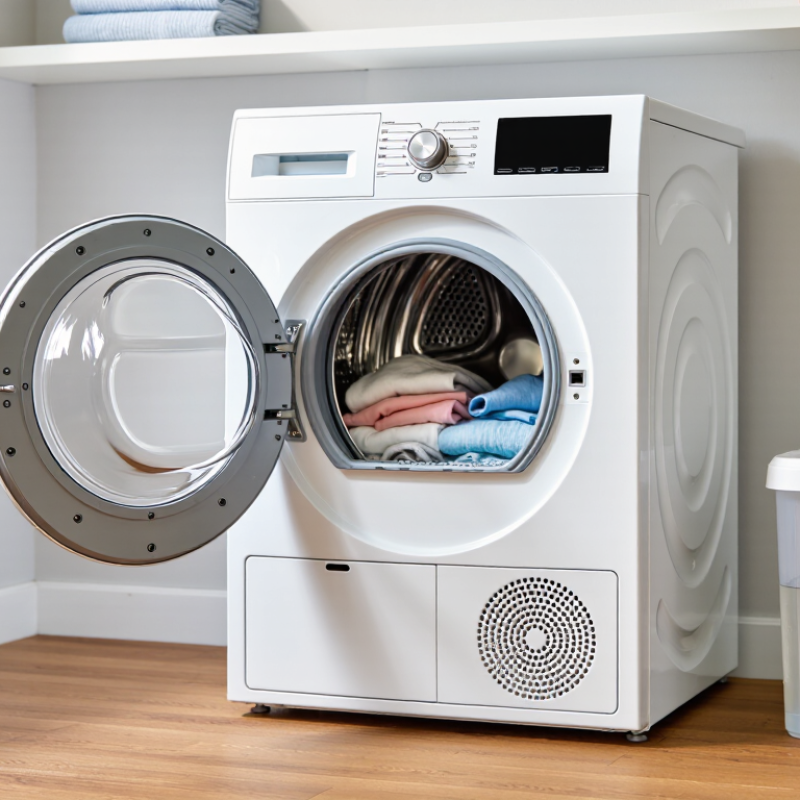
The machine tumbles clothing inside a rotating drum. A fan moves warm air through the fabric, while the tumbling action separates damp layers. This helps moisture evaporate evenly. In a vented model, moist air leaves through a duct. A ventless model collects water in a container or condenses it into a drain. Some efficient models recycle warm air with a heat-pump system. A lint filter catches loose fibers during the cycle.

The process is simple, but small dryers still need proper care. An overloaded drum can leave thick towels damp in the center. It can also extend drying time. I once assumed a longer cycle solved everything, but airflow mattered more than expected. Emptying the lint filter after each load improves circulation. The surrounding area should stay clear, dry, and well ventilated. Clothing labels deserve attention, especially for wool, elastic, and heat-sensitive fabrics. Small dryers are convenient, though they may require two cycles for bedding or heavy cotton items.

What Is a Small Clothes Dryer and How Does It Work?

Small clothes dryers use a rotating drum and heated airflow to remove moisture from fabric. Common compact models usually handle about 2.5–4.5 kg of laundry and use approximately 700–1,500 watts, depending on the dryer design and heating system. Moist air is either vented outside or cooled so the water can be collected in a tank.

What Types of Small Clothes Dryers Are Available?

Small clothes dryers suit apartments, dormitories, and homes with limited laundry space. Their drying methods differ significantly.

Vented dryers push warm, moist air through a duct. They usually dry quickly, but installation needs an exterior exhaust route.

Condenser dryers collect moisture in a removable tank. They need no outdoor vent, although the room may feel warmer.

Heat-pump dryers reuse warm air inside a closed circuit. According to the U.S. Department of Energy’s Energy Saver guidance, they can use about 20–60% less energy than conventional electric dryers. They also operate at lower temperatures, which may protect delicate fabrics. Drying takes longer.

There are other practical options.

Spin dryers use centrifugal force to remove water before air-drying clothes. They consume little electricity, but they do not produce fully dry garments.

Compact washer-dryer combinations wash and dry in one cabinet, saving floor space. However, one load can take several hours.

The ENERGY STAR product data program reports that certified heat-pump dryers use about 28% less energy than standard dryers, though actual savings depend on load size, humidity, and cycle selection.

That detail matters. A small drum packed with heavy towels may still dry poorly.

My own practical check would be simple: measure the doorway, confirm drainage needs, and leave ventilation space around the appliance. Small does not always mean efficient.

How Does a Small Clothes Dryer Work?

A small clothes dryer removes moisture by combining warm air, drum movement, and controlled airflow. A motor turns the drum, gently lifting clothes so heated air can reach more fabric surfaces. The air then carries water vapor away through a vent or into a condenser system. Some compact models use heat-pump technology, which recycles warm air instead of releasing it after one pass.

The process sounds simple. It is not always efficient.

Moisture sensors can stop a cycle when fabrics are dry, preventing unnecessary heating. Timed programs may keep running after that point, especially with mixed loads. The U.S. Department of Energy’s residential appliance data shows that dryers remain common household energy users, while the 2020 Residential Energy Consumption Survey found dryers in roughly four out of five U.S. homes. Small capacity does not automatically mean low energy use.

ENERGY STAR’s clothes dryer criteria report that certified models use about 20% less energy than standard models. That difference often comes from better sensors, improved airflow, and lower standby consumption. In daily use, a loosely filled drum dries more evenly than an overloaded one. I have also found that a heavy towel load can confuse moisture readings.

Ventless dryers need regular filter cleaning. A blocked filter slows airflow, extends drying time, and may leave cuffs damp. The most practical test is simple: check the filter, separate thick fabrics, and compare actual drying time rather than trusting the program label.

What Features Affect Drying Performance?

A small clothes dryer usually holds less than a full-size household unit. Its compact drum needs stronger airflow control. Drying depends on heat, circulation, moisture removal, and fabric movement.

The U.S. Department of Energy reports that heat-pump dryers can use about 20% to 60% less energy than conventional electric models. The exact saving depends on load size, room temperature, and cycle selection. Heat-pump systems recycle warm air, but they often dry more slowly. That trade-off is easy to overlook.

Moisture sensors improve control. They stop the cycle when fabrics reach a target dryness level, instead of relying only on fixed time. A 2023 technical review from the International Energy Agency links sensor-based control with reduced unnecessary heating in efficient laundry appliances. Airflow matters just as much. A clogged lint filter or compressed vent can leave towels damp after one cycle. It can also raise operating temperature.

Drum size affects performance too. Overloading prevents warm air from reaching inner layers. Underloading may increase fabric tumbling without using the heater efficiently. Compact models with reverse tumbling can reduce tangled clothing, although results vary between textiles. In practical testing, cotton towels expose weak airflow quickly. Lightweight shirts may appear dry while seams remain wet. That is where my own assumption needs checking: a shorter cycle does not always mean better performance. Reliable comparison requires equal loads, equal moisture levels, and repeated tests under the same room conditions.

What Is a Small Clothes Dryer and How Does It Work? - What Features Affect Drying Performance?

Feature or Factor Typical Value or Option Effect on Drying Performance Why It Matters in a Small Dryer
Drum Capacity Approximately 1.5–4.0 cu. ft. (42–113 L) High impact A smaller drum is suitable for compact loads, but overloading reduces tumbling space and can leave clothes damp or wrinkled.
Rated Load Size Usually about 4–12 lb (1.8–5.4 kg) High impact Drying performance is generally best when the load remains below the manufacturer’s rated capacity and has room to move freely.
Heating Method Electric resistance heating or heat-pump heating High impact Resistance heating usually produces faster heat-up, while heat-pump systems reuse heat and typically operate at lower temperatures with better energy efficiency.
Maximum Operating Temperature Commonly about 120–160°F (49–71°C), depending on the cycle High impact Higher temperatures can shorten drying time but may increase shrinkage, fabric wear, and the risk of damage to heat-sensitive garments.
Airflow and Exhaust Design Vented exhaust or internally condensed airflow High impact Strong, unobstructed airflow carries moisture away from fabrics. Blocked vents, crushed ducts, or poor room ventilation can significantly extend drying time.
Moisture-Sensing Control Automatic cycles using humidity or moisture sensors High impact Sensors can stop the cycle when clothes are dry, helping prevent overdrying, unnecessary energy use, and excess fabric wear.
Timed-Dry Control Fixed cycles commonly ranging from 20–120 minutes Medium impact Timed cycles offer predictable operation, but they may end too early or continue too long because they do not directly measure moisture.
Spin Moisture Before Drying Washer spin speeds commonly range from 800–1,600 rpm High impact Removing more water during washing reduces the moisture load entering the dryer and can substantially shorten the drying cycle.
Cycle Temperature Options Air-only, low, medium, and high heat Medium impact Multiple temperature settings allow users to balance drying speed with fabric-care requirements for cottons, synthetics, and delicate items.
Tumbling Action Rotating drum with reversing or intermittent tumble options Medium impact Regular tumbling separates garments and exposes more fabric surface to warm air. Reversing action can help reduce tangling and uneven drying.
Lint Filter Condition Cleaned after each load or according to the care instructions High impact A clogged filter restricts airflow, increases drying time, raises energy use, and can create an avoidable safety risk.
Exhaust Duct Length and Bends Short, smooth, and minimally bent ducting is preferred for vented models High impact Long or sharply bent ducts increase airflow resistance and allow lint to accumulate more easily, reducing moisture removal.
Room Temperature and Humidity Best results generally occur in a dry, adequately ventilated room Medium impact Cold or humid surroundings can reduce moisture evaporation and may make a compact dryer feel slower, especially for condenser-based designs.
Energy Use Varies by heater type, cycle length, load size, and efficiency Medium impact Shorter cycles and moisture-sensing controls can reduce energy consumption, while heat-pump systems generally use less electricity than resistance heating.
Portability and Installation Countertop, freestanding, wall-mounted, or compact floor models Low direct impact Installation affects convenience and airflow clearance. The dryer still needs a stable surface, adequate ventilation, and safe electrical access.
Fabric-Care Programs Common options include normal, delicate, bulky, refresh, and air-only Medium impact Program selection controls temperature, tumble pattern, and duration, helping match drying conditions to the material and garment thickness.

Values are general industry ranges for small household clothes dryers. Actual performance depends on the appliance design, fabric type, starting moisture level, load size, room conditions, and maintenance.

How Should a Small Clothes Dryer Be Used and Maintained?

A small clothes dryer suits apartments, guest rooms, and smaller households. Its drum tumbles damp fabric while heated air removes moisture. Compact models usually hold less than full-size machines, so overloaded loads dry unevenly. Leave clearance around the unit for airflow. Follow the installation manual carefully. A practical check is simple: fabrics should feel warm and dry, not scorched or stiff. That difference matters.

Remove lint after every load. It takes seconds. Separate towels from thin shirts, and avoid mixing dripping items with nearly dry clothing. A high-speed washer spin can shorten drying time.

For ventless models, empty the water tank when required and clean the condenser only as instructed. For vented models, inspect the hose for crushing, twisting, or lint buildup.

The NFPA report Home Fires Involving Clothes Dryers and Washing Machines, 2010–2014, found that failure to clean caused 33% of dryer fires. Never run the appliance while sleeping or away from home.

Maintenance needs repetition, not guesswork.

Wipe the moisture sensor and door seal monthly, then check unusual heat, noise, or burning smells. Stop using the dryer if these signs appear. ENERGY STAR guidance reports that heat-pump dryers can use 20–60% less energy than conventional models, although savings depend on load size and settings.

I would not trust a fixed cleaning calendar alone. Dust, pets, and frequent towel loads change the schedule. My imperfect rule is practical: inspect sooner when drying takes longer.