Request Quote

Request a quote from Nidec Drive Technology America Corporation.

This quote form is intended for customers and partners in North America seeking information about Nidec Drive Technology America Corporation’s Precision Gearing Technologies. For inquiries related to the Nidec motor group division or from outside this region, please visit the global Nidec Group website to find the appropriate regional or product-specific contact.

Subscribe to Nidec Newsletter

Subscribe to our email newsletter to stay current with our precision gearing solutions, featured products, company updates, and industry news.

How to Source Dimethyl Phthalate from Reliable Suppliers

Sourcing Dimethyl Phthalate reliably is not just a price comparison. Buyers need evidence that each shipment matches its specification, arrives in sound packaging, and can be traced to its production batch. A low quotation means little if the certificate of analysis is incomplete or the supplier cannot explain a result. Small details matter: a batch number on the drum should match the shipping documents and quality records.

Professional references can help buyers frame their checks. The European Chemicals Agency’s registered-substance information and the OECD’s eChemPortal provide structured chemical identity and hazard information; neither should be mistaken for a market-price report. For supplier quality, Joseph M. Juran’s well-known phrase, “fitness for use,” offers a practical test. Juran was a quality-management expert, not a Dimethyl Phthalate specialist, so his words are a quality principle rather than product-specific advice. A DMP-specific expert quotation should be verified against its original source before publication.

A dependable supplier should provide a current safety data sheet, a batch-specific certificate of analysis, clear specifications, and documented quality controls. Ask how the supplier handles out-of-specification results, retains samples, and communicates changes. Then compare answers across suppliers—not just the numbers on a quote. Some records may look perfect on paper. Check them. Confirm document dates, sample methods, and traceability before committing to a shipment. This process takes time, and it can still miss problems. That is why ongoing review matters.

How to Source Dimethyl Phthalate from Reliable Suppliers

Identify Dimethyl Phthalate by CAS 131-11-3 and Molar Mass 194.19 g/mol

How to Source Dimethyl Phthalate from Reliable Suppliers

Dimethyl phthalate (DMP) should be identified by both its chemical name and CAS 131-11-3. Its molar mass is 194.19 g/mol. Check that these details match across the quotation, product specification, safety data sheet, and certificate of analysis. A mismatch needs clarification before an order moves forward. The CAS number confirms the substance identity, but it does not establish purity or grade. For an additional screening check, compare the stated formula, C10H10O4, and molar mass with a trusted chemical reference. Small rounding differences can happen. Larger differences deserve attention.

Tips: Request a certificate of analysis linked to the specific production lot. Check its test date, stated purity, and analytical methods. Confirm that the container label carries the same product name and CAS number. Keep the documents together with the purchase record.

A supplier’s clear answers about batch traceability, packaging, and storage can help assess reliability. Review specifications against your intended application, rather than relying on a generic product description. Even a clean match is only a starting point; paperwork can be incomplete, so ask about unclear entries. If details remain inconsistent, pause and verify them before accepting the material.

Set a ≥99% Assay Target and Define Impurity Limits

For dimethyl phthalate, make ≥99.0% assay a written purchase target, not a supplier’s informal claim. The OECD SIDS Initial Assessment Report for Dimethyl Phthalate reports a molecular mass of 194.19 g/mol and a boiling point near 282°C. These values help confirm identity, but they do not establish a lot’s purity. Request a lot-specific certificate of analysis and the test method behind its assay result. A number without a method is weak evidence.

Define impurity limits before requesting quotations. For example, specify water at ≤0.10% by mass, acidity at ≤0.02% by mass, and each unidentified GC impurity at ≤0.10 area%. Treat these as buyer-set limits, not universal industry standards, and align them with the intended process. Ask for chromatograms and confirm whether the assay is reported by GC area or mass; those figures are not interchangeable. Check that the lot number matches the drum label and certificate. Small details matter.

Use an independent laboratory accredited to ISO/IEC 17025 when results are disputed or incoming material is critical. Retain a sealed sample from each delivery for comparison. One caveat: color and clarity can look reassuring, yet neither proves assay or impurity control. A clean-looking drum is not enough.

Verify Supplier Quality Systems, REACH Status, and Safety Data Sheets

When sourcing dimethyl phthalate, look beyond a supplier’s polished sales documents. Ask how its quality system controls incoming materials, production changes, and batch records. Request a recent certificate of analysis and compare its lot number with the container label. Check that test methods and specification limits are stated clearly. A certificate alone cannot show how consistently a supplier works.

Verify REACH status for your intended use and supply chain. Ask for written confirmation of relevant registration or other applicable coverage, and check that the substance identity matches your purchasing documents. Requirements can depend on the role of the parties and the market. Have a qualified compliance professional review any uncertainty. It is easy to assume a supplier’s statement covers every situation; that assumption deserves a second look. Review the current safety data sheet, especially hazard identification, exposure controls, physical properties, and transport information. Confirm the revision date and substance details.

Tips: Request documents before placing a large order. Check that the SDS, analysis certificate, and product label describe the same material. Keep dated copies, and ask for clarification when details conflict. A quick email is not always enough.

Compare Batch COAs and Packaging Against DMP’s 282°C Boiling Point

When sourcing dimethyl phthalate, compare each batch certificate of analysis with the supplier’s stated specification. DMP’s boiling point is about 282°C at atmospheric pressure, but this reference value is not a purity test. A COA may not list boiling point for every lot. If it does, check the reported method and pressure before comparing figures. Small details matter.

Match the COA’s lot number to the container label, then review the assay result and test method. Look for consistent reporting across batches, not just a single attractive number. Ask the supplier to explain unexplained changes in results or missing test details. I would not treat one number as a verdict. It is easy to overlook that.

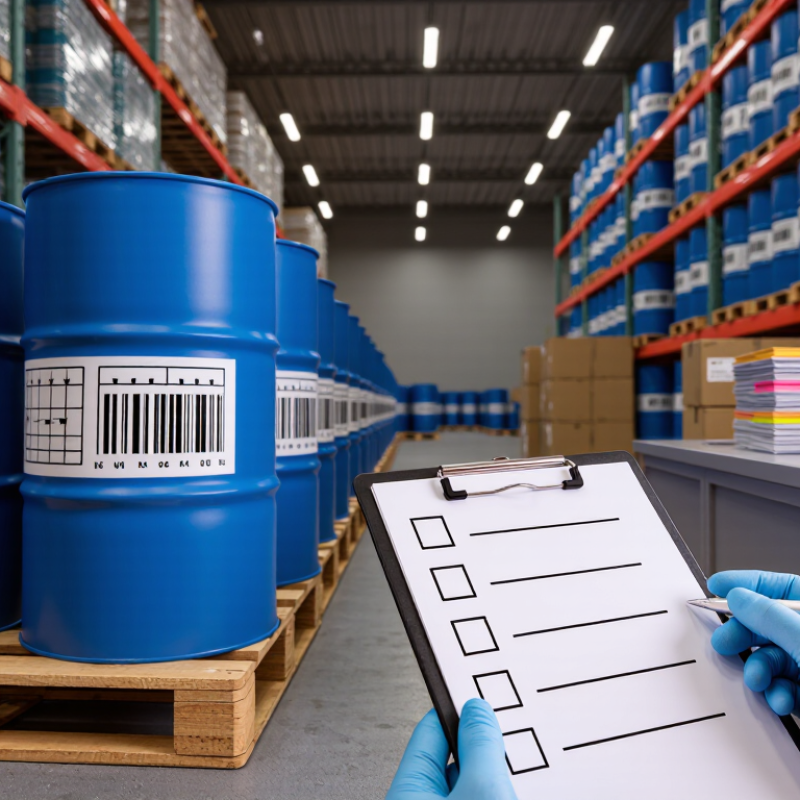
Packaging offers another useful check. Inspect seals, closures, labels, and containers for leaks, damage, or signs of relabeling. Confirm that the packaging material is specified as compatible with DMP and that each container identifies its batch. A high boiling point does not prove the package is suitable, nor does it confirm product quality. Request a current COA and safety data sheet, and compare their details with the delivered lot. If the paperwork and packaging do not agree, pause and ask for clarification before accepting the shipment.

How to Source Dimethyl Phthalate from Reliable Suppliers

Compare Batch COAs and Packaging Against DMP’s 282°C Boiling Point

Reference: Dimethyl phthalate (DMP) has a normal boiling point of approximately 282°C at 760 mmHg (1 atm). Use this as a reference when reviewing the identity and physical-property data on each batch’s COA; it is not a substitute for batch-specific test results.

Supplier checks: Confirm that the COA identifies the material as dimethyl phthalate and includes batch-specific results and test methods. Inspect packaging for intact seals, clear labeling, and matching lot numbers. Investigate discrepancies rather than treating the reference value as a guaranteed batch result.

Evaluate Delivered Cost, Lead Time, and Documentation Before Approval

When comparing dimethyl phthalate offers, do not approve the lowest unit price alone. Ask for the delivered cost to your receiving site, including freight, packaging, insurance, and handling charges. Confirm whether the quote assumes a full pallet or a smaller order. A low drum price can rise after repacking or partial-load fees. Keep the quote and its validity date on file. Small detail. Big difference.

Clarify lead time in writing. Ask when the material will be ready, how long transit is expected to take, and whether the estimate includes dispatch scheduling. A stated “two weeks” may mean production time, not delivery. Check the supplier’s available stock and ask how delays will be communicated. Build a practical buffer around your required arrival date; even a careful estimate can miss a seasonal bottleneck.

Before approval, request a current safety data sheet, product specification, and certificate of analysis for the offered grade. Check that the certificate identifies the lot and reports properties relevant to your process. Confirm packaging, lot traceability, and how substitutions are handled. Documents should match the shipment, not merely look complete. If a change could affect downstream performance, assess a representative sample before committing to volume. A checklist helps, but it can still miss a detail worth revisiting.