Request Quote

Request a quote from Nidec Drive Technology America Corporation.

This quote form is intended for customers and partners in North America seeking information about Nidec Drive Technology America Corporation’s Precision Gearing Technologies. For inquiries related to the Nidec motor group division or from outside this region, please visit the global Nidec Group website to find the appropriate regional or product-specific contact.

Subscribe to Nidec Newsletter

Subscribe to our email newsletter to stay current with our precision gearing solutions, featured products, company updates, and industry news.

Top Ti-6Al-4V Grade 5 Titanium Bar Suppliers?

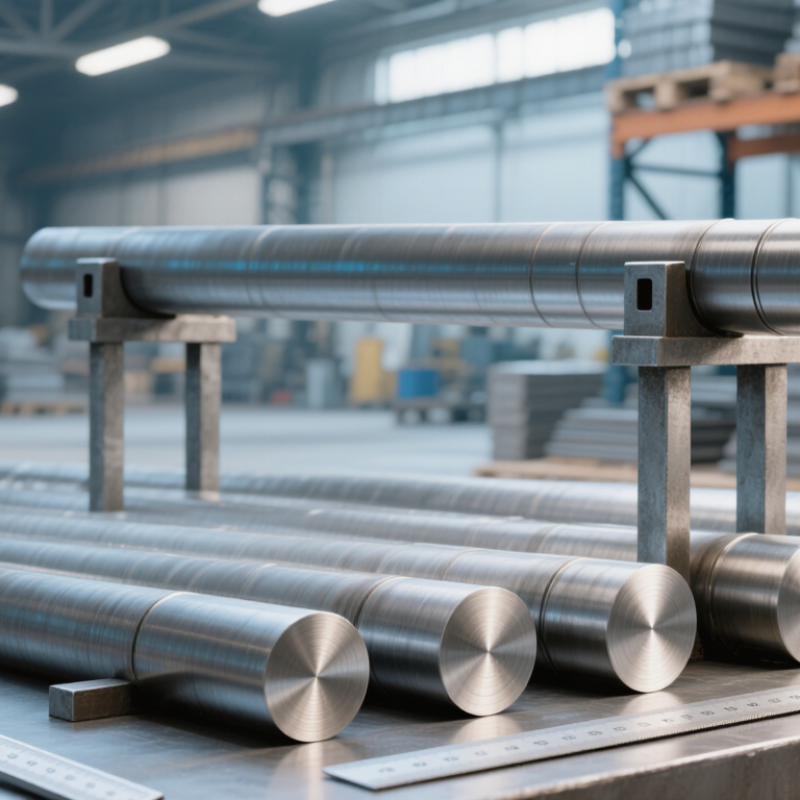
Choosing a reliable supplier for Ti-6Al-4V (Grade 5) Titanium Bar takes more than comparing prices. This widely used titanium alloy offers a useful balance of strength, low weight, and corrosion resistance. Buyers may need it for aerospace components, medical equipment, or demanding industrial parts. Yet material performance depends on more than the alloy name. Product form, dimensions, heat treatment, and manufacturing history can all affect suitability.

A thoughtful supplier review should examine documented quality controls, material test reports, and lot traceability. Check whether certificates match the exact bar dimensions and specification you plan to purchase. Ask about available diameters, cutting tolerances, stock levels, and realistic delivery schedules. Details matter. If machining or further processing is planned, discuss those requirements before ordering. A supplier’s technical team should answer clearly and provide records that can be independently checked. Still, even a well-presented certificate may leave questions about how consistently a supplier handles routine orders. That deserves attention. This guide explores what buyers can verify when comparing leading Ti-6Al-4V Grade 5 bar suppliers, including product range, documentation, service, and supply reliability. No single supplier will fit every project. The best choice depends on your application, required specifications, and confidence in the evidence provided.

Top Ti-6Al-4V Grade 5 Titanium Bar Suppliers?

Understanding Ti-6Al-4V Grade 5 Titanium Bar

Ti-6Al-4V Grade 5 is a widely used titanium alloy, valued for its high strength and relatively low weight. It contains aluminum and vanadium, which help create a strong alpha-beta alloy. The exact properties depend on the bar’s condition, processing, and heat treatment. A grade name alone does not tell the whole story.

For engineering and purchasing teams, check the required diameter, length, surface condition, and material condition before comparing suppliers. Ask for inspection documents that identify the alloy and report relevant test results. Bar stock may be annealed or supplied in another specified condition, so confirm that it suits the part’s design and machining plan. The alloy resists corrosion in many environments, but that does not make every application suitable. It can also be challenging to machine; tooling, heat management, and cutting parameters matter. Small details count.

Tips: Match the purchase specification to the part drawing, not just a familiar grade label. Confirm dimensions and tolerances, then review traceability documents before production. For critical parts, discuss testing and acceptance requirements with a qualified materials specialist. I would not assume two bars perform identically because both are called Grade 5. Processing history can matter, and it is worth checking.

Key Criteria for Evaluating Titanium Bar Suppliers

Top Ti-6Al-4V Grade 5 Titanium Bar Suppliers?
Key Criteria for Evaluating Titanium Bar Suppliers

Choosing a titanium bar supplier involves more than comparing prices. Ask for material test reports showing chemical composition and mechanical properties. Check that the documents match the bar’s heat or lot number. Traceability matters. Confirm the supplier can provide the required diameter, length, and dimensional tolerances. Surface condition deserves attention, too. Scratches, seams, or uneven finishes may affect machining and inspection. A clean sample helps, but one sample cannot prove every shipment will be consistent.

Tips: Request a sample report before ordering. Compare its lot details with the physical bar. Ask how the supplier handles nonconforming material and replacement requests.

Evaluate how clearly the supplier explains applicable specifications and testing methods. For critical applications, discuss whether additional inspection or testing is appropriate. Also check packaging and delivery practices; long bars need support to reduce bending during transit. A checklist helps, but it is not foolproof. Small differences in documentation can be easy to miss, so review the details before approving an order.

Supplier Capabilities, Certifications, and Product Range

Top Ti-6Al-4V Grade 5 Titanium Bar Suppliers?

Supplier Capabilities, Certifications, and Product Range

A capable supplier should provide more than a price and a delivery estimate. For Ti-6Al-4V Grade 5 bar, ask for the material test report, heat number, dimensions, and applicable specification. These details help buyers connect the delivered bar to its documented chemistry and mechanical properties. Check the paperwork.

Certifications can offer useful evidence of a supplier’s quality processes, but they do not replace material-specific records. Confirm that certificates are current and relevant to your application. If aerospace requirements apply, ask about the supplier’s approved processes and traceability controls. A certificate alone may not answer every question. Supplier pages can look complete; sometimes, a test report still leaves a gap.

Product range also matters. Some suppliers stock round bar in common diameters, while others can source cut lengths or less typical sizes. Ask how bars are packaged, identified, and protected from handling damage. Clear answers are reassuring. Vague delivery promises are not. Compare available sizes, lead times, cutting services, and documentation before choosing. Small details matter, though requirements can differ between projects, so confirm them with your design or quality team.

Top Ti-6Al-4V Grade 5 Titanium Bar Suppliers? - Supplier Capabilities, Certifications, and Product Range

Supplier evaluation guide: compare documented product capability and traceability rather than relying on supplier rankings. Requirements vary by purchase specification, product size, and condition.

Evaluation area Relevant facts and supplier evidence to request Practical purchasing check
Material designation Ti-6Al-4V, commonly designated Grade 5; the alloy contains aluminum and vanadium as its principal alloying elements. Confirm the order specifies Grade 5, the governing standard, product form, and required condition.
Applicable product standards ASTM B348 covers titanium and titanium-alloy bars and billets. AMS 4928 is a commonly referenced aerospace specification for Ti-6Al-4V products, including bars; verify the exact scope and revision for the order. Ask the supplier to state the standard and revision on its quotation and material certificate. Do not assume standards are interchangeable.
Chemical composition For Grade 5 under ASTM B348, typical specified limits include aluminum 5.5–6.75%, vanadium 3.5–4.5%, iron maximum 0.40%, and oxygen maximum 0.20%; the specification also limits elements such as carbon, nitrogen, and hydrogen. Request a heat-specific chemical analysis and check every element against the applicable standard, not just the nominal alloy designation.
Mechanical properties Tensile, yield, and elongation requirements depend on the applicable specification, product size, and material condition. A single generic value should not be treated as a guarantee for every bar. Check the lot-specific test results and confirm that the test condition and specimen requirements match the purchase specification.
Product range Titanium bar is commonly supplied in round form; some suppliers can source additional shapes or provide cut-to-length stock. Available diameters, lengths, and shapes depend on mill supply and inventory. Request a current size-and-condition list, dimensional tolerances, minimum order quantity, and confirmation of whether material is stocked or made to order.
Material condition and processing Grade 5 bar can be supplied in specified conditions such as annealed, depending on the governing specification and product availability. Cutting and machining services may be offered separately. Specify the required condition, surface finish, straightness, cut length, and any processing requirements before placing the order.
Traceability and inspection documents A material test report should identify the material, heat or lot, applicable specification, and test results. EN 10204 Type 3.1 is one commonly used inspection-document format when specified. Confirm that certificates are supplied with the shipment and that heat or lot identification remains linked to the delivered bars.
Quality-system certifications ISO 9001 is a general quality-management standard; AS9100 is used in the aerospace sector, and ISO 13485 is used for medical-device quality management. These certifications concern management systems and do not by themselves certify a particular bar shipment. If certification is required, verify the current certificate, its scope, site, and validity. Separately verify product conformance and shipment documentation.
Grade 5 versus Grade 23 Grade 23 is Ti-6Al-4V ELI (extra-low interstitial) and has different chemistry limits from standard Grade 5. It should not be substituted for Grade 5—or vice versa—without approval. Check the full grade designation and interstitial-element requirements, especially for medical or other tightly controlled applications.
Basic material property The commonly reported density of Ti-6Al-4V is approximately 4.43 g/cm³; actual design calculations should use the applicable engineering data and specifications. Use the property as a reference, not as a substitute for design allowables or certified material data.

Note: This guide summarizes common standards and procurement checks. Always verify current specification revisions and project-specific requirements before purchase.

How to Verify Quality, Traceability, and Compliance

A reliable Ti-6Al-4V Grade 5 bar should arrive with records that connect the material to its melt, not just a generic certificate. Ask for a mill test report showing heat number, product form, condition, chemistry, and mechanical results. Then match the heat number on the report to the bar tags and purchase documents. Small mismatches matter.

ASTM B348/B348M lists Grade 5 minimum tensile strength of 895 MPa and minimum yield strength of 828 MPa for applicable annealed bar requirements; elongation requirements also depend on product size. Check the cited specification and size range rather than treating these figures as universal. Request test methods, such as ASTM E8/E8M for tensile testing, and confirm that testing was performed by a laboratory with ISO/IEC 17025 accreditation where independent verification is needed. Keep the records.

A certificate can still look convincing. For higher-risk parts, arrange independent chemical analysis or tensile testing on a sample tied to the delivered heat. Verify calibration records, report revisions, and any stated deviations before cutting the bar. Traceability is practical, not decorative.

Choosing a Supplier for Your Application and Supply Needs

Top Ti-6Al-4V Grade 5 Titanium Bar Suppliers?

Choosing a Supplier for Your Application and Supply Needs

Grade 5 titanium bar is used where strength, low weight, and corrosion resistance matter. The right supplier should understand your application, not just quote a diameter. Share the required grade, bar size, length, quantity, and intended use. Ask for material test reports with heat or lot traceability, and confirm chemistry and mechanical properties meet your purchase specification. Check the applicable ASTM B348/B348M requirements, where relevant. Details matter.

Match the supplier’s stock and processing options to your real schedule. Confirm diameter tolerances, cut-length accuracy, surface condition, and whether custom cutting adds time. If the bar will be machined, discuss machining allowances and any inspection records your process requires. Packaging also deserves attention: bars should arrive protected from damage and clearly identified by lot. For repeat orders, ask how the supplier manages consistent documentation and availability. A low quote may not include testing, cutting, or freight. No checklist catches every mismatch, so review a sample document and clarify uncertain details before placing a larger order.