| 1 | Confirm exact vehicle fitment. Match the part to the vehicle’s year, make, model, trim, and suspension configuration. Check whether the joint is for the upper or lower control arm and whether the application requires a press-in or bolt-in design. | Clear application listings, part dimensions or specifications, and fitment confirmation against the vehicle identification number when available. | Generic “fits most vehicles” claims, missing application details, or uncertainty about left/right and upper/lower placement. |
| 2 | Look for documented quality controls. Assess whether the manufacturer explains how parts are inspected and tested, and whether production follows a documented quality-management system. | Specific quality-control information, traceable production details, and verifiable certification claims. A certification applies to a stated scope and does not by itself guarantee the performance of every part. | Unsupported claims such as “highest quality” without details about inspection, testing, or manufacturing controls. |
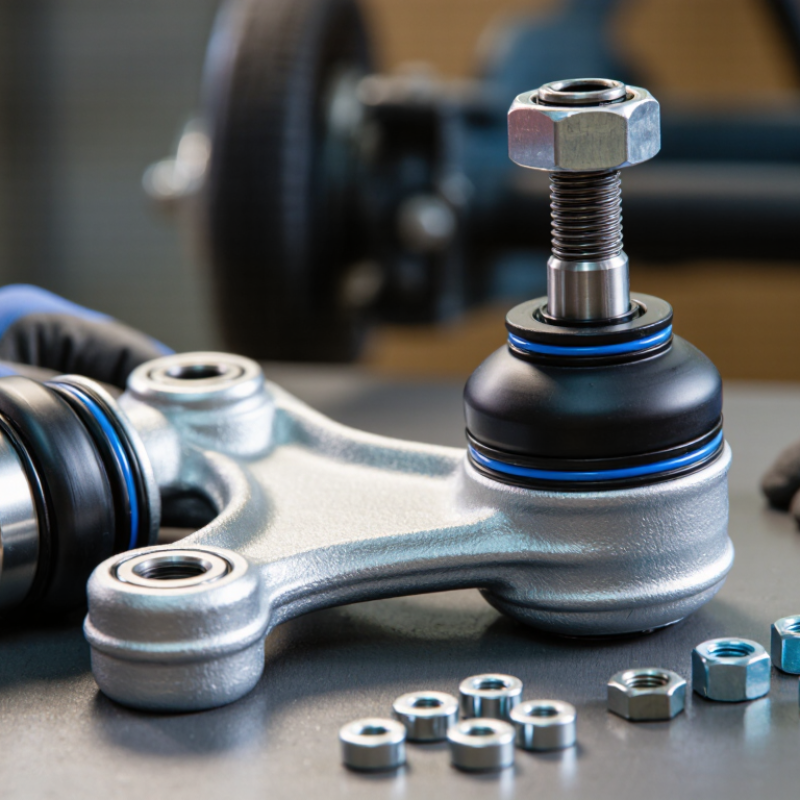
| 3 | Review materials and construction. Check the available specifications for the housing, stud, bearing, boot, and surface protection. Design details should suit the vehicle application and expected operating conditions. | Published material or design specifications, corrosion-protection information, and a protective boot intended to keep contaminants out and lubricant in. | Missing construction information, a damaged or poorly seated boot, or visible corrosion, cracks, or deformation on the part. |
| 4 | Check the warranty terms. Compare the coverage period, covered defects, exclusions, proof-of-purchase requirements, and claim process before buying. | Written terms that are easy to find and explain how to submit a claim. Confirm whether labor, removal, or installation costs are excluded. | Vague verbal assurances, unclear exclusions, or no accessible written warranty policy. |
| 5 | Read reviews for recurring patterns. Give more weight to detailed feedback about fit, installation, noise, durability, and customer support than to a star rating alone. | Multiple reviews describing specific vehicles and use periods, considered alongside verified-purchase labels and the seller’s response to problems. | Repeated reports of incorrect fitment, early looseness, damaged boots, or unresolved warranty claims. A small number of reviews is not conclusive on its own. |
| 6 | Verify installation requirements. Check whether special tools, a press, new fasteners, or a specified torque procedure are required. Follow vehicle-service information for the exact application. | Installation instructions that identify required hardware and procedures, plus access to vehicle-specific service specifications. | Instructions that omit critical steps or suggest guessing torque values. Incorrect installation can affect steering and suspension safety. |
| 7 | Compare total value, not price alone. Consider fitment certainty, construction information, warranty coverage, return terms, and the cost of tools or professional installation. | A clear parts description, transparent return policy, accessible support, and a price that can be compared on equivalent specifications. | A very low price paired with unclear fitment, missing specifications, or restrictive return terms. Avoid assuming that price alone proves quality. |