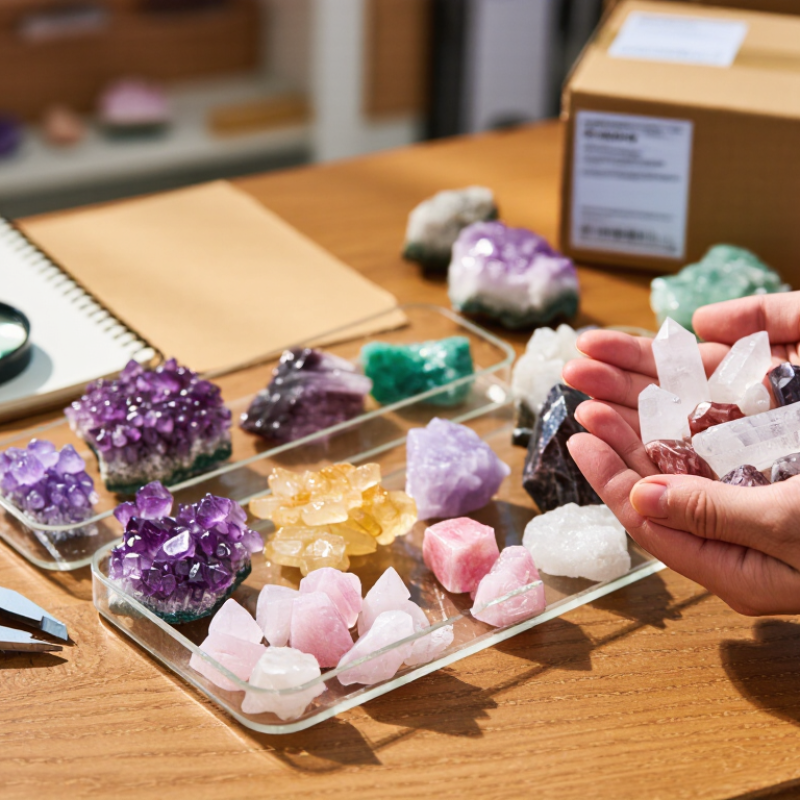
| 1. Identify the intended use | How the crystals will be used or displayed | Jewelry making, craft kits, retail display, classroom activities, or decorative fill | Different uses call for different sizes, shapes, finishes, and levels of uniformity. | Ask for product dimensions, shape, finish, and clear photographs of the actual grade being offered. |
| 2. Choose a suitable form | Whether you need rough pieces, tumbled stones, points, chips, or beads | For example, 6 mm beads for stringing or small tumbled pieces for gift sets | Form affects compatibility with tools, packaging, display layouts, and production methods. | Confirm whether measurements refer to length, diameter, bead-hole size, or a size range. |
| 3. Set a usable size range | Minimum and maximum dimensions that work for your project | A project might accept tumbled pieces approximately 15–25 mm long, with some natural variation. | Natural stones vary; a defined range helps prevent a shipment that is difficult to use or sort. | Request the stated size range and ask how undersized, oversized, or irregular pieces are handled. |
| 4. Estimate quantity from your plan | Number of finished items, kits, or display units required | For 100 kits using 5 stones each, plan for 500 usable stones, then add a practical allowance for sorting and breakage. | Buying by weight does not guarantee a fixed piece count, especially when stone sizes vary. | Ask for an approximate piece count per weight unit and whether the order is sold by weight, count, or both. |
| 5. Define appearance and grading expectations | Acceptable color variation, inclusions, polish, and visible imperfections | Decide whether a mixed natural appearance is acceptable or whether pieces need to look closely matched. | Color and pattern can vary between stones and batches; “natural” does not mean visually identical. | Request representative batch photos and written grading criteria; clarify whether photos show typical or selected pieces. |
| 6. Check handling and safety requirements | Whether pieces will be handled, worn, drilled, or used in children’s activities | For jewelry, check bead-hole consistency and smooth edges; for children’s activities, consider choking hazards and age suitability. | Sharp edges, small parts, dust, and unsuitable materials can create handling or product-safety concerns. | Confirm material identification and any relevant test documentation for the intended application; do not assume a crystal has health benefits. |
| 7. Test a sample before scaling up | Whether the material meets your size, appearance, and processing needs | Use a small sample to test drilling, stringing, sorting, packaging, or display before placing a larger order. | A sample can reveal practical issues that are not obvious from a listing or description. | Compare the sample with the written specifications and confirm that the bulk lot will use the same material and grade. |