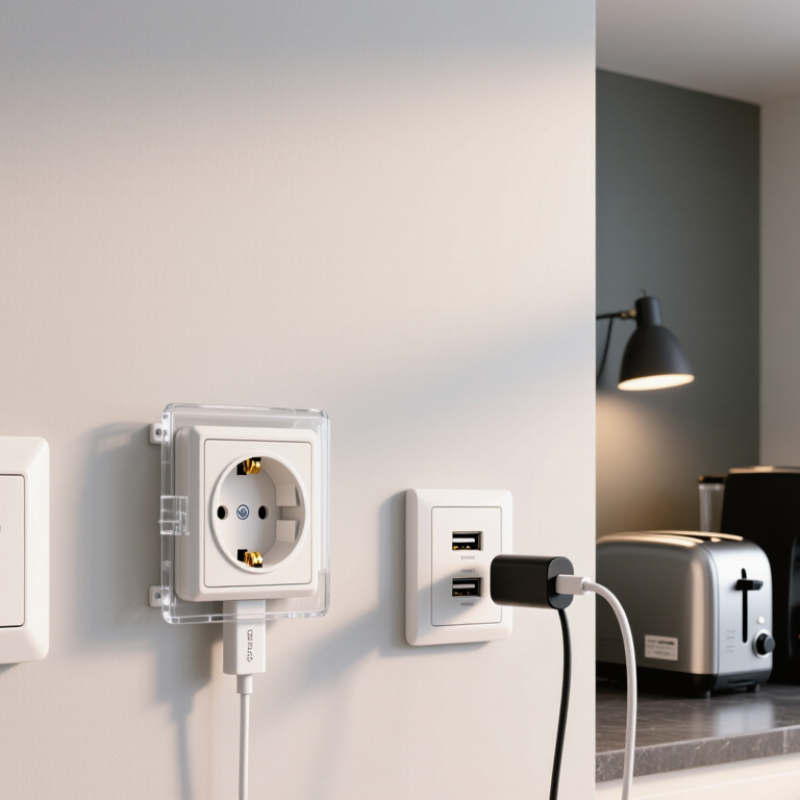
| 1. Match the local standard | Country-specific socket and plug system | Socket shape, voltage, frequency, and wiring practices vary by country. | Choose products approved for the installation location and compatible with local plugs and electrical regulations. An adapter does not convert voltage. |
| 2. Select the right number of outlets | Single, duplex, or multi-outlet unit | A single outlet serves one plug; a duplex outlet provides two receptacles in one device. Multi-outlet designs can reduce the need for plug-in splitters. | Consider plug size and spacing. The number of receptacles does not increase the circuit's safe capacity. |
| 3. Check the rating and circuit | Common North American 15 A or 20 A receptacles; other regions use different ratings | The correct rating depends on the circuit, wiring, and applicable electrical code. | Do not assume a higher-rated outlet makes a circuit capable of carrying more current. Have a qualified electrician verify compatibility when unsure. |
| 4. Prefer grounded outlets where required | Grounded receptacle | A grounding connection provides a protective path for fault current in installations designed for it. | A receptacle with a ground contact does not prove that the wiring is grounded. Never remove or bypass the grounding pin; ask an electrician to assess older wiring. |
| 5. Consider GFCI or RCD protection | GFCI receptacle or an outlet protected by an RCD | These devices are designed to disconnect power when they detect certain leakage-current conditions. Terminology and requirements differ by region. | Protection is required in particular locations under many local codes, often including wet or outdoor areas. Follow local rules and test devices as instructed. |
| 6. Check for tamper-resistant protection | Tamper-resistant receptacle | Internal shutters are designed to resist insertion of objects into only one slot. | Useful in homes with children and required in some locations by local codes. It is a safety feature, not a substitute for supervision. |
| 7. Choose outdoor-rated components for exposed areas | Weather-resistant receptacle with a suitable cover or enclosure | Weather-resistant construction and a properly matched cover help protect against moisture and environmental exposure. | Check the product's intended location and enclosure rating. An outdoor installation may also require GFCI/RCD protection under local code. |
| 8. Compare USB outlet specifications | Outlet with integrated USB charging ports | USB-A and USB-C options are available; charging speed and total output vary by model and may be shared across ports. | Check supported charging standards, maximum output, and simultaneous-port performance. USB ports do not replace the AC receptacles. |
| 9. Match special formats to the room | Switched, floor, pop-up, or recessed outlet | These formats can suit lamps, floor areas, worktops, or spaces where plugs would otherwise protrude. | Confirm mounting depth, box compatibility, access, and suitability for the surrounding surface. Floor and countertop installations need products intended for those locations. |
| 10. Verify fit, quality, and certification | Any replacement or new-installation outlet | Useful considerations include terminal type, device depth, faceplate fit, clear instructions, and recognized safety certification for the market. | Check the box and wiring compatibility and buy a product certified to applicable local standards. Installation should be performed by a qualified person when required. |