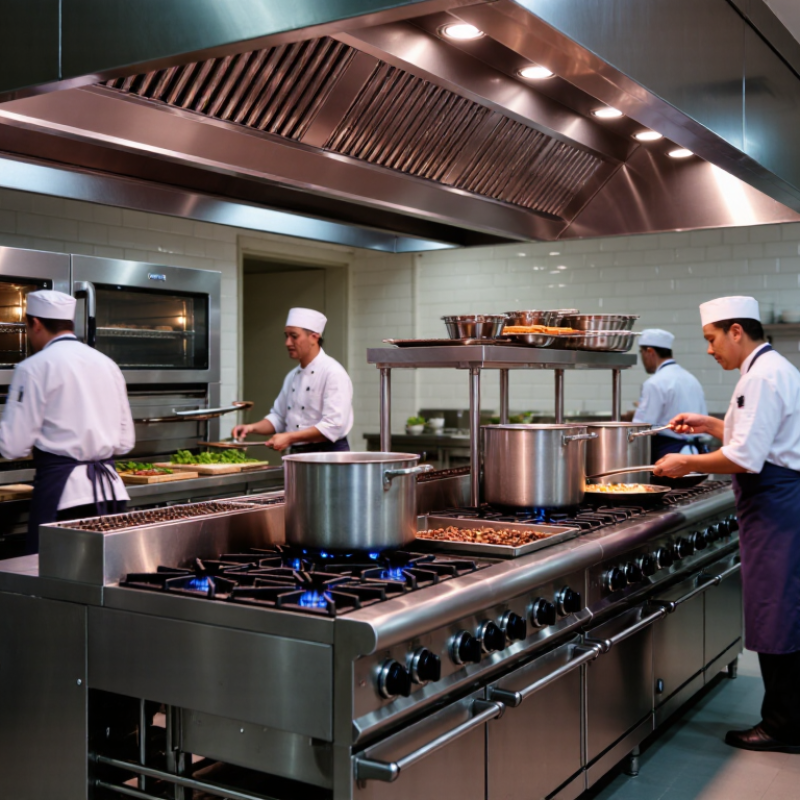
| 1 | Match the fuel source to the menu | Gas ranges commonly provide approximately 25,000–35,000 BTU/h per commercial open burner, while high-output burners may exceed 40,000 BTU/h. Electric elements are commonly rated around 3–5 kW each. | Review the menu mix, peak production volume, available utility capacity, and whether the kitchen requires open-flame cooking, griddling, simmering, or large-pot heating. | Select gas for strong direct flame response and high-output pan work; select electric or induction where precise surface heating, easier cleaning, or limited gas availability is more important. |
| 2 | Compare heat-transfer efficiency | Typical cooking-energy transfer is approximately 35–40% for gas, 70–80% for conventional electric resistance, and up to about 80–90% for induction under suitable operating conditions. | Ask for tested efficiency data and confirm that the figures refer to cooking performance rather than burner input alone. | Consider induction or conventional electric when reducing room heat and energy waste is a priority. Include the cost of electrical upgrades in the total comparison. |
| 3 | Evaluate heat-control precision | Gas provides visual, continuously adjustable flame control. Electric resistance elements respond more slowly because the element retains heat. Induction generally offers rapid power adjustment and low residual surface heat. | Test low-temperature simmering, rapid boil recovery, and transitions between high and low settings using the cookware used in daily service. | Choose the control system that best fits the menu: fine simmering favors responsive controls, while high-volume boiling requires sufficient sustained output and recovery speed. |
| 4 | Size the range for peak demand | A range may have multiple burners, plates, or zones, but simultaneous operation can be limited by the total gas input, electrical service, or manufacturer power-management system. | Calculate the number of pans used during the busiest service period, pan diameters, required output, and expected recovery time after adding cold food. | Size for realistic peak production rather than average demand. Avoid paying for unused capacity, but maintain a reserve for busy periods and future menu changes. |
| 5 | Check ventilation and heat load | Gas flames and conventional electric elements release more waste heat into the kitchen than induction. Exhaust requirements depend on appliance duty, hood design, local code, and the complete cooking line. | Have a qualified ventilation professional review hood capture, makeup air, fire suppression, combustion air, and the additional cooling load created by the range. | Do not evaluate fuel efficiency without considering ventilation and air-conditioning costs. A lower-input appliance may reduce total operating load if it also releases less ambient heat. |
| 6 | Verify electrical and gas infrastructure | Induction and high-output electric ranges may require dedicated three-phase or high-amperage service. Gas equipment requires correctly sized supply piping, regulators, shutoff valves, and combustion ventilation. | Confirm voltage, phase, amperage, gas pressure, connection size, available capacity, and the distance from the utility connection to the cooking line. | Obtain a site survey before ordering. Installation upgrades can materially change the total project cost and schedule. |
| 7 | Compare total cost of ownership | Purchase price is only one cost. Include fuel or electricity, ventilation, cooling, water, cleaning labor, maintenance, replacement parts, and expected service life. | Estimate annual operating hours, average connected load, utility rates, idle time, and the cost of routine service for each fuel option. | Use a three- to seven-year ownership model instead of comparing equipment prices alone. Include demand charges where applicable. |
| 8 | Prioritize cleanability and hygiene | Sealed tops, removable drip trays, rounded corners, smooth controls, and accessible service panels can reduce cleaning time and food-debris accumulation. | Inspect how quickly grates, trays, filters, and burner components can be removed and reinstalled. Confirm that materials tolerate approved cleaning chemicals. | Choose a design that supports daily deep cleaning without requiring excessive disassembly. Lower cleaning labor can offset a higher initial purchase price. |
| 9 | Assess safety and compliance | Commercial ranges may require flame-failure protection, overheating protection, automatic gas shutoff, electrical safety controls, and integration with a fire-suppression system. | Confirm applicable local health, fire, building, gas, electrical, accessibility, and ventilation requirements. Verify that installation can comply with applicable commercial kitchen standards. | Obtain approval from the authority having jurisdiction and use qualified installers. Never rely only on residential installation assumptions for commercial equipment. |
| 10 | Plan for reliability and staff usability | A range that is easy to operate, service, and monitor can reduce training time and unplanned downtime. Induction requires compatible magnetic cookware and proper control-panel protection. | Check warranty terms, local service availability, spare-part lead times, diagnostic features, control readability, cookware compatibility, and operator training needs. | Run a hands-on trial with kitchen staff before final selection. Favor equipment that delivers consistent results under real service conditions and can be repaired promptly. |