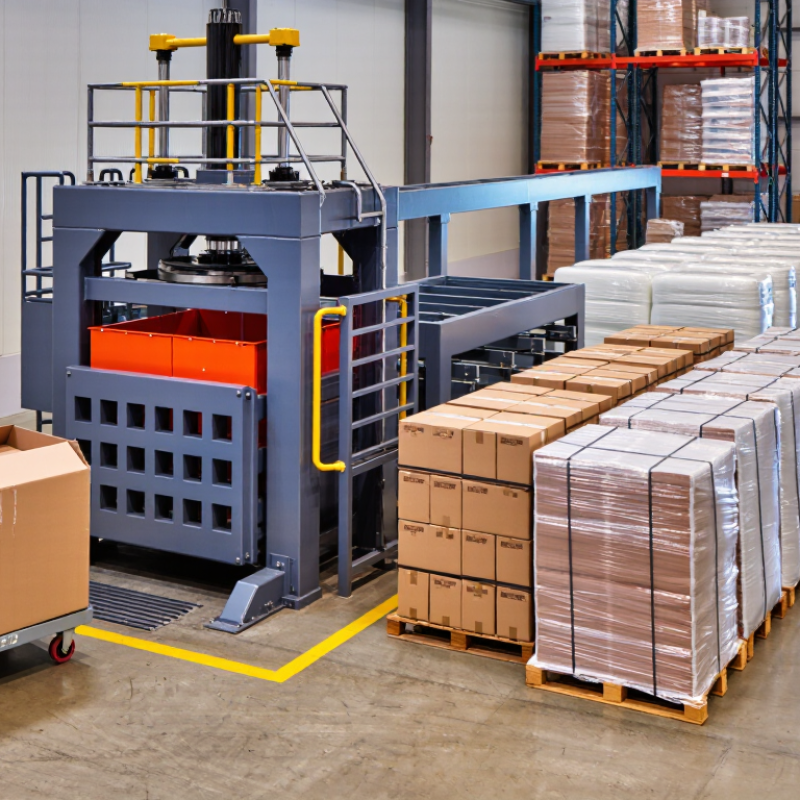
| 1 | Match the press to your materials | Confirm the machine is suitable for the actual waste stream, such as cardboard, paper, plastic film, or suitable rigid plastics. Check material preparation needs and restrictions. | Provide representative samples or a detailed material description. Ask for a trial bale and confirm any limits on moisture, contamination, or material size. | Different materials compress and bind differently. A press selected for the wrong feedstock may produce unstable bales or require extra sorting and handling. |
| 2 | Size capacity for real operating conditions | Compare the expected material volume and operating hours with the rated throughput, chamber size, bale dimensions, and loading method. | Ask how rated throughput was measured and what assumptions it uses. Check whether the quoted capacity reflects your material, operator routine, and planned shifts. | Rated output is not necessarily the output achieved in a particular facility. Realistic sizing helps prevent queues, underused equipment, and production bottlenecks. |
| 3 | Verify installation requirements | Check the machine footprint, access route, floor loading, anchoring, power supply, clearances, and any required guarding or ventilation. | Request an installation drawing and a written site-preparation checklist. Confirm who is responsible for unloading, lifting, electrical connection, commissioning, and permits. | Early site checks can identify access, structural, and utility issues before delivery, reducing the risk of installation delays or additional site work. |
| 4 | Assess safety and operator usability | Review guarding, emergency stops, interlocks, safe loading and bale-ejection procedures, maintenance access, and the operator controls. | Request the operating and safety instructions. Confirm what training is included and whether the equipment can be integrated with your site’s safety procedures. | Safe, clear operating procedures support consistent use and help employers meet applicable workplace safety obligations. |
| 5 | Evaluate supplier support | Check the availability of installation assistance, operator training, troubleshooting, service visits, and replacement parts for the expected service life. | Ask for written warranty terms, service response arrangements, parts availability information, and a clear list of what is and is not covered. | Support availability affects downtime and repair planning. Written terms make it easier to compare offers on an equivalent basis. |
| 6 | Compare lifetime cost, not just purchase price | Include the purchase or lease price, freight, installation, utilities, consumables, planned maintenance, repairs, training, and eventual removal or disposal. | Request an itemized quotation and identify assumptions, exclusions, service intervals, and consumables. Compare costs over the same ownership period and operating schedule. | A lower initial price may not represent the lowest total cost. A consistent cost comparison reveals expenses that can otherwise be overlooked. |
| 7 | Plan for bale handling and future changes | Check bale weight and dimensions against available storage space, transport equipment, collection arrangements, and downstream recycling requirements. | Confirm the finished bale specifications with your waste collector or recycler. Consider whether future changes in waste volume or material mix could require different equipment. | A press is useful only if finished bales can be safely moved, stored, collected, and accepted by the next handler. |