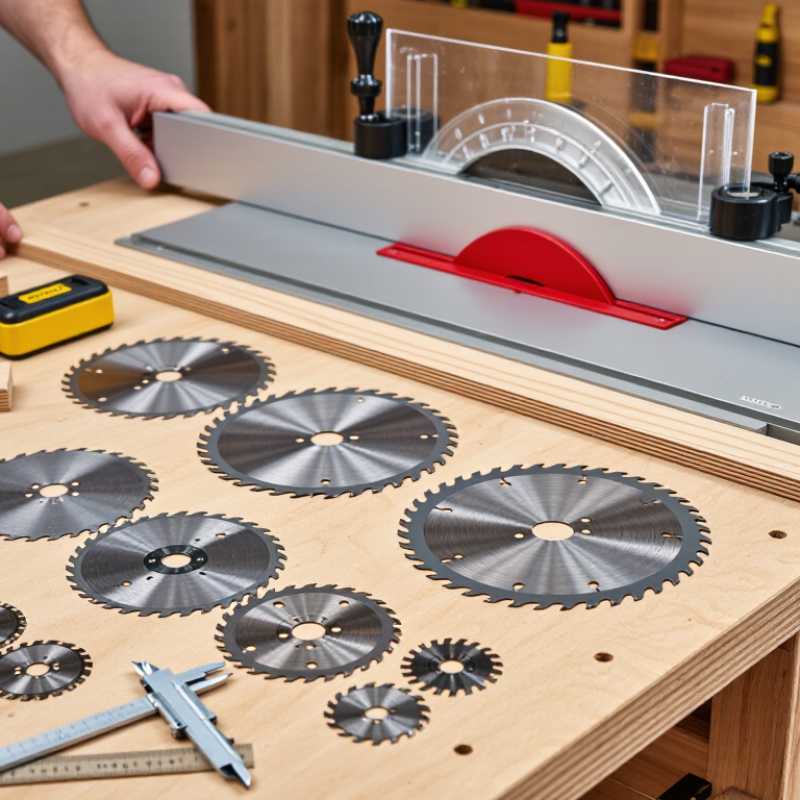
Choosing a dado blade set requires more than counting cutters. Durability, accuracy, and total value must work together. The U.S. Forest Products Laboratory’s Wood Handbook, FPL-GTR-282, explains that wood movement varies with moisture, species, and grain direction. Even an excellent set cannot correct unstable stock.
Tip 1: test on the actual plywood or hardwood.
Tip 2: check carbide edges under bright light.
Tip 3: reject visible chips or uneven brazing.
Tip 4: measure the assembled width with calipers, not the package label.
Accuracy depends on repeatable spacers and flat chippers. A small error can leave a joint too tight, forcing sanding and weakening the fit. The 2024 Grand View Research power-tools report projects continued market growth through 2030, but market expansion does not prove better cutting precision. I still overvalue polished cases sometimes. That is a costly habit.
Tip 5: compare measured widths across three assemblies.
Tip 6: inspect the storage case for protected edges and clear size markings. A dependable set should also allow quick, consistent adjustments.
Overall value includes service life, usable width range, and waste reduction. OSHA’s woodworking safety guidance highlights kickback and ejected stock as key hazards, so stability matters more than a low purchase price.
Tip 7: choose a set with secure clamping, balanced components, and clear operating limits.
Record the first cut, inspect the groove walls, and note burning or vibration. Reports provide useful standards, but your material, saw alignment, and technique still decide the result.