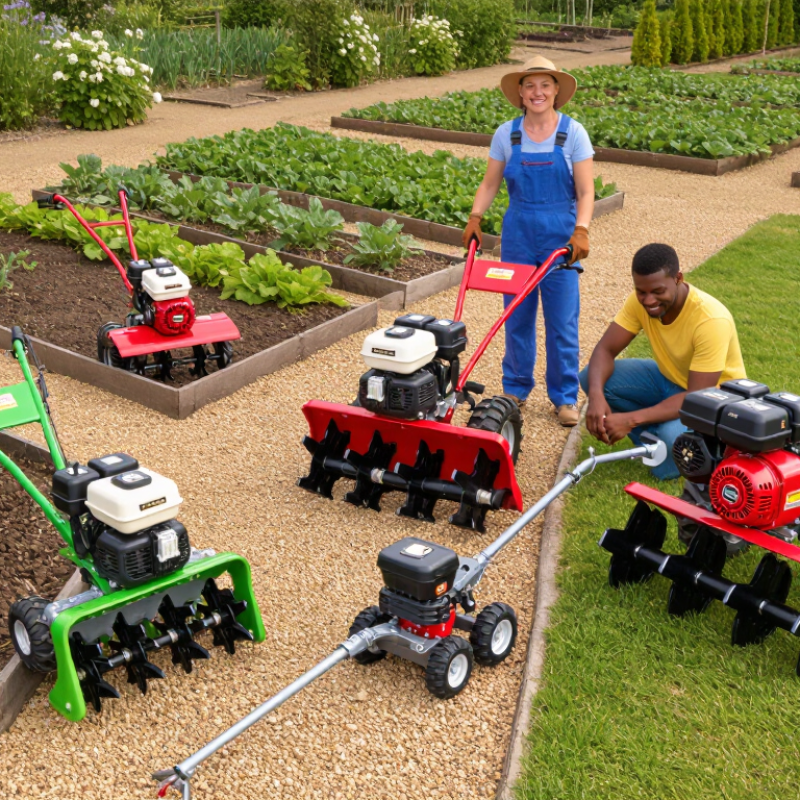
| 1. Match the tool to the job | Decide whether you need to break new ground, prepare an existing bed, or weed between plants. | Often suited to larger jobs and tougher soil, depending on the machine. | A practical choice for maintaining garden beds and light-to-moderate cultivation. | Best for shallow cultivation, small areas, and targeted weeding. |
| 2. Estimate the area | Consider the garden’s size, shape, and how often you will use the tool. | Can suit larger plots, but requires fuel, maintenance, and storage space. | Convenient for small and medium beds; battery runtime or cord access limits coverage. | Works well for compact beds; covering a large area takes more time and effort. |
| 3. Check soil conditions | Clay, compacted, rocky, or root-filled soil can be harder to cultivate than loose, previously worked soil. | A suitable model may provide the power needed for demanding conditions; results depend on design and soil preparation. | Generally more comfortable in loose or previously cultivated soil than in very hard ground. | Most effective in loose soil and for surface-level work; difficult ground requires more physical effort. |
| 4. Compare working width and depth | Look at the manufacturer’s stated tilling width and depth, and check whether width is adjustable. | Available in a wide range of sizes; larger working widths can cover ground faster but may be harder to maneuver. | Specifications vary; narrower models can be easier to guide around established beds. | Usually works a narrow, shallow strip at a time, which helps with precise cultivation. |
| 5. Choose a power source | Weigh convenience, available power, runtime, and the amount of work between breaks. | Runs on fuel and can work away from outlets; requires refueling and engine care. | Corded models need a suitable outdoor extension cord and nearby power; cordless models need charged batteries. | Needs no fuel, battery, or electrical outlet; operation depends on the user’s effort. |
| 6. Consider weight and maneuverability | Check product weight, handle design, wheel arrangement, and how easily the tool turns or transports. | Many models are heavier and may be challenging to lift, turn, or store. | Often lighter than comparable gas equipment, though battery and motor designs affect weight. | Typically simple to carry and control, but hand tools still require bending and repeated movement. |
| 7. Factor in noise and emissions | Think about nearby homes, working hours, ventilation, and your preference for quieter operation. | Produces exhaust during use and is generally louder than electric or manual tools. | Produces no exhaust at the point of use and is generally quieter than gas-powered equipment. | Operates without engine noise or exhaust. |
| 8. Compare upkeep and ongoing costs | Include purchase price, consumables, maintenance, replacement parts, and storage needs. | Requires fuel and regular engine maintenance; service needs depend on the engine and use. | Usually avoids routine engine servicing; batteries, if used, may eventually need replacement. | Has few operating costs; inspect the handle and working head and keep the tool clean. |
| 9. Check safety and controls | Review the manual, safety features, grip, guards, and recommendations for protective equipment. | Look for accessible shutoff controls and appropriate guards; keep hands and feet clear of rotating tines. | Check the switch or lock-off control; manage cords carefully on corded models and follow battery instructions. | There are no powered tines, but use gloves and safe lifting technique to reduce the risk of blisters or strain. |
| 10. Plan for storage and transport | Measure available storage space and consider how the tool will reach the garden. | May need more room and careful fuel storage; confirm it fits your shed and transport setup. | Check whether handles fold and how the cord or battery should be stored. | Usually needs little storage space and is easy to move by hand. |