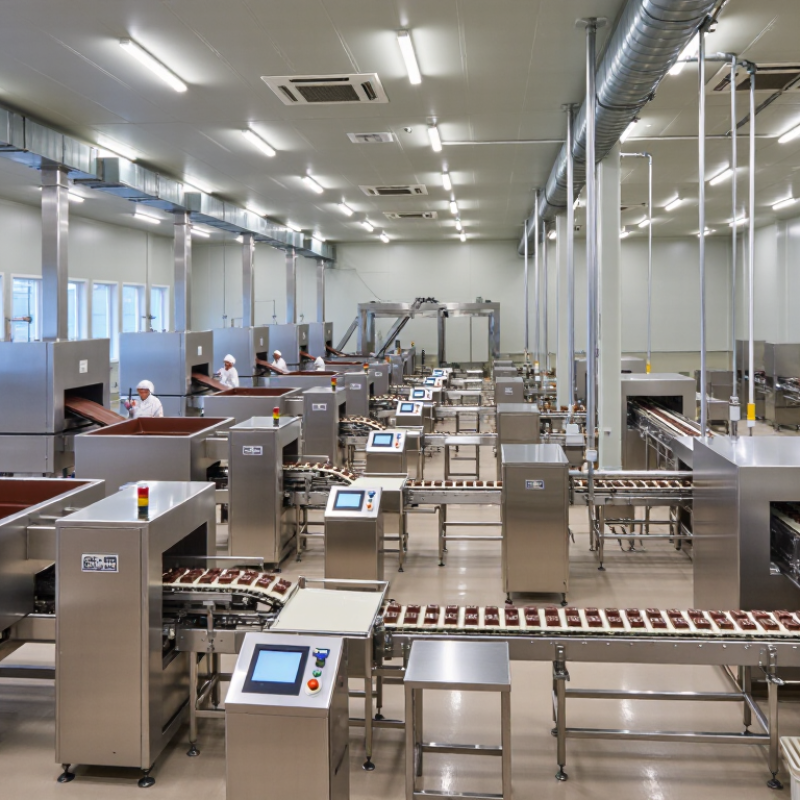
| 1 | HACCP system and prerequisite programs | Confirm that the plant has a documented HACCP plan covering receiving, storage, roasting or treatment where applicable, refining, conching, tempering, moulding, cooling, packaging, and dispatch. | Request the current hazard analysis, process flow diagram, list of critical control points, critical limits, monitoring records, corrective-action records, verification records, sanitation procedures, pest-control records, and allergen-control program. | The HACCP plan should be product- and process-specific, reviewed after process changes, supported by prerequisite programs, and implemented through complete, legible, and retrievable records. | Codex CXC 1-1969, General Principles of Food Hygiene and HACCP System |
| 2 | HACCP validation and verification | Determine whether the plant can demonstrate that its preventive controls are scientifically justified and routinely checked for effectiveness. | Review validation studies, internal audit reports, calibration certificates, environmental monitoring results, finished-product testing, complaint investigations, mock recalls, and management-review records. | Critical limits must be measurable or observable, monitoring must occur at defined frequencies, deviations must trigger documented corrective action, and verification activities must be independent of routine monitoring where practical. | Codex CXC 1-1969 HACCP principles 5–7 |
| 3 | Conformity with Codex CXS 87-1981 | Check whether the plant’s product specifications and labels align with the Codex Standard for Chocolate and Chocolate Products. | Request product specifications showing product name, cocoa ingredients, milk ingredients where relevant, permitted ingredients and additives, moisture or composition criteria where applicable, packaging information, and lot identification. | The selected chocolate category should be clearly defined, the formulation should match the declared product name, and the plant should maintain a controlled process for reviewing changes to Codex, national, and importing-country requirements. | Codex CXS 87-1981, Standard for Chocolate and Chocolate Products |
| 4 | EU cadmium compliance | Verify that the plant manages cadmium in cocoa beans, cocoa mass, cocoa powder, and chocolate according to the finished-product category and cocoa content. | Request recent representative laboratory results, raw-material risk assessments, supplier specifications, sampling plans, nonconformance records, and a calculation showing how the recipe and cocoa ingredients meet the applicable maximum level. | For products placed on the EU market, the applicable maximum levels include:
• Chocolate containing up to 30% total cocoa solids: 0.10 mg/kg
• Chocolate containing 30% to less than 50% total cocoa solids, and milk chocolate containing 30% or more total cocoa solids: 0.30 mg/kg
• Chocolate containing 50% or more total cocoa solids: 0.80 mg/kg
• Cocoa powder sold to the final consumer: 0.60 mg/kg | Regulation (EU) 2023/915, Annex I, maximum levels for cadmium in food |
| 5 | Raw-material control and supplier approval | Assess how the plant controls cocoa beans, cocoa mass, cocoa butter, cocoa powder, milk ingredients, nuts, emulsifiers, flavors, and packaging materials. | Review approved-supplier lists, incoming inspection procedures, certificates of analysis, origin and lot records, allergen declarations, storage conditions, stock-rotation records, and supplier-performance reviews. | Each critical ingredient should be traceable to a supplier lot. Risk-based testing should address relevant hazards, including cadmium, Salmonella risk in low-moisture ingredients, allergens, foreign material, and pesticide or contaminant requirements where applicable. | Codex CXC 1-1969; Regulation (EU) 2023/915 |
| 6 | Process capability and hygienic design | Inspect equipment and process controls for refining, conching, tempering, moulding, cooling, metal detection, packaging, and cleaning. | Request process-capability data, temperature and time records, preventive-maintenance logs, cleaning validation, allergen changeover procedures, foreign-material controls, metal-detector checks, and calibration records. | Equipment should be cleanable, maintained, and suitable for food contact. The plant should control temperature, time, moisture, foreign material, cross-contact, rework, and product segregation using documented procedures. | Codex CXC 1-1969, hygienic practices and control measures |
| 7 | Traceability, recall readiness, and laboratory competence | Test whether the plant can trace materials forward and finished products backward, isolate affected lots, and execute a rapid recall. | Request a recent mock-recall report, one-step-back and one-step-forward traceability records, retention-sample procedures, complaint trends, laboratory accreditation details, analytical methods, detection limits, and chain-of-custody records. | The plant should identify affected lots, quantities, customers, ingredients, and processing dates without ambiguity. Cadmium testing should use a validated method and a competent laboratory; results should be interpreted against the correct legal product category. | Codex CXC 1-1969; ISO/IEC 17025 principles; Regulation (EU) 2023/915 |