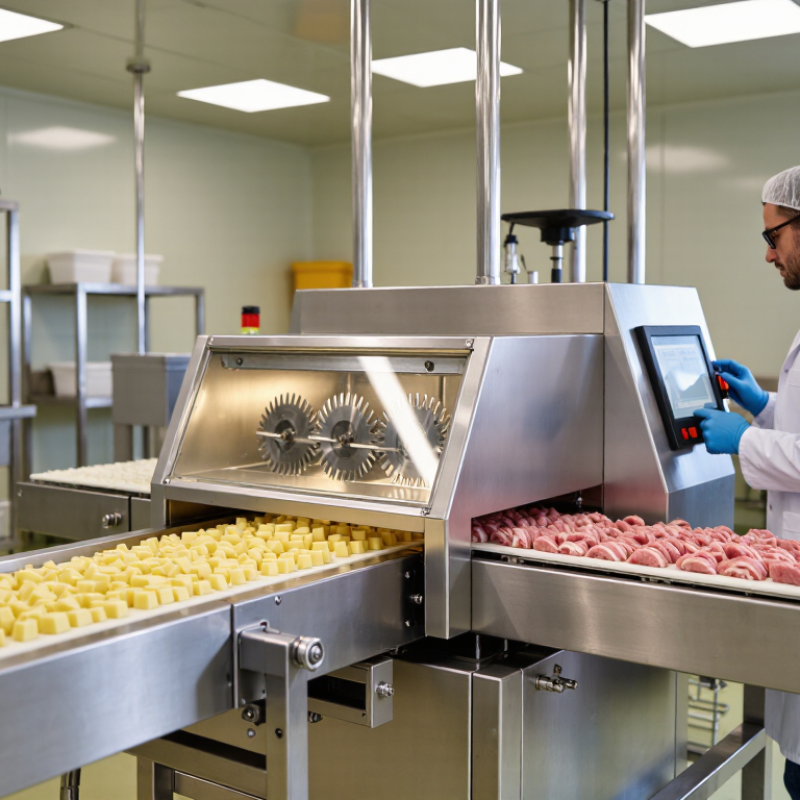
When choosing a dicing machine, specify the required cut dimensions before comparing technical features. A 3–30 mm adjustment range supports thin slices, medium cubes, and larger portions. However, a wide range does not guarantee consistent results. Ask how accurately the machine holds each setting during continuous operation. Small errors matter. A 2 mm deviation can affect cooking time, packaging weight, and product appearance.
Match the adjustment range to your actual production needs. If most batches require 8–12 mm pieces, prioritize stability within that zone instead of choosing the widest range. Check how operators change settings, read measurements, and secure cutting components. Clear scales and repeatable controls reduce guesswork between shifts. Measure the samples. Use a ruler or calibrated gauge, not visual judgment alone.
Material properties also influence final dimensions. Firm vegetables may produce cleaner cuts than soft or fibrous products. Test several batches at 3 mm, 10 mm, and 30 mm when possible. Record piece variation, surface damage, and processing speed. A machine may perform well at 10 mm but struggle with very small pieces. That assumption can fail. Review maintenance records, blade adjustment procedures, and safety instructions with trained technicians. Real production trials often reveal limitations that a specification sheet does not show.