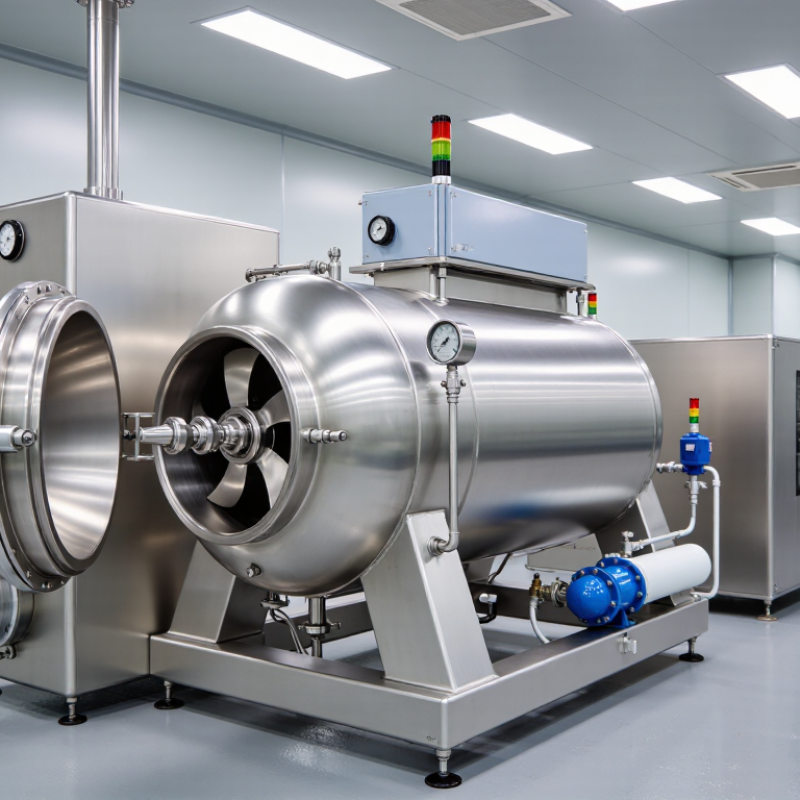
| 1 | Match the Working Capacity | Size the mixer according to the intended batch weight and bulk density. A practical starting point is to operate within approximately 50%–80% of the vessel's nominal volume, subject to the mixer design and material behavior. | An underfilled mixer may provide weak blending, while overfilling can reduce circulation, increase mixing time, and overload the drive system. | Request the usable working volume, maximum batch weight, minimum recommended fill level, and test results using the actual PVC formulation. |
| 2 | Select the Appropriate Mixing Speed | Low-speed ribbon or paddle mixers commonly operate around 20–60 rpm. High-intensity mixers often use substantially higher rotor speeds, frequently about 500–1,500 rpm, depending on the formulation and equipment design. | Speed affects dispersion, blending time, heat generation, and the risk of excessive shear or material degradation. | Confirm the adjustable speed range, speed-control accuracy, start-up torque, and whether separate low- and high-speed stages are available. |
| 3 | Evaluate Temperature Control | For many PVC dry-blend processes, hot mixing may discharge in approximately the 110–130°C range, followed by cooling to roughly 40–55°C before storage or downstream processing. Actual setpoints depend on the formulation. | Controlled heating helps distribute additives, while controlled cooling reduces caking, premature fusion, and thermal damage. | Look for jacket or internal cooling capability, temperature sensors near the material zone, automatic setpoint control, and documented heating and cooling curves. |
| 4 | Check Mixing Uniformity | Ask for a validation protocol based on multiple samples taken from different locations and times. The acceptable variation should be defined for the specific additive or formulation being mixed. | Uniform distribution of stabilizers, lubricants, pigments, and fillers is essential for consistent processing and finished-product quality. | Review sample locations, test methods, mixing time, batch-to-batch repeatability, and evidence from a trial using production-grade materials. |
| 5 | Assess Torque and Drive Capacity | The drive should be selected for the highest expected bulk density, starting load, moisture condition, and viscosity-related resistance, with an appropriate engineering safety margin. | Adequate torque prevents stalling and supports reliable operation during charging, cold starts, and heavy or compacted batches. | Compare motor power, gearbox rating, peak torque, overload protection, start-up behavior, and maintenance requirements under the intended load. |
| 6 | Consider Material Contact and Cleaning | Product-contact surfaces are commonly specified in corrosion-resistant stainless steel or another compatible material, with smooth welds and minimal dead zones. | A cleanable mixer reduces cross-contamination, material retention, additive buildup, and unplanned cleaning time between formulations. | Inspect surface finish, blade clearance, discharge design, access doors, seals, clean-out procedures, and compatibility with the formulation's additives. |
| 7 | Verify Safety and Process Monitoring | The system should include guarded moving parts, an interlocked access cover, emergency stopping, overload protection, temperature alarms, and clear operating controls. | PVC powders and additives can create dust and mechanical hazards. Monitoring also helps prevent operation outside validated temperature, speed, and load limits. | Confirm compliance with applicable local machinery and electrical requirements, dust-control provisions, alarm history, operator training, and preventive-maintenance access. |