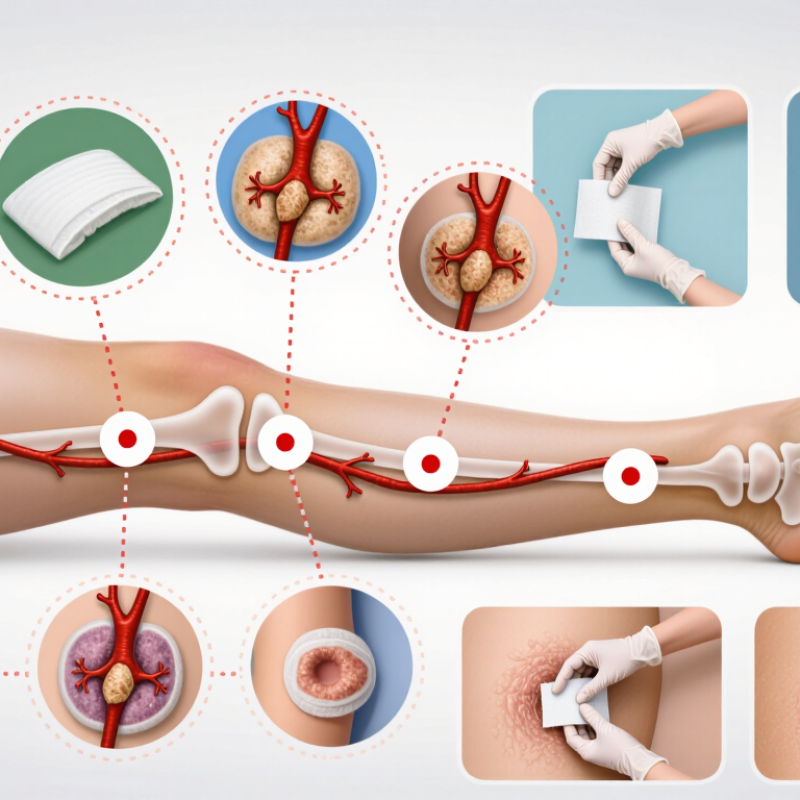
| 1. Check circulation before compression | Assess arterial blood flow and overall suitability for compression; an ankle-brachial pressure index or other vascular assessment may be needed. | Choose a dressing only after the wound and surrounding skin have been assessed. A dressing does not make compression safe when arterial supply is inadequate. | Have a qualified clinician determine whether compression is appropriate and what level to use. Avoid applying compression without assessment when arterial disease is suspected. |
| 2. Match absorbency to exudate | Note the amount of wound fluid and whether the dressing is becoming saturated or leaking between changes. | For heavier exudate, consider an absorbent dressing such as foam, alginate, or a superabsorbent option, selected for the wound and care plan. For low exudate, avoid unnecessarily drying the wound bed. | Ensure the dressing can manage fluid beneath the compression system without causing leakage, excessive bulk, or pressure points. Reassess if strike-through occurs. |
| 3. Protect fragile surrounding skin | Look for maceration, dryness, irritation, or skin damage around the ulcer, especially where wound fluid contacts intact skin. | Use a gentle, non-adherent contact layer when appropriate. A skin barrier product may help protect periwound skin; keep it off the wound bed unless directed. | Keep the dressing flat and contained under the wrap. Avoid folds or excess padding that could increase friction or create localized pressure. |
| 4. Choose a comfortable contact layer | Consider pain, tissue fragility, wound depth, and whether the dressing sticks during removal. | A non-adherent contact layer can reduce trauma during dressing changes. Use a dressing appropriate to the wound bed and follow its application instructions. | Confirm that the combined dressing and compression layers fit comfortably and do not bunch, slip, or restrict movement. |
| 5. Use antimicrobial dressings selectively | Check for clinical signs of infection, such as spreading redness, increasing warmth or pain, fever, or a rapid change in the wound. | Antimicrobial dressings are not routinely needed for every venous ulcer. Use them only when clinically indicated, with a review plan and duration set by a clinician. | Compression does not replace infection assessment or treatment. Seek prompt clinical review for suspected infection or systemic symptoms. |
| 6. Plan dressing changes around the wrap | Consider exudate levels, wound progress, comfort, and the care setting when planning review and change intervals. | Change the dressing when indicated by the wound, saturation, leakage, or product instructions. There is no single change interval suitable for every ulcer. | Choose a practical schedule that allows the compression system to remain effective while still permitting wound review and timely dressing changes. |
| 7. Reassess and adjust the plan | Track wound size, tissue, exudate, pain, skin condition, and tolerance of compression over time. | Change dressing type if the wound or fluid level changes, or if there is leakage, discomfort, or skin damage. Dressing choice should support wound care, not replace it. | Review compression fit and effectiveness at follow-up. Seek clinical advice if the ulcer worsens, fails to progress, or compression causes new pain, numbness, or color change. |