Request Quote

Request a quote from Nidec Drive Technology America Corporation.

This quote form is intended for customers and partners in North America seeking information about Nidec Drive Technology America Corporation’s Precision Gearing Technologies. For inquiries related to the Nidec motor group division or from outside this region, please visit the global Nidec Group website to find the appropriate regional or product-specific contact.

Subscribe to Nidec Newsletter

Subscribe to our email newsletter to stay current with our precision gearing solutions, featured products, company updates, and industry news.

What Are the Top 10 Automated Line Manufacturers in China?

China’s factory floors are changing quickly. In automotive plants, battery workshops, and electronics facilities, an Automated Line can connect robots, conveyors, sensors, and inspection stations into one coordinated process. Yet equipment alone does not guarantee reliable output. Integration, commissioning, maintenance support, and the ability to adapt a line matter just as much.

The scale is significant. The International Federation of Robotics’ World Robotics 2024 report recorded 276,288 industrial robot installations in China in 2023, representing 51% of worldwide installations. China’s operational stock reached approximately 1.76 million industrial robots that year. IFR President Marina Bill described China as “the largest market for industrial robots in the world.” These figures show the market’s reach, but they do not prove that every supplier delivers the same level of engineering or service. A robot count is not a complete measure of line quality.

This guide examines ten Chinese manufacturers associated with automated production lines. It considers their solutions, sector experience, integration capabilities, and support footprint, rather than treating a single product specification as decisive. A real factory has constraints: a narrow aisle, a demanding cycle time, or a process that changes between product batches. Details like these can expose gaps that a polished brochure may miss. There is no perfect shortlist. Company capabilities and project fit should be verified directly before procurement.

What Are the Top 10 Automated Line Manufacturers in China?

Understanding Automated Production Lines and Their Role in China

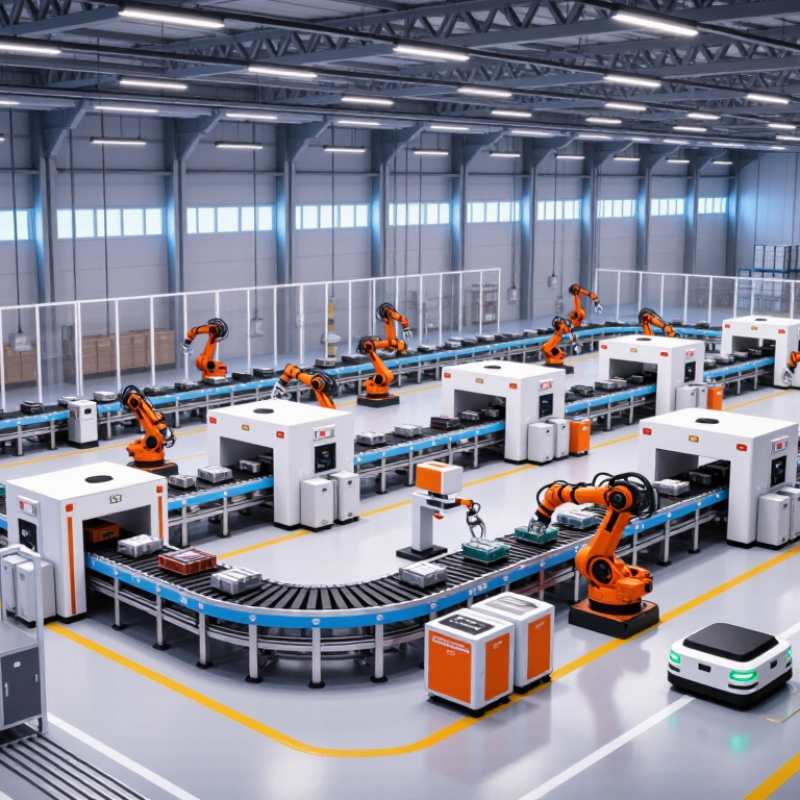
An automated production line connects machines, controls, and inspection stations to move a product through repeatable steps. In China, these lines support industries such as electronics, automotive components, appliances, and food processing. A typical setup may include conveyors, robotic arms, programmable controllers, and cameras that check dimensions or surface defects. The aim is not simply to remove workers. It is to make production more consistent, improve traceability, and handle repetitive tasks with less variation.

The details matter. A fast robot cannot fix a poorly balanced line, and a camera is useful only when lighting and inspection criteria are reliable. Engineers usually assess cycle time, changeover needs, floor space, and how the line will connect with existing equipment before selecting a solution. For buyers comparing automated line manufacturers in China, practical questions include installation support, operator training, spare-parts access, and documented acceptance tests. These checks reveal more than a headline production speed. Not always. Automation can also add maintenance demands, and product changes may require new fixtures or control adjustments. A line that performs well during a demonstration still needs to prove itself across real shifts, materials, and operating conditions.

Criteria for Ranking China's Automated Line Manufacturers

Ranking China’s automated line manufacturers requires more than comparing quoted prices or advertised cycle times. A strong assessment starts with engineering capability: Can the team translate a process map into stable stations, suitable fixtures, and clear control logic? Review factory acceptance records, sample-run data, and change logs. Evidence matters. Ask how cycle time was measured, including loading, inspection, and minor stoppages. Numbers can mislead. A line that reaches its target only with ideal parts may struggle during a real shift. Inspect welds, cable routing, guarding, and operator access during a site visit; small details often reveal build discipline.

Integration and after-sales support deserve equal weight. Check whether robots, conveyors, vision systems, and traceability tools exchange data reliably, then request a demonstration using representative products. Compare defect rates, uptime definitions, and recovery time after a fault, not just headline output. Verify safety design, documentation, spare-parts planning, and technician response through records and customer references where available. Customization matters, but excessive one-off engineering can raise costs and delay commissioning. A fair ranking should also consider delivery performance and lifecycle support. The assessment is imperfect: public data is uneven, and a polished showroom cannot prove long-term reliability. Use consistent evidence across manufacturers.

Profiles of 10 Leading Automated Line Manufacturers in China

China’s automated-line manufacturers differ more by engineering focus than by headline capacity. Automotive specialists build robotic welding cells and body assembly lines, where fixture accuracy matters. Battery-line suppliers handle electrode coating, cell assembly, and traceable testing. Electronics integrators connect placement machines with optical inspection and careful component handling. Small tolerances matter.

Food and beverage packaging manufacturers focus on filling, sealing, and cleaning-friendly conveyor layouts. Appliance-line builders combine fastening stations, electrical checks, and end-of-line testing. Metalworking specialists automate cutting, bending, and welding, often adapting cells to changing product dimensions. Intralogistics-focused manufacturers link workstations with conveyors and automated storage, reducing manual transfers.

Personal-care packaging suppliers coordinate bottle handling, dosing, capping, and labeling. Photovoltaic-line builders address delicate panel movement and inspection between process stages. Custom automation integrators serve factories whose products do not fit standard equipment. Fit comes first. For each supplier, buyers should examine sample cycle-time data, changeover procedures, safety design, and service coverage. A polished factory tour can still leave questions about spare parts, software access, or recovery after a stoppage. Request a process demonstration using representative workpieces; the results may reveal gaps that a proposal does not.

What Are the Top 10 Automated Line Manufacturers in China? — Profiles of 10 Leading Automated Line Manufacturers in China

These anonymized profiles describe established automation-line application segments in China, not named companies. They are not a verified ranking, and capabilities vary by supplier, facility, and project.

Profile Automated Line Specialization Typical Line Scope Common Automation Modules Typical Applications Key Project Considerations
Profile 01 Automotive body-in-white and body assembly Vehicle-body framing, joining, and transfer operations Industrial robots, spot-welding equipment, fixtures, conveyors, machine vision Body shells and subassemblies for passenger and commercial vehicles Weld quality, dimensional accuracy, guarding, and coordination between stations
Profile 02 Battery cell, module, and pack assembly Cell handling, module assembly, pack integration, and end-of-line checks Precision dispensing, fastening, laser processing, traceability, electrical test systems Manufacturing lines for rechargeable battery products and battery packs Cell handling, process traceability, electrical safety, and control of dust or moisture where required
Profile 03 Photovoltaic module manufacturing Cell interconnection, layup, lamination, framing, and module testing Stringing equipment, robotic handling, laminators, inspection and testing stations Production of framed photovoltaic modules Cell breakage prevention, process consistency, inspection coverage, and line balancing
Profile 04 Electronics and electrical-product assembly Printed circuit board assembly and downstream product assembly Screen printers, pick-and-place machines, reflow ovens, automated optical inspection Consumer electronics, control boards, and electrical assemblies Component traceability, inspection strategy, changeover time, and electrostatic-discharge controls
Profile 05 Home appliance assembly Part feeding, product assembly, functional testing, and packing Conveyors, screwdriving systems, robotic handling, leak or electrical test stations Refrigerators, washing machines, air conditioners, and other household appliances Product-model flexibility, ergonomic workstation design, test coverage, and takt-time requirements
Profile 06 Food and beverage processing and packaging Product filling or dosing, container handling, sealing, labeling, and palletizing Filling machines, checkweighers, inspection systems, case packers, palletizers Bottled, canned, packaged, and portioned food or beverage products Hygienic design, cleanability, product-contact materials, and packaging-line changeovers
Profile 07 Pharmaceutical packaging Primary packaging, inspection, cartoning, and case packing Blister or bottle packaging equipment, vision inspection, serialization and aggregation systems Packaging operations for medicines and regulated healthcare products Validated processes, product and batch traceability, documentation, and contamination controls
Profile 08 Machining and robotic machine tending Workpiece loading, machining, in-process handling, and finished-part inspection CNC machine tools, robot tending, part feeders, gauging, tool and process monitoring Repeat production of metal components for vehicles, machinery, and equipment Workholding accuracy, chip and coolant management, machine safety, and unattended operation controls
Profile 09 Warehouse and intralogistics systems Automated storage, conveyance, sorting, and order-handling operations Conveyors, sorters, automated storage and retrieval systems, mobile robots, warehouse software Factories, distribution centers, and e-commerce fulfillment operations Throughput planning, integration with warehouse systems, traffic management, and recovery from downtime
Profile 10 General industrial assembly and testing Part assembly, fastening, dispensing, inspection, and end-of-line testing Flexible fixtures, collaborative or industrial robots, machine vision, test and data-acquisition systems Pumps, motors, instruments, industrial components, and other manufactured products Product variation, measurement-system suitability, maintainability, and compliance with applicable safety requirements

Key Industries and Technologies Served by These Manufacturers

China’s automated line manufacturers serve automotive, electronics, food processing, home appliance, and metalworking industries. Each sector needs a different balance of speed, precision, and flexibility. Automotive lines often combine robotic welding, material handling, and inspection stations. Electronics plants rely on compact assembly cells, machine vision, and precise component placement. Food producers need hygienic conveyors, filling equipment, and packaging systems that handle frequent product changes. Details matter.

Common technologies include programmable controls, industrial robots, sensors, vision inspection, and manufacturing data systems. Together, these tools can reduce repetitive work and help identify defects earlier. Yet a fast cycle time on paper does not guarantee smooth production. Layout, changeover time, spare parts, and operator training all affect daily performance. A live factory trial can reveal awkward handoffs or recurring stoppages that a demonstration may not show. Comparing suppliers is not always straightforward.

Tips: Match the line design to your actual product range and target output. Ask for sample cycle-time records, changeover steps, and maintenance schedules. Check how faults are logged and whether operators can understand the interface. A small pilot run is useful, though it may not capture every production issue.

China's Automation Landscape: Industrial Robot Installations, 2019–2023

Annual installations provide context for the market served by automated production-line manufacturers; this chart does not rank individual companies.

China’s industrial robot installations rose substantially from 2019 to 2022 before easing in 2023. Automated lines commonly apply robotics, machine vision, and programmable control in industries such as automotive and electronics. Source: International Federation of Robotics (IFR), World Robotics.

How to Compare Manufacturers for Your Automation Project

A useful comparison starts with the work the line must perform, not a manufacturer’s headline price. Define target output, product variations, shift length, and acceptable changeover time. Ask each manufacturer to map those needs to stations, cycle times, staffing, and inspection points. Request a layout and a written list of assumptions. Numbers matter.

Compare proposals using the same test conditions. Ask how the quoted cycle time was measured, and whether it includes loading, quality checks, and routine stops. Review sample acceptance criteria, factory testing procedures, operator training, maintenance instructions, and spare-parts availability. Check whether the controls can share data with your existing equipment, and who supports commissioning across time zones. If possible, speak with customers running similar products or arrange a site visit. Look closely at cable routing, guarding, access to sensors, and how quickly a technician can clear a jam. Small details matter.

A low initial cost can hide expensive integration work. Ask for exclusions, change-request rates, and a realistic delivery schedule. No scorecard is perfect. A weighted comparison helps, but it can still miss awkward handoffs between stations. Leave room for a pilot run, and record unresolved questions before signing.