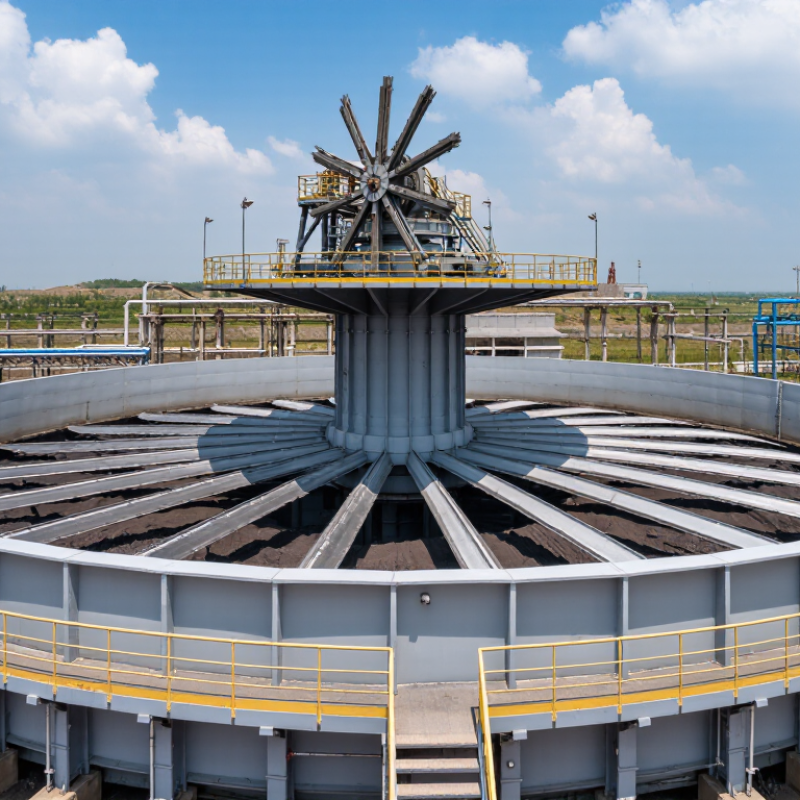
When comparing central-drive concentrators, treat underflow density as a measured operating result, not a catalogue promise. The Australian Government’s 2016 Tailings Management handbook gives indicative solids concentrations of about 30–50% for conventional tailings and roughly 50–70% for thickened tailings. These ranges are context, not targets for every ore. Request test-work data for your slurry’s particle size, clay content, and throughput. Confirm that the quoted percentage means solids by mass; “density” alone can obscure the measurement basis. Small wording matters.
Drive design affects torque reserve, rake reliability, and maintenance access. Compare continuous torque ratings with peak loads during bed-building or recovery from process upsets. For energy, request metered kWh per dry tonne, including auxiliaries, and specify the feed rate. A rating-plate figure is not plant performance.
For example, a 15-kW drive treating 1,000 dry tonnes per hour uses 0.015 kWh/t at full rated power, before pumps and controls. Measure it on site.
Service life has no universal figure: examine fatigue design, corrosion allowance, bearing replacement intervals, and operating records from comparable duty. Ask for documented outages and years in operation, not just warranty length. Even a careful spreadsheet can miss poor maintenance.