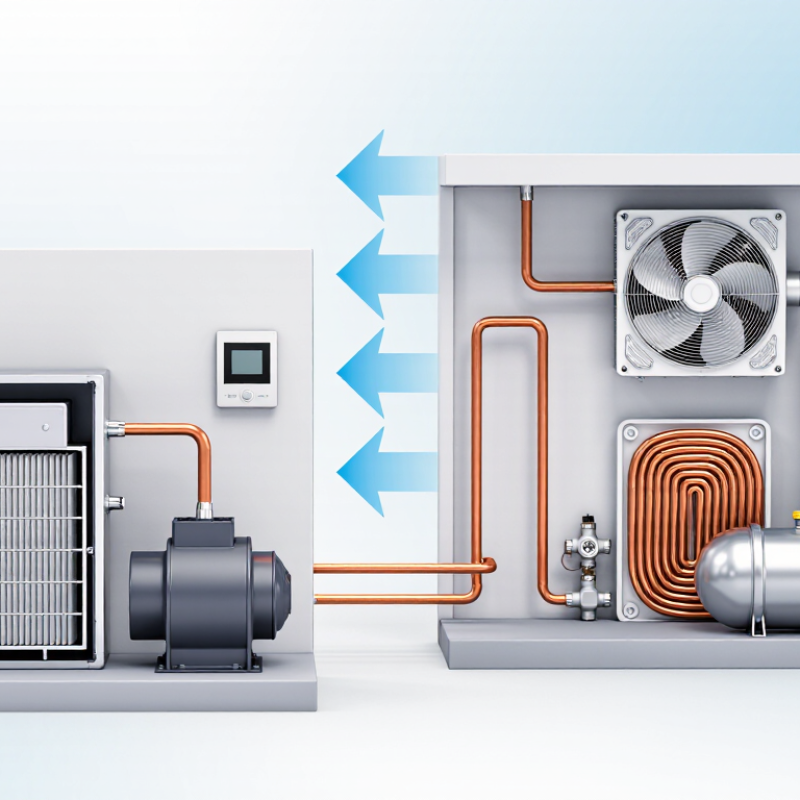
| 1 | Compressor | Refrigeration circuit | Compresses low-pressure refrigerant vapor and moves it through the refrigeration cycle. It is the main electrical load in many air-conditioning systems. | Usually a single-phase or three-phase motor. Starting current is normally higher than running current; exact voltage and current depend on the unit design. | No cooling, tripped breaker, abnormal humming, overheating, or repeated startup attempts. |
| 2 | Condenser Fan Motor | Outdoor unit | Moves outdoor air across the condenser coil to release heat from the refrigerant. | Commonly an AC motor with a rated voltage, speed, and horsepower specified on its nameplate. Some systems use electronically controlled motors. | Outdoor unit overheating, high-pressure shutdown, weak airflow, unusual noise, or a fan that does not rotate. |
| 3 | Blower Motor | Indoor air-handling section | Drives the indoor blower wheel or fan to circulate conditioned air through the evaporator coil and ductwork. | May use multiple speed taps, a capacitor, or an electronically controlled motor module. The operating current varies by motor type and airflow setting. | Low or no indoor airflow, poor cooling distribution, motor noise, overheating, or intermittent operation. |
| 4 | Run Capacitor | Motor and compressor circuits | Creates the phase shift needed for many single-phase motors and helps maintain efficient motor operation while running. | Rated in microfarads and voltage. Dual capacitors may serve both the compressor and condenser fan motor in one enclosure. | Hard starting, humming motors, reduced performance, overheating, bulging casing, or a motor that stops unexpectedly. |
| 5 | Contactor | High-voltage switching circuit | Uses a low-voltage control signal to switch power to high-voltage loads such as the compressor and outdoor fan motor. | Contains a control coil and power contacts. Coil voltage is commonly a low control voltage, while contact ratings must match the connected load. | Outdoor unit will not start, contacts remain stuck, chattering sounds, visible pitting, or intermittent cooling. |
| 6 | Thermostat or Controller | Measures room temperature and sends operating commands for cooling, heating, fan operation, and temperature control. | Typically communicates with the indoor unit through low-voltage control wiring. Advanced controllers may use digital communication protocols. | Incorrect room temperature, failure to call for cooling, short cycling, blank display, or unresponsive controls. |
| 7 | Control Board | Processes sensor and control signals, manages relays or electronic switches, and coordinates indoor and outdoor unit operation. | Includes low-voltage terminals, relays, fuses, connectors, and microelectronic control circuits. Board design varies by system architecture. | Random shutdowns, error codes, incorrect sequencing, unresponsive components, or failure after electrical surges. |
| 8 | Temperature Sensor | Detects air or coil temperature and provides feedback used to regulate cooling capacity and protect the system. | Many systems use thermistors whose resistance changes with temperature. Sensors must match the control board's specified resistance curve. | Erratic temperature readings, short cycling, frost on the coil, delayed operation, or sensor-related fault codes. |
| 9 | Pressure Switch or Pressure Sensor | Monitors refrigerant pressure and helps protect the compressor from excessively high or low operating conditions. | Mechanical switches open or close at set pressure limits; electronic sensors send a variable signal to the control system. | Unexpected shutdowns, compressor lockout, repeated fault indications, or operation only under certain outdoor conditions. |
| 10 | Disconnect, Fuse, or Circuit Breaker | Provides a means to isolate the equipment and protects wiring and components from excessive current or short circuits. | Protection devices must be correctly sized for the equipment's marked electrical ratings and installed according to applicable electrical codes. | Complete loss of power, repeated tripping, blown fuses, burnt terminals, or unsafe voltage conditions. |