What Are the Top 10 Types of Seamless Steel Tube?
Seamless Steel Tube is made without a welded seam, giving it a continuous wall that suits demanding pressure and temperature conditions. Yet “top 10” does not mean one universal ranking. Buyers compare tubes by material, manufacturing method, dimensions, and intended service. A grade suited to a boiler may be the wrong choice for a hydraulic line. Details matter.
This guide introduces ten widely used categories, including carbon steel, alloy steel, stainless steel, boiler, line pipe, hydraulic, precision, structural, bearing, and cold-drawn tubes. Some categories overlap: a tube can be both alloy steel and cold drawn. That can be confusing. The distinctions become clearer when we connect each type to its typical application, such as a high-pressure fluid circuit or a machine component requiring close tolerances.
We also consider practical selection factors: operating pressure, temperature, corrosion exposure, wall thickness, dimensional tolerances, and applicable specifications. These checks help narrow options, but they cannot replace engineering review or verified product documentation. A polished surface alone proves little. Material certificates, inspection records, and supplier capability deserve attention, too. In real projects, small differences in grade or heat treatment can change performance. Even experienced buyers sometimes overlook them. Use the following overview as a starting point, then confirm requirements with the relevant design standard and a qualified supplier.
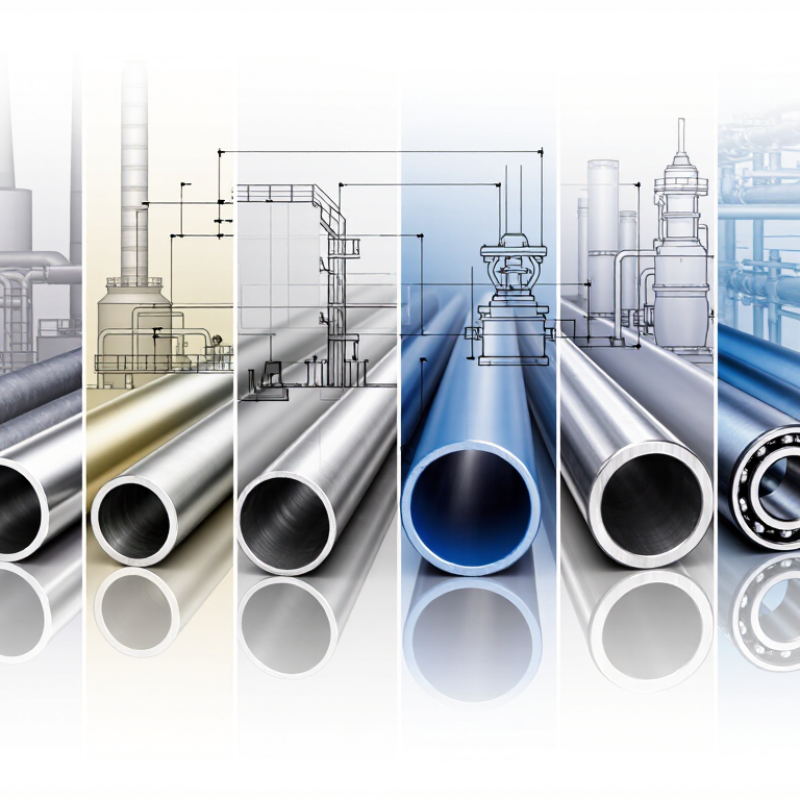
How Seamless Steel Tubes Are Classified by Material and Application
What Are the Top 10 Types of Seamless Steel Tube?
How Seamless Steel Tubes Are Classified by Material and Application
Seamless steel tubes are best classified by both chemistry and service duty. Carbon steel tubes, such as ASTM A106 grades, suit steam, water, and oil pipelines. Low-alloy tubes add chromium or molybdenum for boilers and high-temperature equipment. Stainless tubes resist corrosion in food, chemical, and marine systems. Duplex stainless tubes provide higher strength and chloride resistance. Nickel-alloy tubes handle severe heat and aggressive chemicals. Titanium tubes serve lightweight, highly corrosive environments. Tool-steel tubes support demanding mechanical parts. Hydraulic tubes require clean internal surfaces and tight tolerances. Line-pipe tubes transport fluids over long distances. Structural tubes support buildings, platforms, and machinery.
Material alone does not decide suitability. Application changes the required wall thickness, yield strength, temperature rating, and testing method. The World Steel Association’s 2024 Short Range Outlook projected global steel demand at about 1.79 billion tonnes in 2024. This scale reflects steel’s continuing role in energy, construction, and manufacturing. However, seamless tubes represent only one specialized segment. Their production costs and performance can vary sharply. The categories also overlap. A duplex tube may serve both chemical processing and offshore systems. That is worth checking carefully.
Tips: Match the grade to the fluid, temperature, pressure, and corrosion risk. Review ASTM, API, or ISO requirements before ordering. Ask for heat numbers, mill certificates, hydrostatic test results, and dimensional records. A cheaper grade may fail earlier. In my experience, application details are often incomplete, and that weakens the selection.
Carbon Steel and Low-Temperature Seamless Tubes
What Are the Top 10 Types of Seamless Steel Tube?
Carbon steel and low-temperature seamless tubes are widely selected when strength, pressure resistance, and dependable service matter. The ten common categories include general-purpose carbon, high-pressure carbon, boiler, structural, hydraulic, bearing, alloy, low-temperature carbon, nickel-alloy low-temperature, and cryogenic tubes.
Carbon steel seamless tubes suit pipelines, pressure vessels, machinery shafts, and structural supports. Their continuous wall has no welded seam, reducing one potential weakness under pressure. Grades with controlled carbon content usually offer better weldability and easier field fabrication. Wall thickness, outside diameter, tensile strength, and impact requirements must match the design. Details matter.
Low-temperature seamless tubes require stricter attention. They are used in cold storage systems, gas processing equipment, and outdoor piping exposed to severe winter conditions. Impact testing at a specified temperature helps confirm toughness. A tube that performs well at room temperature may become brittle below zero. Cold service is unforgiving. Material certificates, heat numbers, and test results should be checked before installation. Proper bevels and clean internal surfaces also support reliable welding and flow. In practice, selection is not always perfect. Designers sometimes focus on pressure ratings and overlook startup temperature, thermal shock, or handling damage. Reviewing actual operating conditions can prevent that mistake.
10 Common Types of Seamless Steel Tubes
Representative minimum tensile strength values for widely specified carbon-steel and low-temperature seamless tube grades.
ASTM A333 Grade 6 and ASTM A334 Grade 1 are low-temperature seamless tube grades with specified impact-testing requirements. Values shown are representative minimum tensile strengths stated in the referenced material specifications; actual requirements may vary by grade, product size, and edition of the standard.
Reference specifications: ASTM A106, ASTM A53, ASTM A179, ASTM A192, ASTM A210, ASTM A333, ASTM A334, ASTM A519, API 5L, and EN 10216-1.
Alloy Steel and High-Pressure Seamless Tubes
What Are the Top 10 Types of Seamless Steel Tube?
Alloy Steel and High-Pressure Seamless Tubes
Seamless steel tubes are selected by material, pressure rating, temperature, and service environment. Common types include carbon steel, alloy steel, stainless steel, duplex steel, nickel alloy, bearing steel, boiler tube, hydraulic tube, structural tube, and high-pressure tube. These categories can overlap, so the correct choice requires more than a simple product label.
Alloy steel tubes contain elements such as chromium, molybdenum, nickel, or vanadium. These additions improve strength, toughness, and resistance to heat. They are widely used in boilers, heat exchangers, pressure vessels, and power piping. Grade selection matters. A tube designed for moderate heat may fail under repeated thermal cycling.
High-pressure seamless tubes are manufactured without a welded seam. This structure supports reliable performance under internal pressure. However, seamless construction does not guarantee safety by itself. Wall thickness, ovality, surface defects, and chemical composition must be checked. Hydrostatic testing and dimensional inspection add practical confidence.
Details matter.
During installation, bending radius and cleanliness also affect service life. Contamination can damage hydraulic systems, while poor alignment may create local stress. Some specifications appear suitable on paper but perform poorly in actual conditions. Engineers should review operating pressure, temperature changes, corrosion exposure, and inspection records before approval. Material certificates should match the delivered heat and tested dimensions, not merely the purchase order.
Stainless Steel and Duplex Seamless Tubes
What Are the Top 10 Types of Seamless Steel Tube?
Stainless Steel and Duplex Seamless Tubes
Stainless and duplex seamless tubes are important choices among the top ten steel tube types. Stainless grades such as 304 and 316 resist moisture, oxidation, and many common chemicals. Duplex grades combine austenitic and ferritic structures. This gives them higher strength and better chloride resistance. They suit heat exchangers, chemical piping, offshore equipment, and process plants. Seamless construction removes a welded joint, but it does not remove every risk. Poor heat treatment can reduce corrosion performance. Incorrect sizing can also create vibration, pressure loss, or costly replacement work.
Technical selection should consider temperature, pressure, fluid chemistry, and cleaning methods. Chloride exposure deserves special attention. Duplex tubes need controlled manufacturing and balanced phase content. Inspection may include positive material identification, hydrostatic testing, eddy-current testing, and dimensional checks. A certificate alone is not enough. Traceability matters from raw material to final inspection. It is easy to over-specify. Yet choosing a cheaper grade without reviewing service conditions can be worse.
Tips: Compare corrosion data, not only price. Check wall thickness at several points. Request heat-treatment records and test results. Review installation bending limits before ordering. Small details matter.
Boiler, Heat-Exchanger, Hydraulic, and Precision Seamless Tubes
Among the ten common seamless-steel-tube categories, boiler, heat-exchanger, hydraulic, and precision tubes serve distinct operating needs. Boiler tubes face hot gases and pressurized steam, so material grade, wall thickness, and inspection records matter. Heat-exchanger tubes transfer heat across thin walls; surface condition and dimensional consistency affect fit and performance. Small defects can matter.
Hydraulic tubes carry pressurized fluid through bends and fittings. Buyers should check the specified pressure, bore, wall thickness, and cleanliness rather than rely on the word “seamless” alone. Precision tubes are valued for close tolerances and repeatable dimensions, especially in moving assemblies. Still, tighter tolerances do not automatically mean better service; the application decides.
The World Steel Association’s World Steel in Figures 2024 reports 1,888.2 million tonnes of crude steel production in 2023. This figure describes the wider steel industry, not seamless-tube output, so it should not be treated as a tube-market estimate.
For selection, compare the tube’s grade and dimensions with the applicable ASTM or ASME specification, then confirm test requirements with the supplier. A practical detail: record the tube’s heat number and inspection results. Easy to overlook.
Reference: World Steel Association, World Steel in Figures 2024.