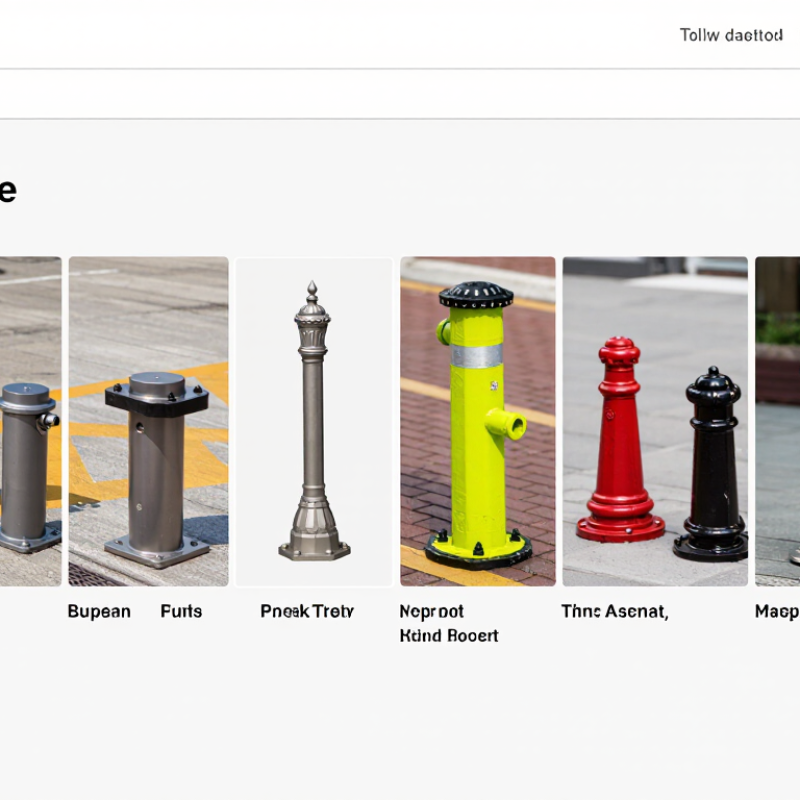
| 1. Socket-Mounted Removable Bollard | The post lifts out of a ground-fixed receiver socket, usually after an internal lock or retaining pin is released. | Steel post with an in-ground socket; a removable cap can cover the socket when the post is out. | Suitable for occasional access changes. The post must be lifted and stored separately. | Private driveways, service entrances, and parking bays that need periodic vehicle access. | Check socket depth, drainage, cap fit, lifting weight, and whether the surface can be excavated. |
| 2. Lockable Removable Bollard | A key-operated lock or locking mechanism secures the post in its ground receiver; authorized users remove it when access is needed. | Steel post and socket with a keyed lock, often supplied with a protective socket cover. | Controlled access for designated key holders; manual removal is required. | Reserved parking, gated paths, and access points managed by property staff. | Confirm the lock type, key-management plan, corrosion protection, and replacement-key availability. |
| 3. Manual Telescopic Retractable Bollard | The post slides down into an underground housing and is raised by hand when access restriction is required. | Steel upper post, ground-level housing, and a locking point; the surface is generally clear when lowered. | Provides a clear opening without storing a loose post, but requires manual operation. | Residential entrances, pedestrian areas with occasional deliveries, and shared-access routes. | Check housing depth, water management, operating effort, and whether the lowered unit suits the expected vehicle traffic. |
| 4. Gas-Assisted Retractable Bollard | A gas strut helps raise the post from its in-ground housing; the user lowers and secures it manually. | Retractable steel post with an assisted-lift mechanism and a ground-level housing. | Quicker and easier to raise than a basic manual unit, while still requiring a person to operate it. | Frequent-use driveways, residential parking areas, and sites where powered access control is unnecessary. | Ask about the mechanism’s service requirements, operating temperature range, and replacement-part availability. |
| 5. Hydraulic Automatic Bollard | A hydraulic system raises and lowers the bollard, typically through a control panel, access reader, or authorized command. | Steel post and below-ground housing with hydraulic power and control components. | Supports frequent, remotely controlled access; operation depends on power and system maintenance. | Managed entrances, commercial sites, and locations with regular vehicle movements. | Plan for power supply, drainage, maintenance access, emergency operation, and compatibility with site controls. |
| 6. Electromechanical Automatic Bollard | An electric motor and mechanical drive raise or lower the post after an authorized control signal. | Steel bollard with an underground drive unit and electrical controls; configurations vary by manufacturer. | Allows controlled, repeatable operation without manual lifting. | Office entrances, managed parking facilities, and access lanes with frequent opening cycles. | Compare cycle requirements, electrical protection, control-system integration, maintenance access, and backup procedures. |
| 7. Standard Fold-Down Bollard | The post pivots on a ground-level hinge and lies flat when access is required; it is raised by hand afterward. | Steel post with a hinged base plate fixed to a suitable hard surface. | Quick manual operation with no post to carry or store separately. | Driveways, parking spaces, and low-speed access points with occasional vehicle entry. | Check the folded profile, hinge clearance, fixing substrate, and whether the lowered post could obstruct pedestrians or vehicles. |
| 8. Lockable Fold-Down Bollard | A hinged post folds down for access and locks upright to restrict unauthorized lowering. | Steel post, surface-mounted hinge plate, and an integrated or separate locking point. | Offers quick access for key holders while keeping the bollard attached to the surface. | Reserved bays, private driveways, and access points where a visible manual barrier is preferred. | Review lock position, key control, hinge protection, anchor suitability, and resistance to tampering. |
| 9. Surface-Mounted Removable Bollard | The post detaches from a fixed surface plate or mounting socket, avoiding the need for a deep in-ground receiver. | Steel post with a surface-fixed base assembly; exact removal and locking methods vary. | Can be removed when needed, with less excavation than many in-ground options. | Existing paved areas, sites with limited excavation options, and temporary access-control layouts. | Check the slab condition, anchor type, trip profile, drainage around the base, and the manufacturer’s installation requirements. |
| 10. Chain-Linked Removable Bollard Set | Multiple steel posts are connected by a removable chain; one or more posts can be taken out to create an opening. | Steel posts with chain eyes and compatible chain; posts may use sockets or surface-mounted bases. | Defines a wider boundary while allowing a section to be opened when required. | Car parks, pedestrian zones, forecourts, and low-speed areas needing a visible boundary. | Confirm chain length, post spacing, storage for removed posts or chain, and that the layout does not create a pedestrian hazard. |