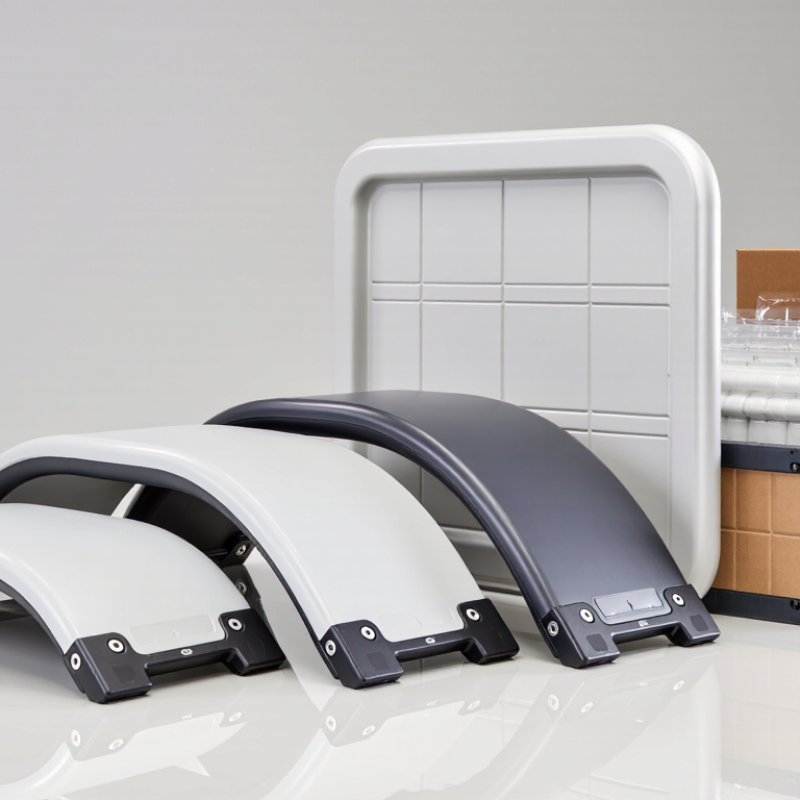
| Product design and development | Turns product requirements into designs, tooling specifications, and production instructions. | Board shape, support layout, adjustment features, surface texture, packaging design, and product samples. | Available drawings, sample-development process, revision control, and design ownership terms. | Request dimensioned drawings, a pre-production sample, and written confirmation of design and tooling ownership. |
| Material and component supply | Provides plastics and any supplementary components used in a finished board. | Plastic resins such as polypropylene or ABS may be used, depending on the product design; components may include hinges, adjustment parts, or padding. | Material grade, color consistency, component specifications, and traceability records. | Check material declarations and purchase specifications; confirm that the documented material matches the production sample. |
| Molding and forming | Creates the board’s main body and molded surface features. | Injection molding is a common process for molded plastic products. Mold design and process settings influence dimensions and surface finish. | Tooling condition, dimensional tolerances, defect records, and production-sample approval. | Review inspection criteria and sample measurements; ask how tooling maintenance and mold changes are recorded. |
| Finishing and assembly | Completes products that use multiple parts or require additional finishing. | Part fitting, assembly of adjustment mechanisms, edge finishing, visual inspection, and labeling. | Assembly instructions, fit checks, appearance standards, and lot identification. | Request the assembly checklist and inspect representative units from a production lot. |
| Quality control and product safety | Checks that products meet agreed specifications and applicable destination-market requirements. | Incoming-material checks, in-process inspections, finished-product checks, and review of product claims and warnings. | Inspection plan, test methods, acceptance criteria, corrective-action records, and relevant test reports. | Confirm that reports identify the tested product and model; verify requirements for the intended market with the relevant authority or qualified testing provider. |
| Packaging and export preparation | Protects products during storage and transport and prepares shipment documentation. | Retail or bulk packaging, carton labeling, packing lists, and export coordination. | Packaging dimensions, carton quantity, labeling language, shipment terms, and document responsibilities. | Approve a packaging sample and confirm carton markings and shipping documents before dispatch. |
| Factory-direct and contract manufacturing | Supplies products directly or manufactures to a buyer’s specification; trading and sourcing intermediaries may also coordinate orders. | Standard products, customized colors or packaging, private-label orders, and production based on buyer-approved specifications. | Manufacturing location, subcontracting policy, order terms, lead-time commitments, and communication responsibilities. | Ask who performs molding and assembly, whether any stages are subcontracted, and which party is responsible for quality approval. |
| Supplier comparison and ranking | Organizes a shortlist using comparable evidence rather than unsupported “top manufacturer” claims. | Comparison of product fit, manufacturing capability, quality systems, documentation, and commercial terms. | Sample results, verified production capabilities, inspection evidence, responsiveness, and total landed cost. | Use the same specification and evaluation checklist for every supplier; independently verify certificates and test documentation. |