| Product Scope | Rear fixed or floating calipers matched to the required vehicle applications, mounting position, piston configuration, and parking-brake design. | Application catalogue, engineering drawings, cross-reference list, and vehicle-fitment data. | A caliper that fits the vehicle but has the wrong piston area, mounting geometry, or parking-brake mechanism may cause unsafe braking performance. |
| Quality Management System | A documented quality system, preferably ISO 9001; IATF 16949 is a stronger indicator for suppliers serving automotive production programs. | Current certificates, certification scope, issuing body, expiry date, and recent audit findings. | Certification supports process control, traceability, corrective action, and consistent production management. |
| Material Selection | Common caliper bodies use ductile or gray cast iron, while some applications use aluminum alloys. The material must follow the approved drawing or vehicle specification. | Material certificates, chemical composition reports, mechanical-property reports, and incoming-material inspection records. | Material affects strength, corrosion resistance, weight, heat transfer, and dimensional stability. |
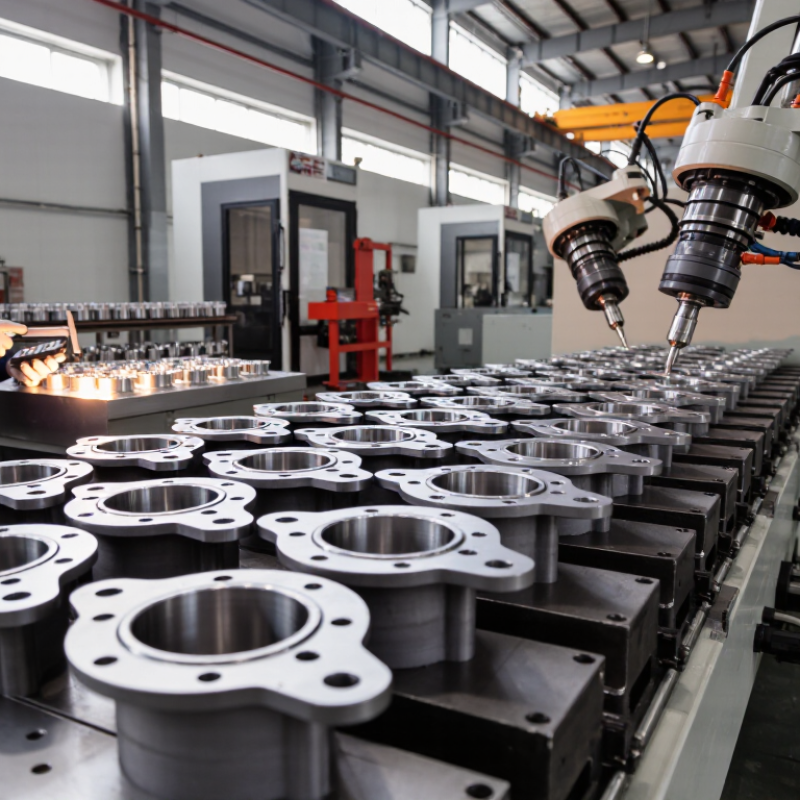
| Machining Capability | Controlled machining of piston bores, seal grooves, mounting faces, bleeder ports, and threaded holes, with inspection against drawing tolerances. | Process flow chart, control plan, capability studies, calibrated measuring-equipment list, and sample inspection reports. | Poor bore geometry or mounting accuracy can lead to leakage, uneven pad wear, noise, or brake drag. |
| Sealing and Piston System | Seals, dust boots, pistons, retaining rings, and guide components should be selected for the specified brake-fluid environment and operating temperature. | Seal material specifications, compatibility data, supplier certificates, dimensional inspection results, and endurance-test records. | Seal failure may cause fluid leakage, piston corrosion, loss of retraction, or premature pad wear. |
| Corrosion Protection | Surface treatment should be selected for the intended market, such as zinc plating, phosphate treatment, painted coating, or other validated protection. | Coating specification, coating-thickness records, salt-spray test method and results, and appearance standards. | Rear calipers are exposed to water, road salt, dirt, and temperature cycling, which can accelerate corrosion and seizure. |
| Pressure and Leakage Testing | Every production batch should have a documented hydraulic leakage and pressure test based on the approved product specification; test pressure and duration must be application-specific. | Test procedure, acceptance criteria, calibration records, batch results, and nonconformance records. | A pressure test helps identify casting porosity, machining defects, seal problems, and assembly errors before shipment. |
| Functional Testing | Verification should include piston movement, seal performance, guide-pin movement, parking-brake operation where applicable, and return or drag behavior. | Functional test plan, end-of-line test records, prototype validation report, and sample test videos where appropriate. | Functional defects can create braking imbalance, excessive drag, noise, or reduced service life. |
| Prototype and Sample Approval | Samples should be produced using production-intent materials, tooling, machining, coatings, and assembly procedures. | Dimensional report, material report, sample photographs, fitment record, and signed sample-approval document. | A production-intent sample gives a more reliable indication of actual mass-production quality than a hand-finished prototype. |
| Traceability | Each batch should be traceable to raw material, casting or forging lot, machining date, assembly operator or line, inspection results, and shipment records. | Lot-code format, traceability procedure, production records, and recall or containment procedure. | Traceability makes defect investigation and targeted corrective action faster and less costly. |
| Minimum Order Quantity | Aftermarket programs commonly negotiate model-specific quantities; tooling, packaging, and customization can increase the minimum order. | Written quotation showing minimum order, sample quantity, tooling charges, packaging requirements, and reorder conditions. | A clear minimum-order policy reduces inventory risk and prevents unexpected tooling or packaging costs. |
| Production Lead Time | For established products, a practical planning range is often about 30–60 days after order confirmation; new tooling or validation may require additional time. | Detailed production schedule, tooling timeline, capacity statement, and on-time-delivery records. | Lead time affects safety-stock levels, launch planning, and the reliability of aftermarket supply. |
| Packaging and Logistics | Packaging should protect machined surfaces, bleeder screws, guide components, and coated areas from impact, moisture, contamination, and corrosion during transport. | Packaging drawings, carton dimensions, gross and net weight, pallet plan, moisture-protection method, and shipping terms. | Inadequate packaging can turn compliant products into damaged or corroded goods before they reach the customer. |
| Technical Communication | The supplier should provide clear English technical documents, responsive engineering support, and controlled revision management. | Drawing revision history, response-time commitment, engineering contact details, and change-notification procedure. | Accurate communication reduces specification errors and ensures that design or material changes are approved before production. |
| Warranty and Corrective Action | A written warranty, complaint-handling process, root-cause analysis method, and defined corrective-action response time should be available. | Warranty terms, return procedure, 8D or equivalent corrective-action template, and historical quality-performance data. | After-sales support is essential when a field issue involves safety-related brake components. |