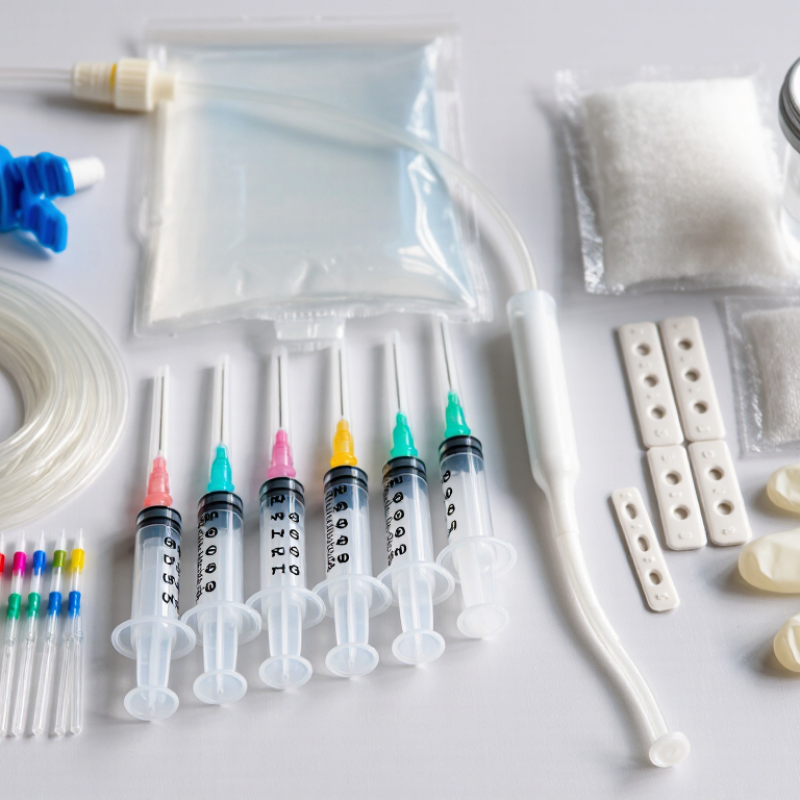
| Syringes and Hypodermic Needles | Injection, medication delivery, vaccination, and fluid withdrawal | Polypropylene or polycarbonate barrels; stainless-steel needles; elastomeric plungers | Usually sterile and individually packaged | Accurate volume, needle sharpness, low leakage, secure hub connection, and clear graduations | Sharps containers for needles; regulated medical-waste handling for contaminated components |
| Peripheral Intravenous Catheters | Short-term access to peripheral veins for fluids, medicines, and blood products | Fluoropolymer or polyurethane catheter; stainless-steel introducer needle; plastic hub | Sterile, single-use devices | Kink resistance, biocompatibility, secure fixation, low insertion force, and reliable blood flashback | Needle and catheter components disposed of as regulated sharps or infectious waste according to local rules |
| Infusion and Administration Sets | Controlled delivery of intravenous fluids, medicines, and nutrition | Medical-grade PVC, polyethylene, polypropylene, silicone, and elastomers | Commonly sterile and supplied for single-patient use | Flow accuracy, leak prevention, connector compatibility, tubing flexibility, and air-management performance | Regulated medical waste after contact with fluids or medicines |
| Surgical and Examination Gloves | Barrier protection for healthcare workers and patients during examination and procedures | Natural rubber latex, nitrile, or synthetic polymers | Examination gloves may be non-sterile; surgical gloves are sterile | Puncture resistance, tensile strength, tactile sensitivity, fit, and protection against contamination | Infectious or regulated medical waste when contaminated; general waste only where permitted for uncontaminated items |
| Surgical Gowns, Drapes, and Packs | Maintaining sterile fields and limiting transfer of microorganisms and fluids | Nonwoven polypropylene, polyethylene films, cellulose blends, and absorbent composites | Sterile for surgical use; some protective apparel is supplied non-sterile | Barrier performance, fluid resistance, lint control, drape strength, and ergonomic design | Regulated medical waste when contaminated or used in a sterile procedure |
| Wound Dressings and Disposable Bandages | Protection, absorption, exudate management, and support of wound healing | Nonwoven fibers, cotton or rayon, polyurethane films, acrylic adhesives, foam, and hydrocolloid materials | Sterile for many open-wound applications; some basic bandages are non-sterile | Absorbency, moisture balance, atraumatic removal, skin compatibility, and secure adhesion | Regulated medical waste if saturated with blood or other potentially infectious material |
| Urinary Catheters and Drainage Bags | Urine drainage, bladder management, and postoperative fluid collection | Silicone, latex with protective coatings, polyurethane, PVC, and polyethylene | Generally sterile for insertion; external collection accessories may vary | Biocompatibility, smooth surface, drainage reliability, balloon integrity, and anti-kink performance | Regulated medical waste after use and contact with urine or other body fluids |
| Respiratory Masks, Breathing Circuits, and Filters | Oxygen delivery, ventilation support, aerosol management, and respiratory filtration | Polypropylene nonwoven media, PVC, silicone, polyethylene, and elastomeric components | Many patient-contact products are sterile or single-patient use; general masks may be non-sterile | Filtration efficiency, airflow resistance, connector fit, dead-space control, and moisture handling | Regulated medical waste when used in clinical care or exposed to respiratory secretions |
| Blood Collection Tubes and Specimen Containers | Collection, transport, and preservation of blood, urine, and other clinical specimens | Glass or PET plastic tubes, polypropylene caps, elastomeric stoppers, and laboratory additives | Usually sterile or hygienically controlled; sterility requirements depend on the intended test | Leak resistance, specimen integrity, additive stability, labeling clarity, and transport durability | Sharps or biohazard waste streams, depending on container design and specimen contamination |
| Diagnostic Test Cartridges and Collection Swabs | Point-of-care testing and collection of respiratory, wound, or other clinical samples | Polypropylene, polystyrene, polyester or nylon fibers, paper membranes, and reagent-coated materials | Typically individually packaged; sterility depends on the specimen type and test design | Analytical sensitivity, specificity, sample recovery, stability, and ease of use | Biohazard or regulated medical waste after specimen contact |