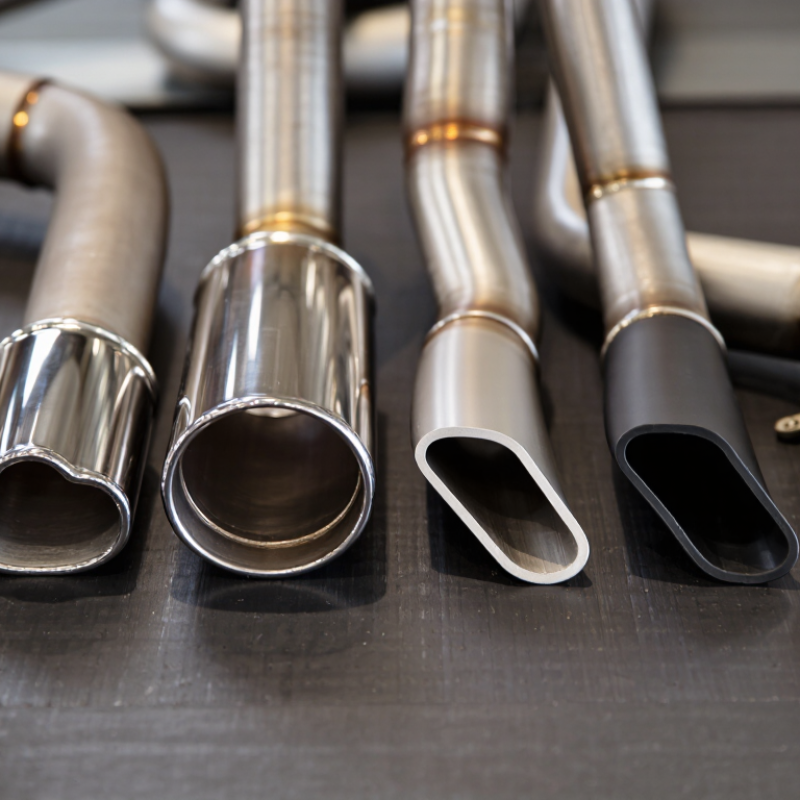
| Straight-cut | The outlet is cut perpendicular to the pipe’s length. | Simple, even circular opening. | Stainless steel or aluminized steel. | Check outlet diameter and clearance to the bumper. | Usually a visual change; a basic tip does not normally alter exhaust tone noticeably. |
| Angle-cut or slash-cut | The outlet is cut diagonally rather than straight across. | Slanted opening, often with a sportier appearance. | Stainless steel or aluminized steel. | The cut direction and pipe length affect how it sits beneath the bumper. | The cut changes appearance, not typically engine output. |
| Rolled-edge | The outlet’s rim is rolled inward or outward to create a rounded lip. | Thicker-looking, finished edge. | Usually stainless steel. | Confirm the outer diameter, since the rolled rim can be wider than the inlet. | Primarily a styling and edge-finish choice. |
| Double-wall | An outer sleeve surrounds an inner outlet tube. | Deeper, layered outlet profile. | Commonly stainless steel. | The larger outer diameter needs adequate bumper and ground clearance. | The double-wall construction is mostly for appearance; it is not a substitute for a muffler or resonator. |
| Single-wall | A single layer of metal forms the outlet tube. | Clean, relatively lightweight profile. | Stainless steel or aluminized steel. | Material and finish influence corrosion resistance and upkeep. | A single wall does not by itself determine exhaust volume or power. |
| Dual-outlet | One tailpipe section ends in two visible outlets; some systems use separate pipes on each side. | Two outlet openings, sometimes arranged side by side. | Usually stainless steel or aluminized steel. | A dual-outlet tip is not necessarily a true dual exhaust system; inspect the vehicle’s actual pipe layout. | Outlet count alone does not establish increased flow or performance. |
| Turn-down or downturned | The outlet bends downward toward the road surface. | Outlet is less visible from behind the vehicle. | Steel or stainless steel. | Keep exhaust flow away from bodywork and ensure safe clearance from the ground and nearby components. | Changes the direction of the outlet; sound depends mainly on the full exhaust system. |
| Resonated tip | A tip incorporates a small resonating chamber or sound-tuning element. | Often similar in appearance to a conventional tip, with a larger or extended body. | Typically stainless steel. | Confirm the part is designed for the vehicle and intended sound characteristics. | May influence sound in some applications, but results vary with the vehicle and exhaust system. |
| Material-finish variants | Tips may use polished, brushed, coated, or composite outer finishes. | Appearance ranges from bright metal to dark or textured finishes. | Stainless steel, aluminized steel, titanium, or a composite outer sleeve, depending on design. | Consider heat exposure, corrosion resistance, cleaning requirements, and the manufacturer’s installation instructions. | Material or finish alone does not guarantee a change in engine power or sound. |