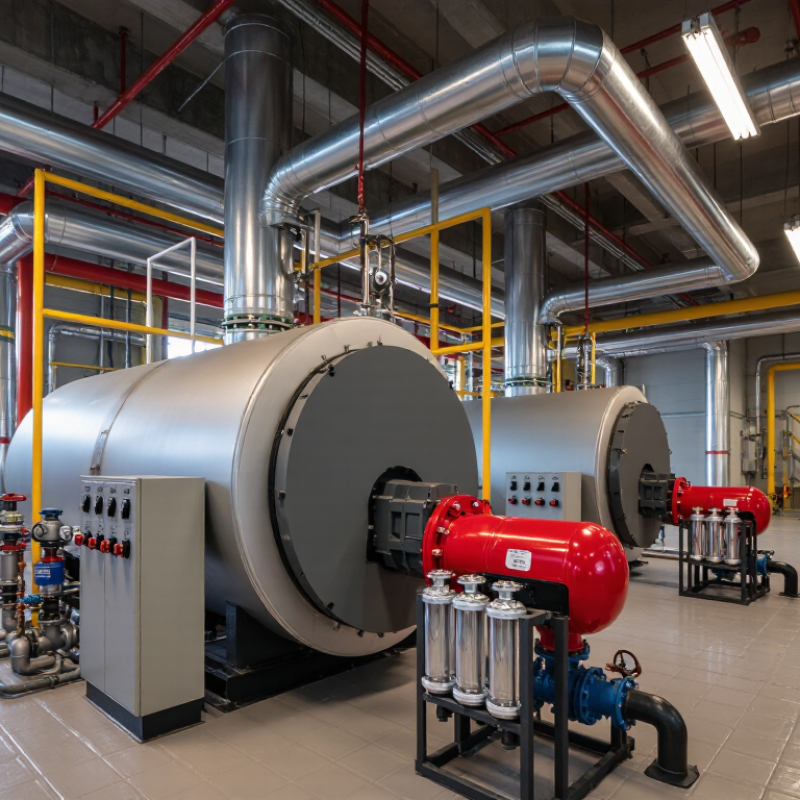
| Fire-tube boiler design | Hot combustion gases pass through tubes surrounded by boiler water. Fire-tube units are commonly used for lower- to medium-capacity steam duties. | Often considered for facilities with comparatively steady steam demand and moderate pressure requirements. Capacity, pressure, water quality, and turndown should be checked against the process load. | U.S. Department of Energy (DOE), Steam Systems |
| Water-tube boiler design | Water flows inside tubes while hot combustion gases pass around them. Water-tube designs are used for a wide range of industrial and high-pressure steam duties. | Useful where steam capacity, pressure, or load variation calls for a design suited to the operating conditions. System design and operating controls are as important as the boiler type. | DOE, Steam Systems |
| Common industrial applications | Steam is used for process heating, cleaning, sterilization, humidification, and power generation. Users include food processing, chemicals, pulp and paper, refining, and healthcare facilities. | Manufacturers typically configure equipment around required steam pressure, peak and average demand, operating hours, fuel availability, and site-specific emissions requirements. | DOE, Steam Systems |
| Thermal efficiency assessment | Boiler efficiency depends on fuel input and useful steam output; actual performance is affected by combustion, blowdown, radiation losses, operating load, and maintenance. | Compare proposals using a clearly stated test method, fuel heating-value basis, operating load, and included auxiliary power. A single efficiency figure is not directly comparable if these conditions differ. | DOE, Steam Systems |
| Combustion and excess air | Combustion controls manage the air-to-fuel ratio. Too much excess air can increase stack losses, while insufficient air can cause incomplete combustion and elevated carbon monoxide. | Look for suitable burner controls, commissioning, and routine checks of flue-gas oxygen and carbon monoxide across the expected operating range. | DOE, Steam Systems |
| Natural-gas carbon dioxide factor | The U.S. EPA stationary-combustion factor for natural gas is approximately 53.06 kg CO₂ per MMBtu of fuel input. | This is a fuel-combustion factor, not a boiler-efficiency rating or a full lifecycle emissions figure. Actual fuel use determines a boiler’s direct CO₂ emissions. | U.S. EPA, GHG Emission Factors Hub |
| Heat recovery | Economizers can recover heat from boiler exhaust to preheat feedwater. Condensing heat recovery can also capture heat from water vapor in flue gas when system conditions allow. | Potential savings depend on return-water temperature, exhaust conditions, corrosion protection, operating hours, and the plant’s heat demand. A site-specific assessment is needed. | DOE, Steam Systems |
| Steam-system efficiency | Distribution leaks, poorly insulated lines, inappropriate steam pressure, and ineffective condensate return can waste energy beyond the boiler itself. | Evaluate the complete steam system—including traps, insulation, condensate recovery, and controls—rather than relying only on the boiler’s stated efficiency. | DOE, Steam Systems |
| Electrification trend | Electric boilers and other electric process-heat technologies are options for industrial heat users; their suitability depends on the required temperature, power availability, electricity cost, and emissions profile. | Manufacturers and buyers increasingly assess fuel flexibility and electrical integration alongside natural-gas equipment, especially for sites planning lower-carbon operations. | International Energy Agency (IEA), Industry |
| Hydrogen readiness | Hydrogen combustion characteristics differ from natural gas. Fuel conversion or blending can affect burners, controls, materials, safety systems, and emissions. | Do not assume a natural-gas boiler is hydrogen-ready. Obtain written confirmation of the permitted fuel blend and operating conditions from the equipment supplier and applicable authorities. | IEA, The Role of Hydrogen in the Energy Transition |
| Medium combustion plant regulation in the EU | The EU Medium Combustion Plant Directive applies to combustion plants with a rated thermal input of at least 1 MW and less than 50 MW, subject to the directive’s provisions and exemptions. | Project specifications should account for local permitting and applicable emission limits; requirements vary by jurisdiction, plant size, fuel, and installation date. | European Commission, Medium Combustion Plants |
| Procurement considerations | Key evaluation factors include steam capacity and pressure, turndown, load profile, fuel quality, water treatment, emissions controls, service access, and spare-parts availability. | Use a site-specific technical specification and compare lifecycle cost, commissioning support, maintenance requirements, and compliance documentation—not only purchase price. | DOE, Steam Systems |