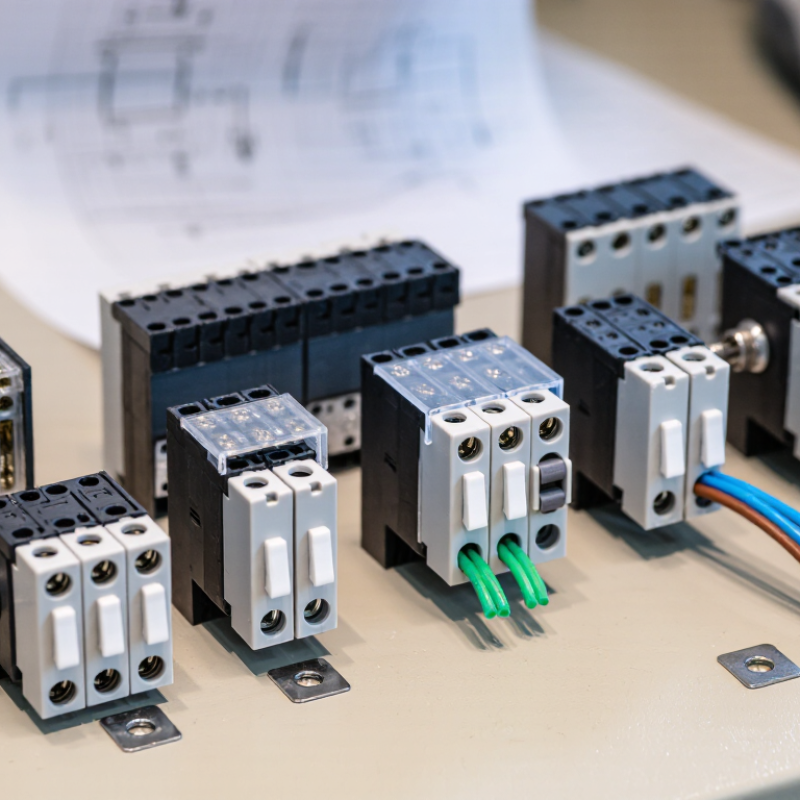
| Product function | A fuse terminal block combines a terminal connection with a fuse holder, providing a point to connect a conductor and protect a circuit against excessive current. | Commonly used in control panels, machinery, and electrical enclosures. | Confirm the intended circuit, installation environment, and applicable electrical standards. |
| How it works | Current passes through the fuse element in series with the circuit. If current exceeds the fuse’s specified limit for long enough, the element melts and opens the circuit. | The fuse must be selected for the circuit’s operating current, voltage, and fault conditions. | Check fuse characteristics, interrupting rating, and replacement procedure; a fuse is not a substitute for every type of circuit protection. |
| Fuse format | The terminal block is designed around a particular fuse size and style. | Common cylindrical fuse formats include 5 × 20 mm, 5 × 25 mm, and 10 × 38 mm; other formats are also available. | Match the holder to the exact fuse dimensions and confirm compatibility with the specified fuse standard. |
| Mounting method | Mounting determines how the block is secured inside the enclosure. | DIN-rail mounting is common in control panels; panel-mount and other installation styles are also used. | Verify rail type or mounting dimensions, available panel space, and accessibility for fuse replacement. |
| Connection technology | The connection method affects wiring speed, conductor compatibility, and maintenance requirements. | Common methods include screw-clamp and spring-clamp connections. | Check conductor material, solid or stranded wire compatibility, permitted cross-section, and any ferrule requirements. |
| Electrical ratings | Voltage and current ratings define the conditions under which a specific block can be used, subject to the installed fuse and applicable rules. | Ratings vary by design, terminal size, fuse format, and certification; there is no single rating for all fuse terminal blocks. | Request the exact model datasheet and check rated voltage, current, conductor size, and derating conditions. |
| Safety and approvals | Approvals and test reports help establish suitability for a destination market and application. | Requirements depend on the product, installation, and destination; IEC and UL-related requirements may be relevant in different markets. | Ask for current certificates, test documentation, and confirmation that the exact product variant is covered. |
| Supplier evaluation | A suitable supplier should provide traceable product information and consistent support for the required configuration. | Compare datasheet completeness, sample availability, production lead time, quality documentation, and export experience. | Request a written quotation specifying model, fuse format, ratings, connection type, approvals, quantity, and delivery terms. |
| Replacement and maintenance | A blown fuse must be replaced with a compatible fuse after the cause of the overcurrent is addressed. | Some designs provide a hinged or removable fuse carrier to make replacement easier. | Check safe access, clear identification, spare-fuse availability, and whether isolation is required before servicing. |