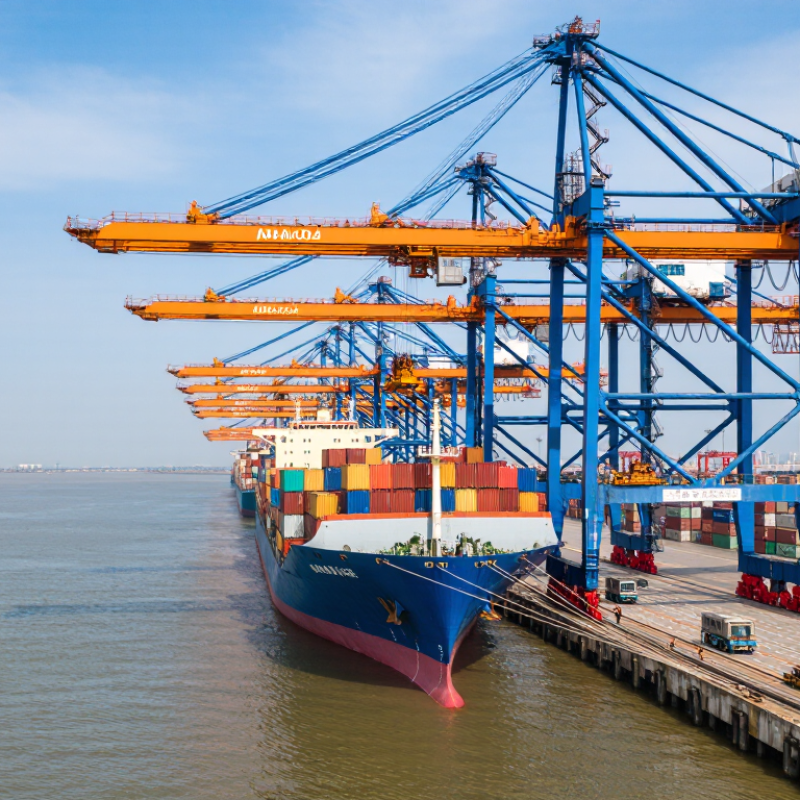
| 1 | Ship-to-Shore Container Crane (STS) | Approximately 40–100 tonnes under a container spreader | Outreach commonly about 45–70 m; configuration depends on vessel size | Loading and unloading containers between ships and quayside | Match outreach, lift height, and rail gauge to the largest vessels and terminal layout. |
| 2 | Mobile Harbor Crane (MHC) | Maximum rated capacity may reach approximately 100–200 tonnes; allowable load decreases with radius | Working outreach commonly about 30–54 m | Container, bulk, general cargo, and project cargo handling | Compare the full load chart, mobility requirements, tire configuration, and attachment options. |
| 3 | Rail-Mounted Gantry Crane (RMG) | Typically around 40–65 tonnes for container handling | Rail span commonly about 30–50 m | Container stacking and transfer across rail, truck, or terminal lanes | Check yard-block width, rail foundations, automation needs, and stacking height. |
| 4 | Rubber-Tired Gantry Crane (RTG) | Typically around 40–65 tonnes for container handling | Commonly spans roughly 20–30 m, depending on the yard arrangement | Flexible container stacking in terminals without fixed gantry rails | Assess tire and pavement loads, power supply, fuel or electrification, and maneuvering space. |
| 5 | Portal Harbor Crane | Common configurations handle approximately 16–50 tonnes; capacities vary by duty and radius | Outreach can be around 30–50 m, depending on the boom and terminal design | General cargo, bulk cargo, and multipurpose quay operations | Review the required operating radius, cargo attachment, duty cycle, and quay load limits. |
| 6 | Grab-Type Ship Unloader | Indicative throughput is about 500–2,000 tonnes per hour for many installations | Designed around vessel beam, hatch layout, and berth geometry | Unloading coal, ore, grain, and other dry bulk cargo | Throughput depends on material density, grab size, dust controls, and conveyor capacity. |
| 7 | Continuous Ship Unloader | Indicative throughput can range from about 500 to 3,000 tonnes per hour | Specified for the vessel range and unloading position at the berth | Continuous unloading of suitable dry bulk materials | Confirm compatibility with cargo properties, dust control, transfer equipment, and maintenance access. |
| 8 | Bulk Shiploader | Bulk-terminal systems may handle approximately 1,000–10,000 tonnes per hour | Reach and travel depend on vessel size and loading pattern | Loading ore, coal, grain, and other dry bulk materials onto ships | Size the system to the cargo rate, stockyard conveyors, vessel hatch arrangement, and environmental controls. |
| 9 | Floating Crane | Available ratings range widely; heavy-lift units can exceed 1,000 tonnes | Project-specific, with capacity governed by radius, stability, and sea conditions | Heavy lifts, offshore transfers, and cargo operations where quay access is limited | Check load charts, water depth, stability limits, mooring requirements, and local operating conditions. |
| 10 | Shipboard Deck Crane | General-cargo models often handle approximately 10–50 tonnes; heavy-lift models can be higher | Outreach varies by vessel and crane design, often around 10–30 m | Cargo handling aboard vessels at ports without dedicated shore cranes | Verify vessel integration, outreach at working load, lifting certification, and maintenance support. |